Get Full Government Meeting Transcripts, Videos, & Alerts Forever!
Get email alerts on the Unemployment Insurance topic
No spam. Unsubscribe anytime.
Department warns vacancies and legacy systems are stretching unemployment insurance and job-center services
Summary
Department officials told the House Finance subcommittee that vacancies—particularly in Employment and Training Services—are lengthening call wait times and review timelines, and the department is assessing a multi-year, multi‑million-dollar UI mainframe modernization.
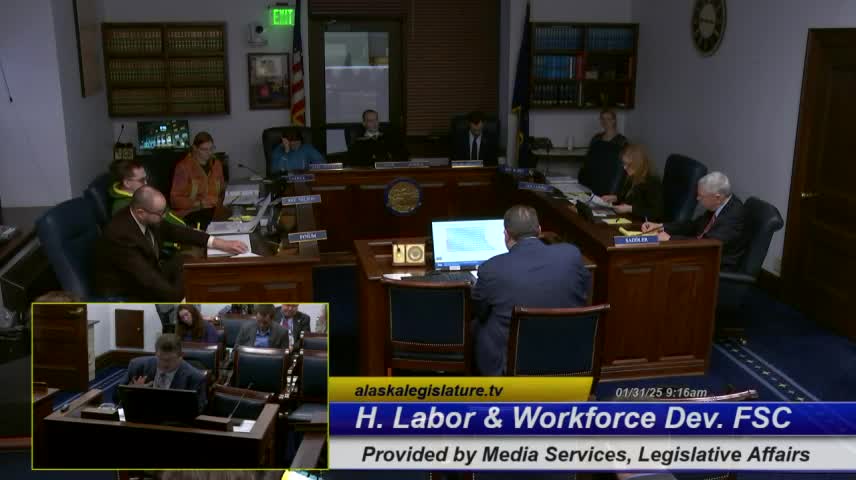
The Alaska Department of Labor and Workforce Development told the department budget subcommittee on Jan. 31 that staffing shortages and an aging unemployment insurance mainframe are affecting service delivery and that officials are planning a multi-year modernization effort.
Paloma Harbor, director of the Division of Employment and Training Services, told the subcommittee her division has the largest share of vacancies within the department and that many open roles are entry-level claims-taker and frontline job-center positions. “The way that impacts Alaskans is, 1, longer wait times for the call queue when people are calling into our claim centers and, longer waiting periods potentially in our review of financial assistance requests,” Harbor said.
DiBartolo provided department-wide staffing figures: the department has budgeted 680 permanent full-time positions, 43 permanent part-time and 21 temporary positions, with 570 positions filled as of Dec. 31, which he said equates to roughly a 22% vacancy rate. He told the committee the Employment and Training Services division alone has about 80 vacancies.
The department also said it had gotten a capital appropriation of just under $500,000 to assess its legacy mainframe, which runs on COBOL, and that a full modernization would be a multi-year project likely measured in the tens of millions of dollars and requiring federal matching funds. DiBartolo said the assessment will produce a better project scope and cost estimate.
Pandemic-era federal authority: DiBartolo told the committee the department reduced its unlimited pandemic-era federal authority stepwise over recent years and is proposing an additional reduction, saying current authority will remain adequate for operations.
Why it matters: Staffing and legacy systems affect timeliness of UI claims and training-eligibility decisions for Alaskans. The department said filling frontline positions and modernizing the UI system are priorities.
Ending: The department committed to providing more detailed vacancy splits and follow-up information on staffing impacts and modernization planning to the committee.