Get Full Government Meeting Transcripts, Videos, & Alerts Forever!
Get email alerts on the Education Board Goals topic
No spam. Unsubscribe anytime.
Syosset board refines four draft district goals; directs staff to gather stakeholder input
Summary
At a work session, the Syosset Central School District Board of Education reviewed revised draft goals for academics, culture, communication and facilities, debated wording, and asked district staff to develop specific objectives and a quick stakeholder feedback plan.
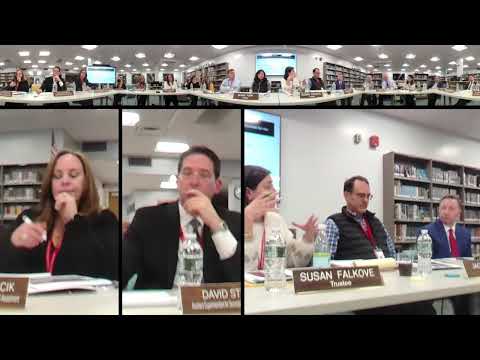
The Syosset Central School District Board of Education reviewed revised draft district goals at a work session held in the Southwest Middle School library and asked district staff to return with specific objectives and a plan to gather broad stakeholder feedback.
The facilitator presented four priority areas and sample goal language that the board discussed line-by-line. For academic excellence the draft states: “We will create individualized learning experiences while maintaining comparability in classroom, instructional, and assessment practices.” For culture it reads: “We will cultivate a kind, safe, and supportive culture that exemplifies pride, patience, respect, integrity, dignity, and empathy, ensuring all students thrive.” For external relations it proposes: “We will foster strong meaningful connections with all families and stakeholders…ensuring that everyone feels heard, supported, and invested in our shared success.” For operations the draft says the district will “ensure that our facilities effectively support an excellent education…all while maintaining fiscal responsibility and sustainability.” These draft sentences were read aloud by the meeting facilitator.
Why it matters: the board intends the high-level goals to guide annual planning, budgeting and measurable objectives for schools and central office staff. Multiple board members warned that wording choices (for example, “comparability” versus “consistency,” and “each” versus “all”) matter because they change how the district’s expectations could be interpreted and implemented.
Board members and administrators repeatedly pressed for precision and for goals that are districtwide. Several trustees suggested adding the terms “inclusive” and “collaborative” in places to emphasize both character/culture and academic practices. One board member urged that culture work begin “from the youngest age,” language others said could be added to a preamble rather than embedded as a prescriptive objective.
The board also discussed how to collect input to shape the next step — measurable objectives and implementation plans. Dr. Rogers (district staff) was asked to work with principals and the leadership team to draft targeted strategic objectives that align with each goal and to propose methods for collecting stakeholder feedback. Trustees emphasized a quick turnaround: the board said the feedback process should be done in weeks or months, not years.
On feedback methods, the meeting recorded a wide-ranging discussion of options and safeguards. Trustees and staff debated using ThoughtExchange (a third-party feedback platform) for rapid, anonymous input while protecting against manipulation, versus in-person or classroom-based collection that would ensure one response per student. Suggestions included separate exchanges or surveys for adults, high school students and younger students; focused groups for middle-school age students; classroom or gym-based collection to avoid duplicate entries; and providing both raw responses and a summarized analysis to the board. Trustees repeatedly said anonymity would encourage honest responses from students and community members, while others recommended collecting disaggregated responses by stakeholder group so the district can see differing priorities by grade level and constituency.
The board declined to adopt new policy language at the meeting. Instead trustees reached consensus — without a formal roll-call vote recorded in the transcript — that Dr. Rogers and the administrative team should bring back initial draft objectives and a stakeholder-engagement plan for board review. The board asked the administration to explain where and how feedback was gathered when it reports back.
Context and next steps: the session was framed as a refinement of goals previously discussed in goal-setting meetings. The facilitator and trustees agreed the goal statements will be followed by specific objectives and measurable actions developed by district leaders and building principals; administrators present at the meeting were asked to help design the stakeholder outreach. Board members asked the administration to prioritize speed and to include opportunities for students, staff, families and community members to provide input.
Votes at a glance: The transcript records a procedural motion to open the meeting early in the session (mover: Mr. Greco; second: Ms. Kokia and Ms. Falco). The motion was confirmed with the chair’s “All in favor? … Okay,” but no numbered roll-call or recorded vote tallies appear in the transcript.
Ending: The board did not adopt the goals as final policy at the work session; it instead requested that district staff return with measurable objectives and an engagement summary that documents which stakeholder groups were consulted and how the data were gathered.