
Vermont educators warn start-up rules and limited Agency of Education capacity threaten regional BOCES
Get AI-powered insights, summaries, and transcripts
Subscribe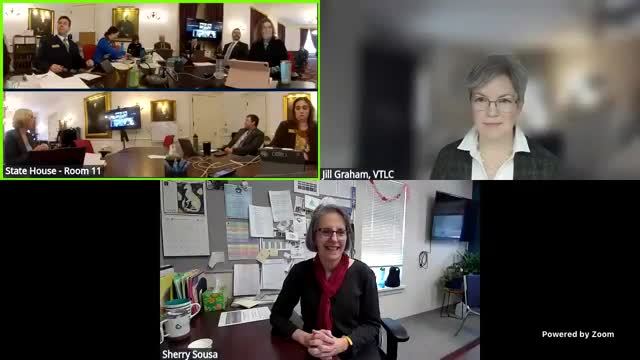
Summary
Witnesses at the House Committee on Education hearing said Vermont’s H.630 enabling BOCES law lacks the implementation infrastructure and up-front funding needed for regional cooperative educational services to form; the Vermont Learning Collaborative says it may fold by June 1, 2025, without additional resources.
House Committee on Education members heard testimony Jan. 31, 2025, that Vermont’s law to create regional boards of cooperative educational services (H.630) lacks the implementation supports and upfront funding needed for districts to form effective BOCES-style cooperatives. Sherry Souza, Mountain View Supervisory Union superintendent, and Jill Graham, executive director of the Vermont Learning Collaborative (VTLC), told the committee that the state Agency of Education (AOE) does not yet have the capacity to review and approve articles of agreement and to support new cooperatives statewide.
Why it matters: Witnesses said BOCES could help contain special-education costs, keep students closer to home and expand access to specialized programming and professional development, but Vermont districts lack the funding, governance expertise and interdistrict trust to complete the required articles of agreement under current statute.
Souza told the committee she and VTLC staff drafted articles of agreement and submitted them to AOE, only to find that "the lack of expertise and infrastructure to meet the expectations of this law" is blocking progress. She said the statutory process assumes districts can produce complex governance documents without outside assistance, yet "the upfront cost to access this expertise and the quantity of time needed to organize…prohibit these groups from meeting the intent of the law." Souza said VTLC used reserve funds and ESRA dollars to begin the work but that not all regions have similar seed funding.
Jill Graham described VTLC’s operations since relaunching as a private entity in 2023 and detailed services the collaborative currently provides: recruitment of special educators, shared staffing arrangements (for example, one educator split across two districts), and regionally delivered professional development. Graham said those shared services both reduce administrative burden on small districts and allow districts to "hire that person, and we could contract them out to both of those districts meeting their needs." She said the collaborative’s model helped Mountain View contain special-education costs: in a district of about 1,000 students the union has two students in residential placement and two in day placements.
Witnesses referenced two statutory funding points cited in testimony: the session’s earlier law (referred to in testimony as Act 168/H.630) includes an allotment described in the statute summary as $10,000 per BOCES for start-up grants, and Souza noted the statewide excess spending threshold for out-of-district tuition and transportation can exceed $68,000 per student, creating state fiscal exposure when districts place students outside their home schools. Souza said the statutory design, as currently implemented, requires articles of agreement to be completed and approved before a cooperative can access start-up funding, which she and others see as a barrier.
Committee members pressed witnesses on what the legislature could do. Representative Brady asked whether the state should change governance or delivery structures or rely on existing tools; committee members suggested a pilot program could demonstrate cost savings and operational models. Souza and Graham asked explicitly for some front-loaded funding or a mechanism that would allow experienced collaborators such as Graham to be contracted to help other regions draft articles of agreement, saying that assistance would accelerate formation and reduce risk of failure. "If we can identify resources to support the next school year, we believe that the collaborative will be self-supporting and the membership fees will be reduced," Souza said.
Agency capacity and local buy-in were recurring themes. Souza said AOE staff "are overwhelmed" and that some at the agency have expressed skepticism about creating another governance layer; she argued that properly supported BOCES can serve as a partner to AOE and member districts. She also noted barriers at the local level: school boards must be convinced to commit membership fees and to share program resources across district lines, and some boards in VTLC’s southeast region have not supported that commitment.
Committee members and witnesses noted no formal vote or change to H.630 occurred at the hearing. Several members said they would review the statute’s language and the summary of appropriations to determine whether existing start-up grant language can be interpreted to allow earlier access to funds or whether a statutory tweak is required.
Ending: Committee members thanked the witnesses and indicated staff would check the legislative summary and statute language about start-up grant timing. Witnesses said VTLC remains willing to assist other regions and that timely help may determine whether the collaborative survives beyond June 1, 2025.