Get Full Government Meeting Transcripts, Videos, & Alerts Forever!
Get email alerts on the Municipal Budget topic
No spam. Unsubscribe anytime.
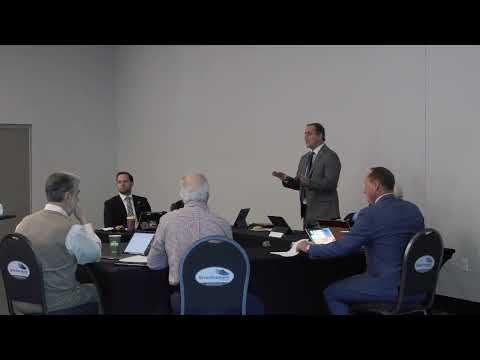
Clearwater workshop focuses on budget strategy, hurricane recovery and utility spending
Summary
At a strategic planning session, Clearwater leaders reviewed 10‑year financial forecasts, hurricane recovery costs and a staff package of operating and capital reductions meant to avoid a millage increase while protecting core services and reserves.
Clearwater city leaders and staff spent a multi‑hour strategic planning session reviewing financial forecasts, hurricane recovery costs and short‑term budget “belt‑tightening” measures intended to avoid a property tax (millage) increase while preserving core services.
The council’s budget directors and finance staff presented a 10‑year forecast that factors in recent operating and capital savings, utility rate assumptions and an anticipated drawdown of some reserves. “The focus … is gonna be more on budget strategy,” City Manager Jennifer said as she opened the session. Budget Director Kayleen Castle noted the council-adopted strategic plan and a new dashboard staff is developing to track projects and funding. “Our strategic plan was adopted by the council in May of 2023,” Castle said.
Why it matters: Clearwater continues to pay for hurricane recovery while planning multi‑year capital work for utilities, parks and public facilities. Staff told the council that a package of operating reductions, staffing adjustments and scaled‑back capital spending would keep the 10‑year forecast from requiring a millage increase under the assumptions used. At the same time the city must balance maintaining existing assets and services with requests for new projects.
Most important facts
- Finance Director Jay Raven summarized forecasts for the major enterprise funds and the general fund. He said water and sewer currently have a strong level of unrestricted reserves but those reserves are largely committed to major capital projects; the forecast shows reserves potentially depleted by fiscal 2027 and a likely need for a bond issuance. Raven said the forecast assumes water/sewer rates rise about 6% annually starting in 2026 and that a new rate study will be completed.
- The stormwater fund likewise faces an aggressive capital plan and a forecasted reserve depletion (Raven said the fund assumes the 8% annual increases adopted last year). The solid‑waste/recycling fund showed heavy hurricane‑debris costs in FY2025 with reimbursements forecast through 2029; the fund retained healthy reserves under the forecast.
- Castle told the council the staff budget exercise identified roughly $945,000 in operating reductions, approximately $809,000 in staffing‑related savings and about $5.7 million of reduced capital spending projected across fiscal year 2026 and portions of 2027.
- The Central Insurance Fund forecast used a conservative hurricane hit of $35 million to general government and assumed 50% reimbursement (about $17.5 million) to show a worst‑case; staff said they expect to receive insurance and FEMA reimbursements in excess of that conservative assumption.
What council members discussed
Council members framed “needs” narrowly around basic public services — water, sewer, streets and public safety — and described parks, arts and some redevelopment projects as important quality‑of‑life investments that require careful prioritization. Speakers repeatedly urged staff to pursue efficiencies, update delivery models and explore public‑private partnerships rather than defaulting to across‑the‑board personnel cuts.
Councilman Cotton urged department heads to “treat [their budgets] like your budget at home” and to identify low‑cost, high‑impact adjustments rather than automatic line‑by‑line cuts. Several council members said they supported the staff package as a reasonable starting point but asked for more detail before formally adopting any specific personnel or project changes.
Pickleball and parks
A small but vocal portion of the discussion focused on recreation needs, specifically pickleball courts and how they fit into an overall racket‑sports strategy (including McMullen Tennis Center and other facilities). Council members asked staff to return with more context on how new courts would be funded and maintained and how additions fit the council’s stated priority of maintaining current assets before adding new ones.
Next steps and staff direction
Council members gave preliminary, nonbinding direction to staff to:
- Use the budget philosophy discussions from the retreat to guide the formal budget preparation; staff should return with more detailed, department‑level proposals rather than asking the council to adopt line‑item cuts now. - Continue to pursue the operating reductions and capital‑scope refinements that were included in the staff package while providing more detail on the specific personnel and project impacts (the library and records/reporting positions in police were cited as examples already discussed with staff). - Explore fee adjustments, revenue opportunities and public‑private partnerships as ways to fund priorities without relying solely on the general fund or a millage increase.
No formal decisions or votes were taken at the session; councilmembers asked staff to return with refined proposals and additional analysis at a follow‑up meeting planned for February.
Quotes (from meeting participants)
- “This is serving as our strategic planning session,” Jennifer (City Manager) said, framing the meeting’s purpose as establishing a budget philosophy rather than final line‑item cuts.
- “We’re not consultants who are gonna come in and provide you with a map or whatever. We’re process guys,” Rafael Montalvo of the FCRC Consensus Center said, describing the facilitators’ neutral role.
- “Our strategic plan was adopted by the council in May of 2023,” Kayleen Castle, budget director, said as she reviewed plan alignment and a new internal dashboard.
- “The water and sewer utility bond has a strong level of unrestricted reserves … these excess reserves have been fully committed to major capital projects,” Jay Raven, finance director, said, noting the forecasted need for future bond financing.
Ending
Council members praised staff for identifying near‑term savings and for the depth of forecasting work. Several members emphasized the need to preserve reserves given the still‑uncertain FEMA and insurance reimbursements related to recent hurricanes and the large ongoing utility capital program. Staff will return with more detailed, department‑level options and a refined set of recommendations before the formal budget cycle.