Get Full Government Meeting Transcripts, Videos, & Alerts Forever!
Get email alerts on the Controlled Substances topic
No spam. Unsubscribe anytime.
House panel backs scheduling tianeptine and phenibut amid addiction concerns
Summary
The House Health and Human Services Committee voted to give HB 173 a favorable recommendation to add tianeptine and phenibut to Utah's controlled-substances schedule after lawmakers heard physician testimony about severe withdrawal and easy retail access.
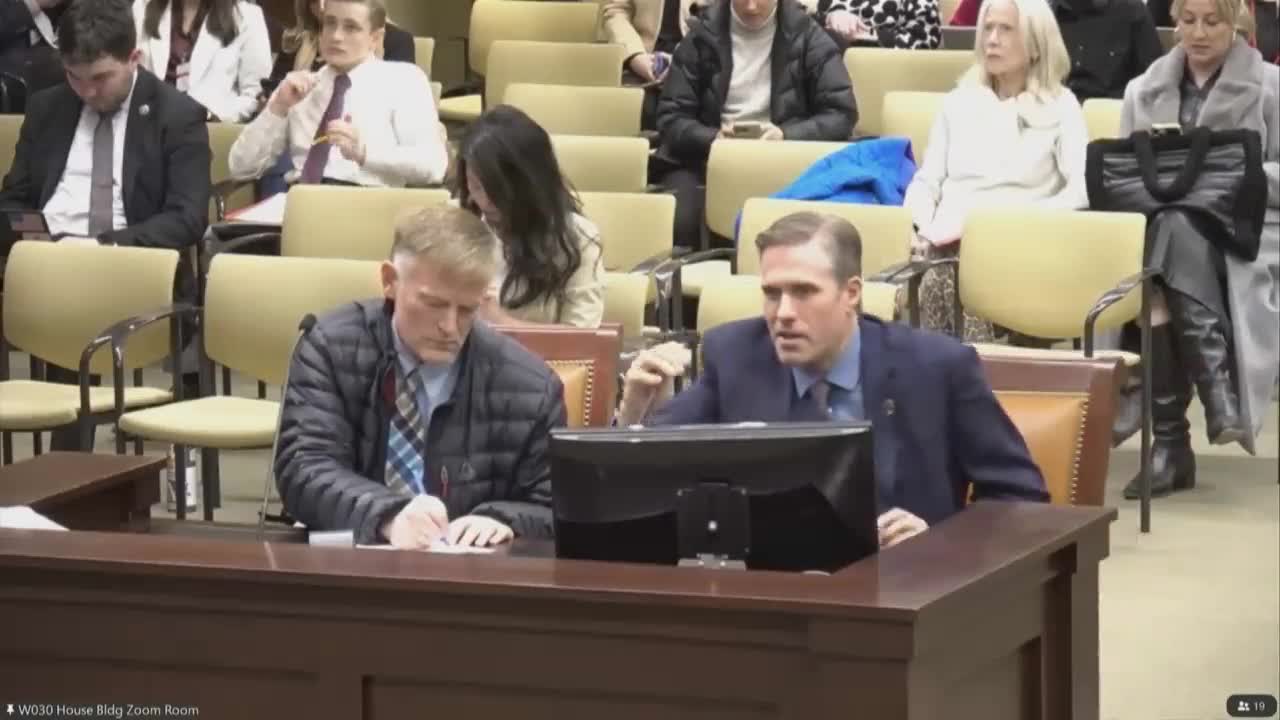
Representative Cutler presented HB 173 to the House Health and Human Services Committee, seeking to add two compounds—tianeptine and phenibut—to the state?s controlled-substances schedule. "My goal is to get these off the retail market," Cutler told the committee, saying there had been no substantive change to the bill since an October interim presentation and that medical experts recommended scheduling.
The committee heard clinical case reports from Dr. Scott Erickson, a family physician in Bountiful who said he has treated multiple patients with dependence and prolonged withdrawal from phenibut and tianeptine. Erickson described a 37-year-old patient who required repeated tapers using baclofen and gabapentin-like medications and a 22-year-old who spent a week in an intensive care unit after high‑dose phenibut use. "We were able to wean him off finally, but even after several months, he still stated ... he just did not feel right since his phenibut use," Erickson said, describing persistent post‑acute withdrawal symptoms.
Lawmakers questioned scheduling level and criminal consequences. Representative Daley Provo asked why the sponsor favored Schedule I rather than Schedule II or III, noting that higher schedules carry stiffer criminal penalties. Cutler said he relied on recommendations from clinicians and their goal to remove the products from retail shelves. Several members—including one who suggested Schedule II or III—expressed concern that a Schedule I designation could complicate long-term recovery and reentry into the community.
Members also discussed how the compounds are sold. Committee members and Dr. Erickson said the products are often obtainable at gas stations or smoke shops, in forms ranging from energy drinks to powders and tinctures, and that potency and composition are frequently unknown. Representative Chevre asked whether the two substances appear together in retail products; Cutler and Erickson said they had no evidence the drugs were combined and that availability varies by product and vendor.
Representative Elison moved to forward HB 173 with a favorable recommendation. The motion passed on a voice vote; the committee recorded no roll-call tally in the transcript.
The bill sponsor and clinicians framed the measure as a public‑health action to reduce ease of access while acknowledging unresolved questions about the precise scheduling level and downstream criminal‑justice consequences. The committee vote sends the bill to the next stage of consideration.