Get Full Government Meeting Transcripts, Videos, & Alerts Forever!
Get email alerts on the Equity Strategic Plan topic
No spam. Unsubscribe anytime.
Montgomery County schools embed anti‑racist audit into new strategic plan; officials vow clearer accountability
Summary
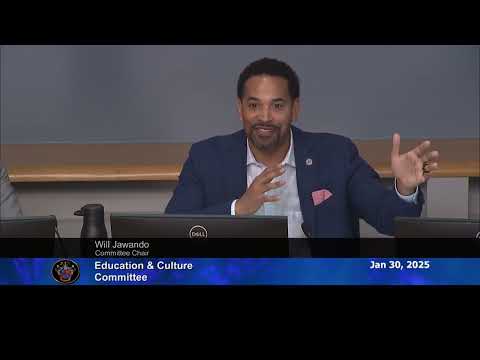
Council Vice President Giordano opened the Education and Culture Committee meeting Jan. 30 by reminding attendees that Montgomery County Public Schools (MCPS) began an anti‑racist audit in 2020 and that the council and community expect action on its findings.
Council Vice President Giordano opened the Education and Culture Committee meeting Jan. 30 by reminding attendees that Montgomery County Public Schools (MCPS) began an anti‑racist audit in 2020 and that the council and community expect action on its findings. Doug Prouty, the council’s senior budget and policy analyst, said the committee would hear how audit recommendations are being incorporated into the district’s new strategic plan and get updates on implementation progress.
Why it matters: The anti‑racist audit identified wide variation in how best practices are applied across schools. County and school officials said embedding the audit’s cross‑domain recommendations into MCPS’s strategic plan is intended to make implementation consistent rather than piecemeal.
MCPS presenters described a multi‑phase strategic‑planning process that they said is designed to translate audit findings into measurable goals and school‑level actions. Dr. Alston (role not specified in the transcript) told the committee the district used Phase 1 engagement feedback and a Phase 2 root‑cause analysis to draft goals and is now in Phase 3, developing measurable objectives. She said the board is expected to finalize the strategic plan in May.
MCPS officials highlighted new public and internal data dashboards on the MCPS website that display school‑level metrics such as graduation validation, chronic absenteeism, staffing, special education, and parent engagement. Officials said dashboards and internal monitoring tools will support data‑driven decisions and that “these dashboards have been a game changer” for staff who use them to track progress and communicate with families.
Community members and council members pressed MCPS on timeliness and transparency. Council members noted that the action‑plan tracker on MCPS’s website had received a sudden cluster of updates, and they urged regular, scheduled reporting so the public can see ongoing progress rather than sporadic updates tied to committee sessions. MCPS staff said they will adopt regular timelines and calendars for updates and align accountability structures around the strategic plan’s goals.
On training and implementation, MCPS described a significant expansion of professional learning and materials designed to support anti‑racist practice: mandatory professional learning for school‑based administrators on hate‑bias reporting, a culture‑responsive planning document for engagement, templates for inclusive communications, and multiple professional learning modules for central office staff. MCPS reported high attendance and satisfaction scores for several trainings and said 95% of leaders demonstrated growth on specified equity skills after participating.
Several council members and community advocates urged clearer metrics. They requested that MCPS report rates (percentages) alongside raw counts for outcomes such as suspensions and discipline, identify which trainings are mandatory versus optional, show who attended, and specify consequences or follow‑up when administrators fail to implement required practices.
What remains unresolved: Councilmember May said she had confirmed with Superintendent Taylor that certain equity and restorative positions would be reconfigured for next year: eight restorative justice specialists and three equity instructional specialists would be placed into new “professional learning specialist” roles to support implementation and school improvement planning. MCPS officials present described the intended role of a reconstituted equity unit (system strategy, training design, recommendations for use of equity funds) and said the new professional learning roles would support principals and schools, but they acknowledged some HR and implementation steps remain.
The district also flagged dependency on forthcoming state legislation. MCPS staff are monitoring proposed Maryland bills (House Bill 0192 and House Bill 0488) that would create state designations and reporting requirements for restorative practices; staff said they are evaluating whether district data systems and staffing align with these potential new requirements.
The committee asked MCPS to return with more detailed, scheduled reporting and clearer links between the strategic plan goals, school improvement plans and accountability measures. Doug Prouty said committee follow‑ups will continue before budget deliberations in April and in the summer.