Get Full Government Meeting Transcripts, Videos, & Alerts Forever!
Get email alerts on the Youth Sports Safety topic
No spam. Unsubscribe anytime.
Recreation staff say youth football compliance improved but gaps remain in coach background checks
Summary
Art Shepherd, recreation-division staff, reported 40 youth football teams and 164 coaches completed background checks and training in 2010; staff said county funds cover checks for two coaches per team and leagues covered additional checks, leaving the program at about 85 percent compliance versus a departmental goal of 100 percent.
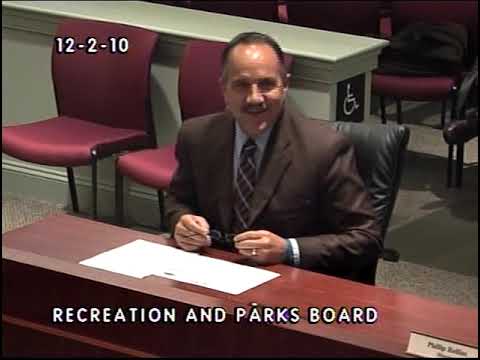
Art Shepherd, recreation-division staff, told the Recreation and Parks Board on Dec. 2 that youth football participation and coach certification improved this season but that full compliance remains a goal.
Shepherd said the county recorded 40 teams this year and conducted background checks and coach training for 164 people. "We did background checks on 164," he said, noting that county funding covers checks for two coaches per team and that some leagues paid for additional coaches to be checked. Shepherd said the total number of potential coaches (based on two per team) was 80, while the actual number checked was 164, which he characterized as roughly four coaches per team overall.
The county’s approach, Shepherd said, includes issuing badges to certified coaches so staff can identify authorized sideline personnel. "Because in football, they all coaches were certified with checks and they had badges in order to be on the sidelines," Shepherd said. He added that the recreation division posts certified-coach lists on its website so parents may confirm a coach's status.
Shepherd and other staff reported that 85 percent of teams met the adopted community standards requiring checks and training, and said the department is not satisfied with that level. "But we want a 100%. And so I'm not satisfied with 85," Shepherd said. He noted a department policy gives the county leverage: leagues not in compliance could potentially lose the ability to use public fields.
Board members and staff clarified how checks were paid for. Shepherd said county funding only covered two coaches per team; additional background checks for other coaches were paid by the clubs themselves. Staff said leagues had seen value in certifying more coaches and had absorbed the cost to expand compliance.
Officials singled out communication and funding as the two main challenges to reaching 100 percent compliance. Shepherd and others said they will continue outreach to leagues, explore additional funding or cost-sharing options, and work with clubs to increase midseason certification and adherence to standards.
The board also heard a brief recap of the football playoff and championship schedule: playoffs started Nov. 13 and championship games were played Nov. 20 at Ryken High School’s new stadium, where staff described improved field separation for spectators and a turf surface.
Staff said the department will gather club leaders on Dec. 13 to discuss 2011 operational issues including sideline behavior, weigh-ins, birth-certificate verification, roster and player-card rules, playing-time rules, playoff fees and referee/cheerleading guidelines. Shepherd described the program as a second-year league that had built a foundation but still had items to refine.
Ending: Shepherd and the board asked leagues and volunteers to continue cooperation on certification and training; staff said they will pursue clearer midseason communication and explore additional funding routes so the county can reach full compliance.