Get Full Government Meeting Transcripts, Videos, & Alerts Forever!
Get email alerts on the Gun Policy topic
No spam. Unsubscribe anytime.
Committee rejects favorable recommendation for comprehensive firearms bill SB 130 after heated public debate
Summary
SB 130, a broad firearms measure that would have banned certain gas‑operated semiautomatic rifles and high-capacity magazines, added a five‑day waiting period and criminalized some altered-serial-number firearms, failed to receive committee support and did not pass out of committee.
Senate Bill 130, a 52‑page firearms measure that proposed multiple changes — including a ban on gas‑operated semiautomatic rifles with detachable or high‑capacity magazines, criminal penalties for certain attachments and magazine possession, a five‑day waiting period for dealer sales and expanded penalties for altered serial numbers — failed to win committee approval on Jan. 31.
Sponsor Senator Blake Bluhn framed SB 130 as a prevention tool to reduce mass-shooting lethality and suicide, noting that “83% of gun deaths in Utah are people who died by suicide with a gun” and arguing that limits on high‑capacity magazines and certain attachments would reduce casualties in active‑shooter events. The bill would also require dealers to post negligent‑storage liability notices and expand penalties for restricted persons who possess ammunition.
Public testimony was sharply divided. Supporters included members of Gun Violence Prevention Center of Utah, Utah Moms Demand Action and pediatrician Dr. Jennifer Brinton, who described treating survivors and argued for a waiting period and restrictions on high‑capacity magazines and conversion devices. Opponents included the Utah Shooting Sports Council, Women For Gun Rights, Utah Legislative Watch and other gun‑rights groups who said the bill infringes the state and federal constitutional right to bear arms, risked creating registries and would not reduce violent crime; the Utah Shooting Sports Council noted states with strict gun laws that nonetheless have higher homicide rates.
Law enforcement input included support from the Salt Lake County District Attorney’s Office for adding tools to criminal statutes (for example, prohibiting altered serial numbers and restricting ammunition possession by prohibited persons). Several committee members said they were open to narrower measures or stakeholder negotiation.
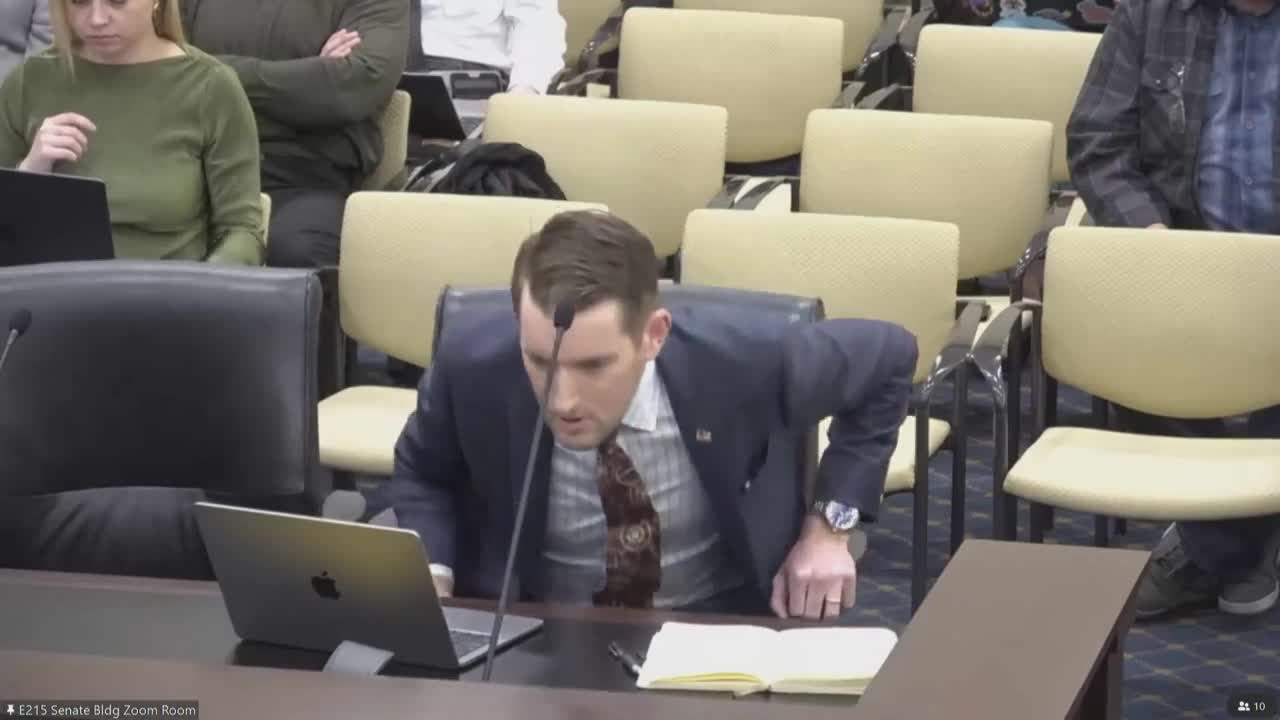
Senator Bluhn moved favorable recommendation; a roll‑call vote failed, with one ‘aye’ and several ‘no’ votes recorded during the committee roll call. The chair ruled the motion failed and the committee adjourned.
Sponsor Bluhn said he would welcome stakeholder talks on narrower packages; members urged pre‑bill stakeholder engagement before reintroducing large policy packages.