Get Full Government Meeting Transcripts, Videos, & Alerts Forever!
Get email alerts on the Waste Tires Recycling topic
No spam. Unsubscribe anytime.
Senate committee pushes plan B for rural tire disposal, favors SB 63
Summary
The Natural Resources, Agriculture and Environment Standing Committee voted to send Senate Bill 63 to the full Senate, advancing a temporary ‘plan B’ that would let small Utah counties use shredded tires as landfill cover and ease transport rules for certain counties while preserving space for private recycling solutions.
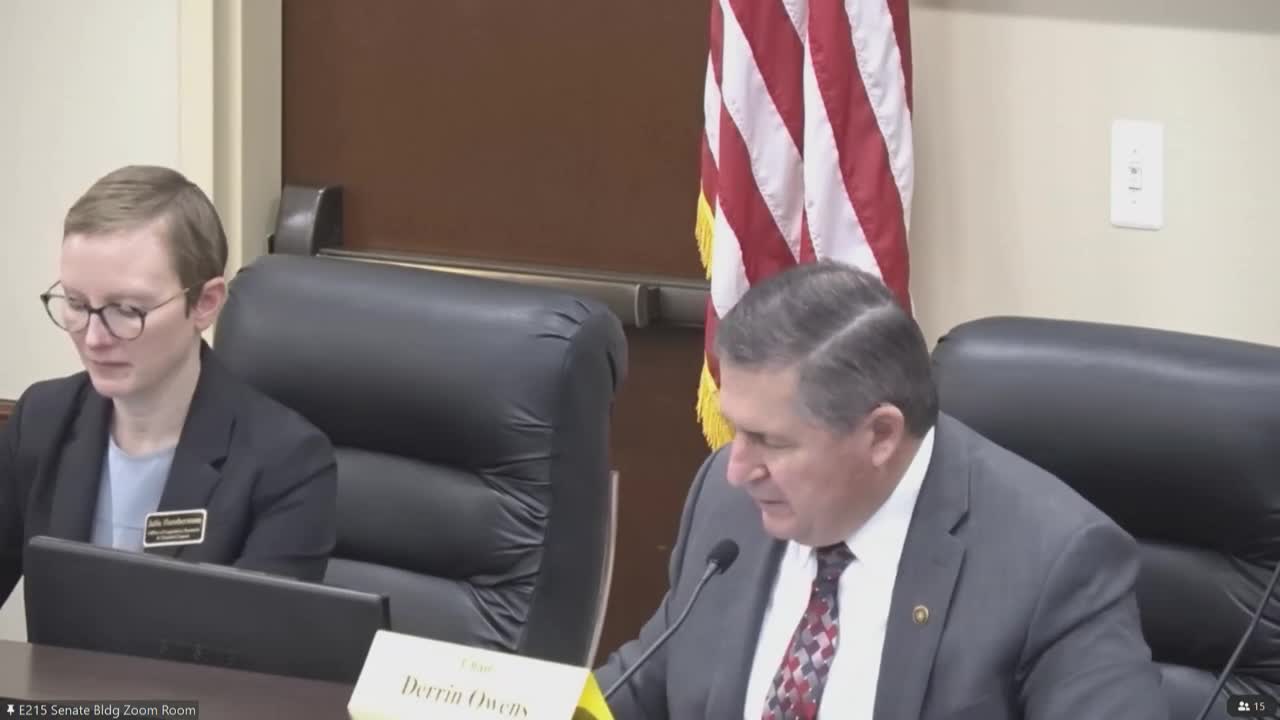
Senate sponsors and rural landfill operators told the Natural Resources, Agriculture and Environment Standing Committee on Jan. 31 that widespread piles of used tires in rural counties are not moving through the existing recycling market, and they favor a backup option to keep tires from accumulating.
The bill would let class 3–6 county landfills accept shredded tires as “beneficial use” daily cover and change the definition of tire chip size from 2 inches to as large as 8 inches. Senator Daniel Vickers, sponsor of SB 63, said the change is intended as a plan B for rural areas: “This plan B would be a solution just for 3rd through 6th class counties that would allow the landfill to utilize the shredded tires…allowing cover to be the beneficial use.”
Committee testimony described the practical problem: some rural landfills have thousands of tires stacked with no economical collection option. Bruce Anderson, director of the Iron County Landfill, said his site and neighboring counties are “not the low hanging fruit” for commercial collectors and that a local low-speed shredder could provide daily cover and improve compaction. Doug Hansen, director of Utah’s Division of Waste Management and Radiation Control, said the bill would remove a regulatory barrier by allowing landfills in specified county classes to transport tires under their landfill permits to a shredder-equipped county.
Private recyclers and end users warned the committee the amendment risks undermining existing recycling markets. Shannon Clark of Liberty Tire said the bill “would encourage the landfilling of the tires,” and that Utah’s current program is intended to keep tires out of landfills and move them into higher-value recycled products. David George of Great Salt Lake Recycling and Larry Gibbons of GeoCycle (a cement-fuel user) said they can accept and process many tires and asked for more time and coordination to expand services into rural areas. Candace Daley, lobbyist for Liberty Tire, said her company had limited notice and asked the committee to allow more stakeholder conversations.
Senator Bridal moved favorable recommendation to the full Senate; the committee approved the motion unanimously. Sponsor Vickers said he welcomes private-sector solutions and expects continued discussion as the bill advances.
If enacted, SB 63 would be an option rather than a mandate: it creates a conditional pathway for smaller counties to use shredded tires as landfill cover and to pool funds to acquire shredding equipment, while preserving private-market recycling when available.
Committee members and industry witnesses urged ongoing outreach between recyclers, counties and the Division of Waste Management to avoid unintended impacts on private recycling capacity and to clarify how waste-tire fees follow material when counties accept tires.