Get Full Government Meeting Transcripts, Videos, & Alerts Forever!
Get email alerts on the Legislation topic
No spam. Unsubscribe anytime.
Utah House advances array of bills on education, public safety, taxes and more; several measures pass unanimously
Summary
The Utah House on Jan. 31 moved a wide set of bills — from teacher data-privacy and mammography language to police due-process changes — and adopted multiple committee reports. Several bills passed by voice or recorded roll call votes; one contentious measure on punitive damages passed on a divided vote.
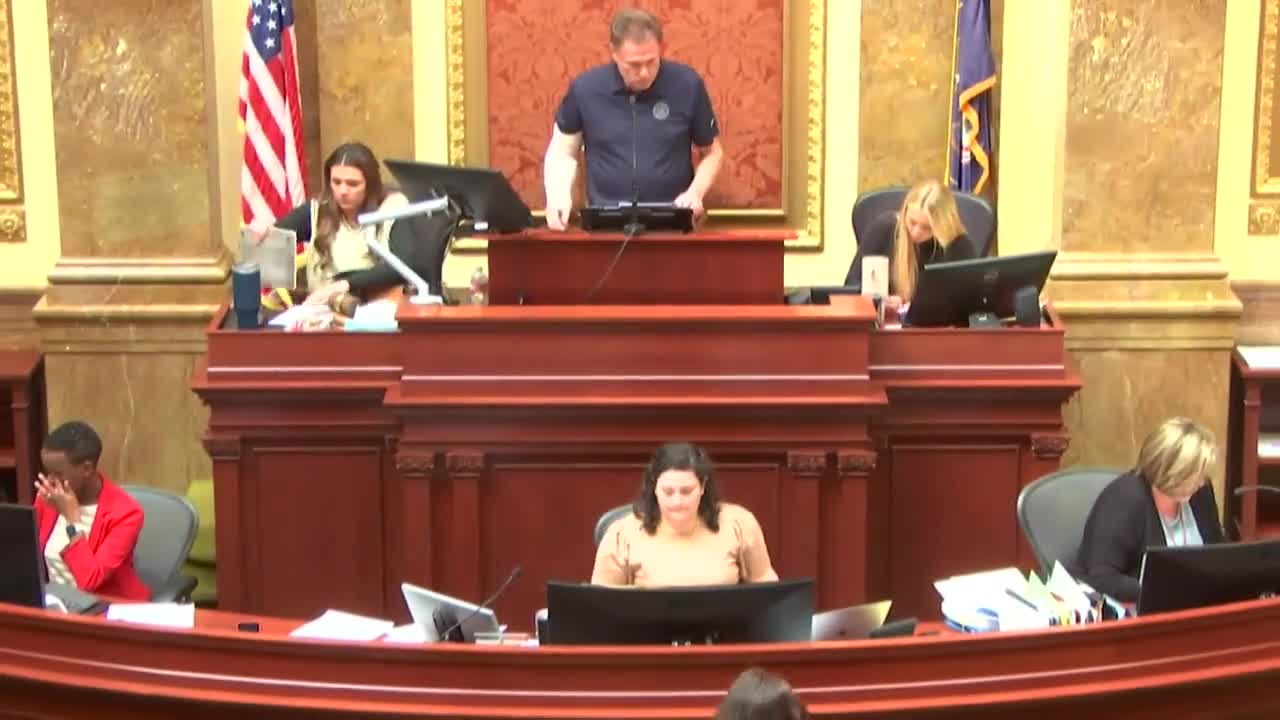
The Utah House of Representatives on Jan. 31 approved a slate of bills and committee reports covering education, health, taxation, elections and public safety, voting on measures that will now go to the Senate or be signed by the speaker.
The session combined routine committee business and ceremonial citations with a steady pace of third‑reading votes. Most bills passed with unanimous or near‑unanimous margins; one bill on punitive damages drew a divided recorded vote.
Representative Trevor Lee, sponsor of 1st substitute House Bill 124 (Education Industry Employee Privacy), told the House the measure “is trying to help as we bridge the gap in this new world of data privacy that we have relating to our teachers in public education.” Lee said the bill will bar third‑party companies from buying teachers’ email lists and protect teachers from being required to waive device privacy when using third‑party apps, adding that districts must provide devices if a teacher does not have one the district can require.
Other education items advanced with minimal debate. Representative DeFay described 1st substitute House Bill 144 as a transparency measure requiring school districts to send settlement agreements with the U.S. Department of Justice to the attorney general’s office and the State Board of Education for advisory review, without creating a new enforcement power.
Health and consumer items included House Bill 146 (mammography language), which Representative Hall said removes redundant state language now covered by the FDA; and HCR 2, a concurrent resolution allowing the Public Employees Health Program (PEHP) to adjust benefits so pharmacy rebates at point‑of‑sale can be returned to enrollees, a change Representative Thurston described as aligning PEHP policy with that intent.
On public safety and law enforcement, Representative Gwen’s HB 82 (Law Enforcement Modifications) drew extended discussion. Gwen described the bill as a due‑process measure clarifying the roles of agencies and prosecutors when an officer is identified as a potential impeachment (Brady/Giglio) witness. Under the bill prosecutors must notify officers in writing, present the evidence, and allow rebuttal; agencies cannot remove an officer from a position solely because the prosecutor has listed them as potentially impeachable. “The prosecutor has their role. They need to stay in their lane,” Gwen said, adding the bill does not limit discipline for underlying criminal misconduct.
Representative Ivory’s 1st substitute HB 66 (Ritual Abuse Amendments) creates sentencing enhancements and training provisions for prosecutors and law enforcement on ritual abuse of children; Ivory said the bill grew from constituent reports of “absolutely horrific” abuse. Representative Watkins’ HB 33 (Child Welfare Reporting Amendments) aims to reduce repeated, anonymous reports that DCFS investigators said were being used vindictively; the bill would remove anonymity for those filings and allow referral for criminal charges when reports are knowingly false.
A change to punitive‑damages distribution, HB 154, prompted the clearest division. Representative Stoddard said the bill would stop the current practice of splitting punitive awards above $50,000 with the state and instead allow the plaintiff to retain the full award. The House passed the bill 43‑29.
Several senate bills on the House calendar passed and will be returned to the Senate or signed by the speaker for transmittal, including 1st substitute SB 17 (services for Department of Defense civilian employees) and 1st substitute SB 18 (election fundraising amendments, with a substitute limiting contributions from registered state lobbyists to federal campaigns during the legislature’s session).
The House also approved routine committee reports placing bills on third‑reading calendars, and approved motions to authorize the speaker to sign citations honoring Dr. Michael Good and the Salt Lake County Sheriff’s Office.
Votes at a glance
- 1st substitute, HB 124, Education Industry Employee Privacy — Sponsor: Representative Trevor Lee. Vote: 69 yeas, 1 nay. Outcome: passed; transmitted to Senate.
- 1st substitute, HB 144, School District Contracting Amendments — Sponsor: Representative DeFay. Vote: 72 yeas, 0 nays. Outcome: passed; transmitted to Senate.
- HB 146, Mammography Amendments — Sponsor: Representative Hall. Vote: 72 yeas, 0 nays. Outcome: passed; transmitted to Senate.
- HCR 2, Concurrent resolution directing PEHP regarding pharmaceutical rebates — Sponsor: Representative Thurston. Vote: 71 yeas, 0 nays. Outcome: passed; transmitted to Senate.
- 1st substitute, SB 17, Services for Department of Defense Civilian Employees — House sponsor: Representative Val Peterson. Vote: 73 yeas, 0 nays. Outcome: passed; returned to Senate for signature.
- 1st substitute, SB 18, Election Fundraising Amendments (with substitute limiting contributions from registered state lobbyists during session) — House sponsor: Representative Bolander. Vote: 70 yeas, 0 nays. Outcome: passed; returned to Senate.
- SB 13, Property Tax Reimbursement Amendments — House sponsor: Representative Joseph Eliason. Vote: 71 yeas, 0 nays. Outcome: passed; returned to Senate.
- HB 17, Limitations on Use of Polygraphs — Sponsor: Representative Romero. Vote: 70 yeas, 0 nays. Outcome: passed; transmitted to Senate.
- HB 33, Child Welfare Reporting Amendments — Sponsor: Representative Watkins. Vote: 74 yeas, 0 nays. Outcome: passed; transmitted to Senate.
- HB 154, Punitive Damages Amendments — Sponsor: Representative Stoddard. Vote: 43 yeas, 29 nays. Outcome: passed; transmitted to Senate.
- 1st substitute, HB 66, Ritual Abuse Amendments — Sponsor: Representative Ivory. Vote: 73 yeas, 0 nays. Outcome: passed; transmitted to Senate.
- HB 82, Law Enforcement Modifications — Sponsor: Representative Gwen. Vote: 72 yeas, 0 nays. Outcome: passed; transmitted to Senate.
Other actions and procedural items included the adoption of committee reports (Government Operations; Political Subdivisions; Public Utilities & Energy; Revenue & Taxation; Rules) and several bills being placed on the 3rd‑reading calendars or placed on the consent calendar as noted by committee chairs.
Why it matters
The bills advance changes affecting day‑to‑day state operations (school transparency and teacher privacy), consumer protections (mammography notices, pharmacy rebates), and criminal‑justice processes (police witness impeachment rules, sentencing enhancements for ritual abuse allegations and limits on polygraph use for assault victims). The punitive‑damages change alters the distribution of awards in civil litigation and passed on a split vote, signaling substantive disagreement on civil‑litigation policy.
What’s next
Measures that passed the House will proceed to the Senate for further consideration or signature as recorded. Several items were circled for later action or assigned to committee for amendment.