
Early‑intervention providers, parents ask appropriators to fund Baby Watch with $1.5 million ongoing
Get AI-powered insights, summaries, and transcripts
Sign Up Free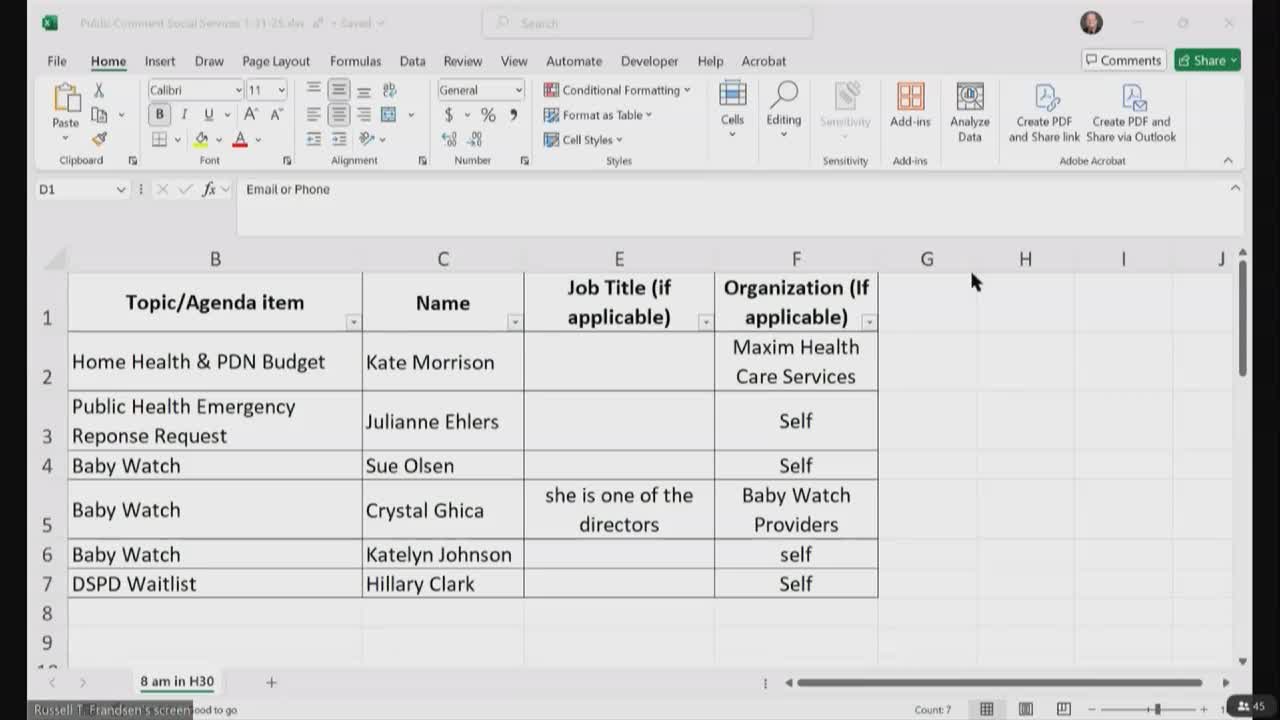
Summary
Direct service providers, program directors and parents told the Social Services Appropriations Subcommittee that Utah’s Baby Watch early intervention system faces turnover, rising costs and service caps; they asked for $1.5 million ongoing to maintain current visit rates and staffing.
Multiple Baby Watch representatives and parents told the Social Services Appropriations Subcommittee that Utah’s Early Intervention (Part C) programs are under strain from flat visit‑rates and staff turnover, and asked lawmakers to approve a $1.5 million ongoing building block request.
Sue Olson, who said she has worked in early intervention for more than 30 years and previously served at the Utah Department of Health, said local Part C programs are funded at an average of 1.7 visits per child per month and that visit‑rates and contract funding have not increased since 2017. Olson said frontier visit rates are $209, rural $180 and urban $168 per visit, and that most visits run 60 to 90 minutes. She told the committee that programs have experienced high turnover — programs reported as much as 64% turnover in one year — and that the proposed $1.5 million would preserve current services but would not finance growth beyond current capacity.
Crystal Gika, director of an early intervention program serving Washington and San Juan counties, described recruitment challenges in rural areas and said program revenues were squeezed when Medicaid changes shifted costs to state funding. She said her program lost multiple experienced staff to school districts and hospitals and that travel times to serve rural families can be hours long.
Parent testimony added a personal dimension. Caitlin Johnson, a parent and early childhood special education professional, described delays in receiving concurrent therapies for her daughter and said early intervention helped her child meet milestones that otherwise seemed out of reach. Johnson said she had to choose between a higher‑paying school district job and lower‑paid early intervention work and noted the substantial pay differential between the two sectors.
Speakers asked the committee to approve the Department of Health and Human Services’ $1.5 million ongoing Baby Watch building block to preserve current service levels across Utah’s 14 local Part C providers.
Committee action: staff and members acknowledged the presentation; the request was entered into the record as agenda materials. Committee discussion included follow‑up questions on service coverage and rural travel demands. No appropriation vote on the $1.5 million request occurred at this hearing.
Why it matters: Part C early‑intervention services are federally required to serve eligible infants and toddlers and their families in natural environments. Providers told the committee that without the requested state funds, local programs may be unable to maintain current visit‑rates or staffing, which advocates said could reduce early developmental gains for children served by the program.
Source and next steps: The Department’s budget documents and the Baby Watch presenters’ one‑pagers were made part of the committee packet. The request will be considered in the subcommittee’s budget negotiations later in the session.