Get Full Government Meeting Transcripts, Videos, & Alerts Forever!
Get email alerts on the Strategic Priorities topic
No spam. Unsubscribe anytime.
Lake Oswego council narrows annual priorities; staff to return with work plans
Summary
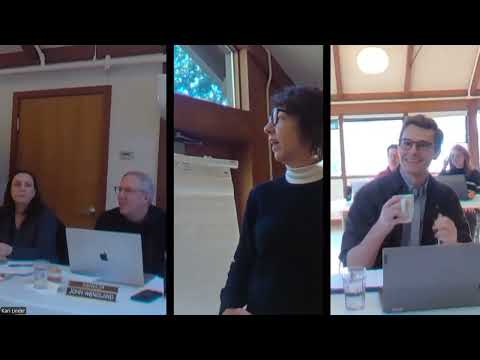
During a council goal‑setting workshop, the Lake Oswego City Council narrowed a longer list of strategic items down to a set of top priorities and directed staff to prepare implementation work plans and budget implications for council review.
During a council goal‑setting workshop, the Lake Oswego City Council narrowed a longer list of strategic items down to a set of top priorities and directed staff to prepare implementation work plans and budget implications for council review.
Councilors agreed to keep the city’s broad mission and values in place and to focus the coming year on a shorter list of major initiatives. Staff said it commonly expects to advance between 15 and 20 major initiatives in a year; councilors’ scores and discussion produced a group of roughly 15 highest‑priority items that staff will return with written work plans and estimated costs for the March agenda cycle.
Why it matters: The goal‑setting outcomes will shape the city’s capital and operating budget requests, public engagement efforts and staffing priorities. Several items the council discussed carry regulatory dependencies (state housing rules, Metro grant timing) or require outside funding (urban renewal, grants) that will affect how quickly initiatives can move from concept to implementation.
What the council prioritized: While conversation touched many city programs, councilors’ aggregated scores and the facilitator’s summary showed consensus support for (not ranked here) a group of initiatives that repeatedly appeared at the top of members’ lists: 50‑plus/senior resilience programming and outreach, an update to the economic development strategy and evaluation of the Chamber pilot, parks and recreational planning (including aquatic/park projects), continued work on the Foothills plan and related urban‑renewal considerations, a coordinated marketing/branding initiative to support local businesses and visitor activity, a sustainable buildings policy for city projects, wastewater planning work, a communications and community‑engagement strategy, emergency preparedness (including wildfire readiness) and an urban/community forestry effort to protect and expand tree canopy. Councilors also repeatedly placed housing‑production follow‑up (implementation of the housing production strategy), development code streamlining and Foothills planning high on their lists.
Key debates and clarifications - Equity and inclusion goal language: Councilors discussed alternative wording for a strategic goal tied to diversity and civic agency — options ranged from a goal that emphasizes attracting a more diverse population to language focused on increasing civic agency and access to city services. Several councilors said they preferred more measurable, action‑oriented language rather than entirely aspirational phrasing. Staff noted some recommended language came from the Youth Leadership Council and the city’s DEI advisory work.
- Climate and sustainability wording and scope: Council members debated whether the climate goal should retain the phrase “combat climate change” or be reframed to “foster and support sustainability practices” and community resilience. Some members said the phrase “combat” signals urgency and seriousness; others said the city’s practical levers fit better with supporting sustainability actions and adaptation. Related initiatives discussed included a sustainable‑buildings policy for city facilities, a residential home‑energy score pilot, and a phased plan to address gas‑powered lawn equipment (leaf‑blowers), with repeated questions about likely enforcement approaches and public communication.
- Marketing and economic development: Councilors discussed whether a marketing initiative should focus inward (improving residents’ awareness of city services and civic engagement) or outward (attracting visitors to shop and dine). Several councilors urged a coordinated brand and marketing approach tied to business partners (Chamber, arts organizations) while stressing the need for clear policy direction and staffing capacity to implement any coordinated campaign.
- Emergency preparedness and disaster recovery: Council members asked staff to describe readiness for wildfire, flood and other large‑scale events and to develop “build‑back” and business‑continuity playbooks so recovery would not be stalled by permitting or resource bottlenecks. Staff said the city already has many emergency plans and mutual‑aid relationships but recommended clarifying code options and permitting streamlines that could help recovery after a major regional event.
- Housing production, Foothills plan and long‑range planning workload: Councilors emphasized the Foothills plan and the housing production strategy as significant near‑term priorities. Staff noted the city holds a Metro grant to support Foothills planning and that code‑streamlining and rezoning work are interdependent; staff signaled the work will be phased and that additional consultant funding (grant applications) may be sought to accelerate public engagement and analysis.
- Code enforcement and city services: Several councilors pressed staff to clarify whether the city should remain primarily complaint‑driven for sidewalk, street‑tree and right‑of‑way issues or move to more proactive enforcement. Staff said the current practice reflected prior council direction and that more proactive enforcement would require additional staffing or reallocation of resources.
What council directed staff to do - Staff was asked to return with written work plans, budget implications and a timeline for the top‑ranked initiatives for a March council agenda. Those work plans should include proposed staffing or contract needs and public‑engagement steps. - For climate/sustainability items flagged for possible policy change — including a sustainable buildings policy and a public discussion about phasing out gas‑powered landscape equipment — staff was asked to outline enforcement options and communication approaches before bringing a formal proposal. - For disaster‑recovery readiness, staff was asked to assemble a short set of code or process options (permitting triage, temporary business continuity measures) the council could adopt quickly in an emergency.
Next steps and schedule: Staff will prepare prioritized work plans and fiscal estimates and return to the council in the March agenda cycle for direction on scope and budget requests. The council will then use that information in its budget deliberations and follow‑up meetings.
Ending: Councilors and staff emphasized the plan is iterative — items that are not prioritized this year can return in future cycles. The city’s leadership said the goal‑setting exercise is intended to give staff a clearer steer for what to bring forward during the next budget and work‑plan cycle.