Get Full Government Meeting Transcripts, Videos, & Alerts Forever!
Get email alerts on the Strategic Plan Midyear Update topic
No spam. Unsubscribe anytime.
Chappaqua district presents midyear strategic update with 19 priority recommendations
Summary
District leadership reviewed midyear progress on a five-year strategic plan, outlining 19 recommendations including a K–4 world language launch, a Bell-based middle-school temporary support program (TSP) pilot, sustainability/energy contract RFP and further work on student belonging, IB exploration and nonresident tuition options.
Chappaqua Central School District administrators presented a midyear progress report Jan. 28 outlining 19 concrete recommendations tied to the district's five‑year strategic plan.
The update summarized work from three cross‑functional teams—strategic fellows, district equity team (DET) and literacy fellows—that have met monthly and included faculty, administrators and parent members. Administrators said the groups have run focus groups, done site visits and begun vendor outreach to develop proposals and pilots for next school year.
District leaders said the recommendations are intended to address curriculum, student belonging and long‑term revenue and capital strategies. The list of priorities includes launching a K–4 world language program in September 2025, piloting a temporary support program (TSP) for middle school students at Bell next year, studying an RFP for a sustainability and energy performance contract, designing middle‑level extracurricular programming at Horace Greeley, and exploring options to generate private revenue (including a staff position to solicit donor support) and nonresident tuition models for out‑of‑district enrollments.
Administrators said the strategic fellows are also studying expanded IB (International Baccalaureate) options and whether IB frameworks for primary and middle years (K–10) could align with district curriculum. Andrew (staff) described IB’s structure and said the district is in an information‑gathering phase; the career program will run at the high school next year while consideration of primary‑years and middle‑years frameworks would require conferences, school visits and at least a year of preparation if the district moved to candidacy.
On facilities and capital work, the district proposed creating an RFP for a sustainability/energy performance contract and revisiting solar feasibility in light of recent technology and market changes. Administrators said past solar proposals were hindered by packaging decisions that required extensive land use; they will reexamine feasibility with updated vendor proposals.
Several items addressed middle‑level student experience and scheduling. The district plans to analyze Horace Greeley student feedback and develop plans to increase elective access and reduce scheduling pressures for students taking advanced courses. Recommendations also include continuing the transportation task force to study electric busing, contracting a scheduling consultant to model potential schedule changes, and merging student belonging work across the strategic and DET groups to avoid duplication.
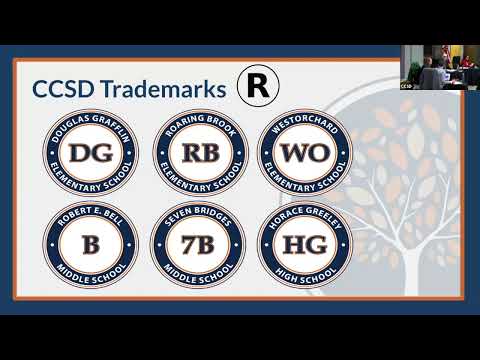
Board members asked for more detail on specific proposals—particularly Mandarin instruction at the middle level, the timing for world language rollout and how fundraising would be structured. Administrators said policy and operational work remains; the policy committee will develop recommended language for items such as trademark use and potential nonresident tuition. A summer work plan was proposed: continue the 19 initiatives now and, if desired, launch a focused subgroup over the summer to revisit the Princeton plan (district reorganization) if the board wants deeper study.
The board scheduled follow‑up presentations: a Horace Greeley presentation Feb. 12 and the superintendent’s budget proposal March 5.
Ending: Administrators characterized the update as a planning snapshot: many items target September 2026 implementation windows while others are intended as pilots or planning steps in 2025.