Get Full Government Meeting Transcripts, Videos, & Alerts Forever!
Get email alerts on the Federal Funding topic
No spam. Unsubscribe anytime.
District officials outline federal grants that fund 4% of Grayslake CCSD 46 budget amid evolving federal pause
Summary
Superintendent Dr. Glickman and district finance staff briefed the board that federal grants represent about 4% (roughly $2.5 million) of the district budget and that a White House executive order to pause some grants is being litigated and remains fluid.
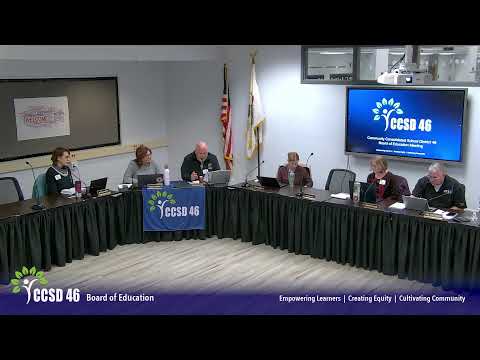
Superintendent Dr. Glickman and district finance staff briefed the Grayslake CCSD 46 Board of Education on Jan. 29 about the district’s federal funding sources after an executive order briefly raised the prospect of a pause in federal grant disbursements.
“We know that the two largest areas of our funding are real estate taxes and state aid. But we do receive 4% of our budget through federal aid; it's about $2,500,000 in total,” Finance Director Chris Wildman told the board, listing the National School Lunch Program, IDEA special education funding, E‑Rate discounts for telecommunications, Title grants and Medicaid billing as the largest federal streams.
Why it matters: many federal grants are restricted and tied to specific student services — for example, lunch reimbursements, special education (IDEA), Title grants for pupil supports and E‑Rate for internet and telecommunications. The district said the grants primarily fund student programming, summer school, targeted staff development, and services billed through Medicaid.
The administration said a White House order directing federal agencies to pause some grants took effect Jan. 28, but the action is being challenged in court. “Lawsuits have been filed,” Wildman said. He described the situation as “evolving” and said federal judges temporarily blocked the order; district staff are monitoring developments and agency guidance.
District staff outlined what would happen operationally if federal funding were disrupted: they would monitor disbursements and assess program impacts for the current and next fiscal year, and report back to the board. Dr. Glickman said the district received updated guidance that, at the time of the meeting, federal funding had not been frozen, but that staff would continue monitoring.
Board members discussed advocacy to state and federal representatives. Board member Krista Braden and others encouraged using established networks to press for full funding of mandates such as IDEA; a board member noted IDEA has historically been funded well below the federal commitment.
Administrators also explained the E‑Rate process: the federal Universal Service Administrative Company (USAC) administers discounts, which flow through state systems and the Illinois Controller’s Office; ISBE (Illinois State Board of Education) publishes grant disbursements for districts.
No board action was taken on federal funding at the meeting; staff committed to regular updates as the legal and administrative situation evolves.