Get Full Government Meeting Transcripts, Videos, & Alerts Forever!
Get email alerts on the Housing Development topic
No spam. Unsubscribe anytime.
Puyallup council approves development deal to turn Cornforth–Campbell site into market hall, apartments
Summary
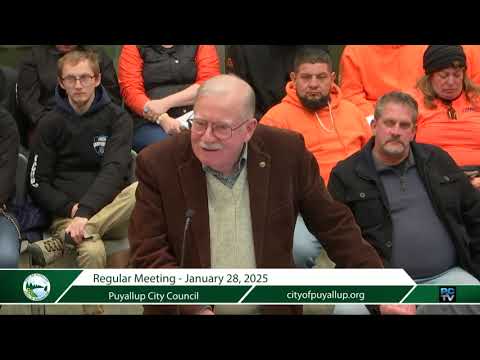
Puyallup City Council approved agreements on Jan. 28 to move the Cornforth–Campbell downtown site toward a multi-phase development led by Palindrome Development that will adaptively reuse the existing building as a market hall and add a 115-unit apartment building, seven for-sale townhomes and a public plaza.
Puyallup City Council approved agreements on Jan. 28 to move the Cornforth–Campbell downtown site toward a multi-phase development led by Palindrome Development that will adaptively reuse the existing building as a market hall and add a 115-unit apartment building, seven for-sale townhomes and a public plaza.
Why it matters: The site has been city-owned since 2002 and was identified in prior downtown planning as a catalyst for revitalization. The Palindrome deal is intended to activate Meeker Festival Street, expand retail and event space in downtown Puyallup and add housing that the city says will support local businesses and increase tax revenues.
The city manager, Steve Kirkley, reminded the council of the site’s history, environmental cleanup and downtown planning work that singled out the Cornforth–Campbell parcels as a priority. Palindrome’s president, Robert Gibson, described the proposal as three linked components: an adaptive-reuse market hall and public plaza; a mixed-use building with roughly 115 rental units (a mix of one- and two-bedrooms); and a row of townhomes along Second Avenue. Gibson said Palindrome expects 20 percent of the rental units to be affordable at 80 percent of area median income (AMI) and that two of the townhomes will have an affordability covenant.
Palindrome’s proposal would: reuse a portion of the existing building for a market hall with micro-retail restaurant pods and a taproom; deliver roughly 115 rental units (about 1–2 bedrooms, Gibson said); offer seven or more townhomes for sale (two subject to affordability covenants); provide rooftop solar and live-work units that front Main Street; and build and maintain a public plaza and public restroom for city events. The plan calls for approximately 20 public parking spaces on the site to be available weekdays 9 a.m.–5 p.m. and for Palindrome to provide equipment storage for Meeker Festival Street events.
City staff and Palindrome presented a schedule and conditions in the development agreement: design review and permitting in 2025; target market-hall groundbreaking in mid‑2026; staged construction through 2028; and an expected property closing in February 2026. Staff told the council the Department of Ecology issued a “no further action” letter in 2024 for petroleum contamination monitoring (a remaining monitoring obligation is referenced in the agreement).
Labor, parking and community benefits drew the most public comment. Multiple representatives of the Western States Regional Council of Carpenters and Laborers Local 242 urged the council to require enforceable labor provisions (for example, state-registered apprenticeship utilization and timely wage guarantees, citing House Bill 1206). Speakers described payroll delays on a prior Palindrome project in Portland and asked the city to add worker protections, contractor vetting and apprenticeship goals to the development agreement before approving the sale.
Local small‑business owners, building managers and downtown residents emphasized parking and access concerns. Several speakers said the Cornforth–Campbell site currently supports daily customer and employee parking and warned loss of those spaces could harm downtown businesses. City presentations cited the 2021 and 2024 downtown parking studies and staff noted a broader parking strategy that includes wayfinding, updated business permit parking, shared‑parking arrangements and use of nearby lots (including a Hill lot, city‑owned lots and Sound Transit parking) to manage demand. Meredith Neal, the city’s development permitting services director, reviewed those studies and the plan to keep some downtown lots available for business permits on weekdays and for public use on evenings and weekends.
Developers’ and supporters’ remarks stressed economic impact and activation. Staff estimated the project could generate about $1.3 million in annual spending for Puyallup businesses and about 175 construction jobs over the multi‑phase build-out; Palindrome and its consultants said the proposal would help activate the festival street and add ongoing retail and property‑management jobs.
Council action and conditions: The council approved a resolution to authorize the development agreement and later approved a separate motion to execute the purchase-and-sale agreement to transfer the property to Palindrome for a nominal sale price. The development agreement ties required project components (market hall, mixed‑use building, townhomes), minimum affordable unit counts (at least 20 percent at 80% AMI), public plaza improvements and public restroom access to enforceable milestones and contains remedies if the developer fails to perform (including termination rights and a city repurchase formula keyed to the sale value). The agreement allows some departures from code (for example, using construction of and in‑lieu credit for the public plaza instead of park impact fees and limited landscape/parking‑stall sizing flexibilities) and requires additional easements, license agreements and an affordability covenant for the for‑sale townhomes.
Council and next steps: The council voted to authorize the development agreement and separately to approve the purchase-and-sale agreement; each vote had a single recorded dissent in the meeting’s spoken record. If the project proceeds, the city and Palindrome will complete design review, permit approvals, right‑of‑way vacation and buy‑sell closing steps specified in the agreement before construction begins. Staff and the developer said they will continue to work with labor representatives, business groups and neighborhood stakeholders on contractor vetting, local bidding outreach and parking/access details.
The city manager said the project is intended to help meet the city’s long‑term growth targets and to provide amenities tied to the Meeker Festival Street activation. The development agreement and purchase-and-sale are public documents; staff and the city attorney remain available to answer detailed questions on specific contract language and performance remedies.
Ending note: Residents and organized labor signaled they will continue pressing for binding labor protections and local hiring opportunities as the project proceeds through permitting and design review. City staff said public hearings and further council deliberations will occur on fill‑in code elements, easements and any zone or street‑vacation steps required to implement the site plan.