Get Full Government Meeting Transcripts, Videos, & Alerts Forever!
Get email alerts on the Human Service Zones topic
No spam. Unsubscribe anytime.
Human service zones report staffing wins, budget shifts and continuing local capacity concerns
Summary
Zone leaders told the House committee that human service zones have begun stabilizing staffing after earlier turnover, that indirect costs were reclassified to direct spending, and that zones are pursuing Medicaid billing options and collaborations with corrections to help people apply for benefits before release.
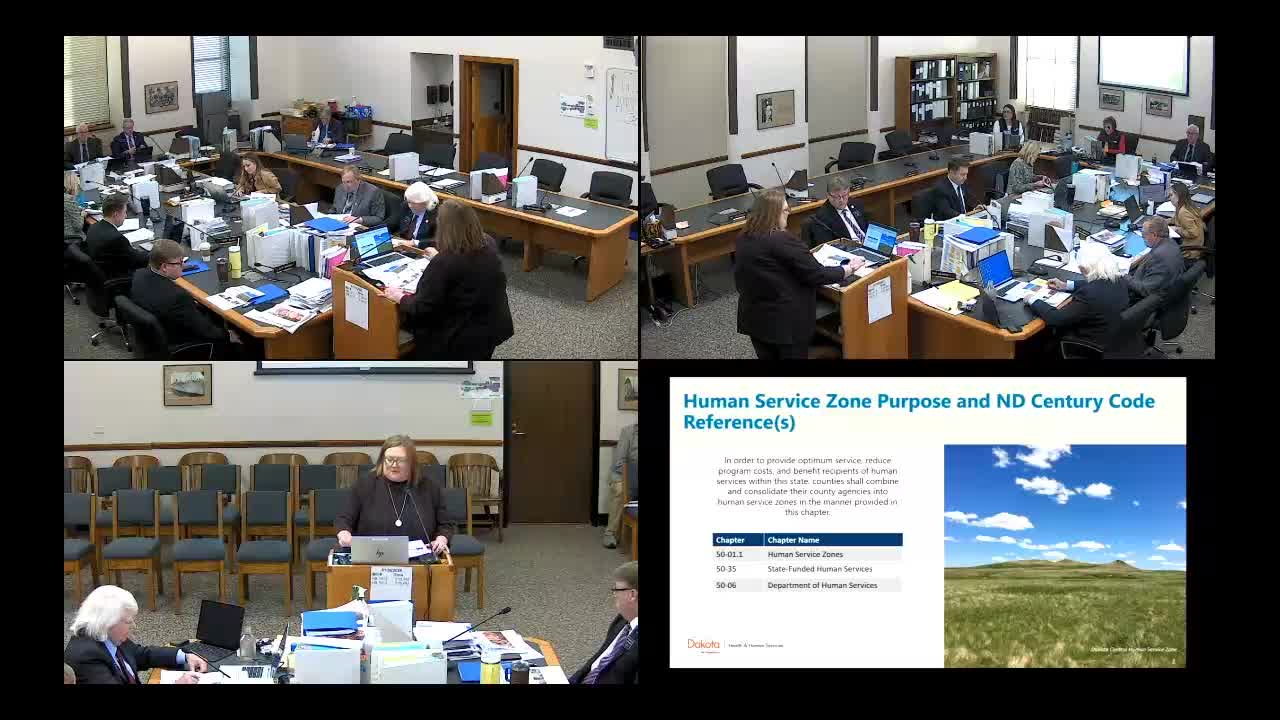
BISMARCK — Human service zone operations drew sustained attention from the House Appropriations Human Services Division on Thursday as zone leaders sketched a complex transition from county‑based delivery to multi‑county, host‑county structures and described recent budget and staffing changes.
Kristen Haspargen, director of Zone Operations at HHS, walked the committee through the zone model and the department’s role in supervision, fiscal support and standards of administration. She said zones continue to collaborate on training, on‑call scheduling and onboarding and that several state policy changes passed last session addressed indirect cost allocation and final disposition (burial) rules.
Key points: staffing, budgets, and collaboration
- Turnover and stabilization: Haspargen cited earlier high turnover in some programs; she pointed to Cass County as a successful stabilization example. Cass County reportedly cut a backlog by more than 86% after an August 2023 surge by supporting zones and deploying staff across 10 zones to clear cases. Turnover rates across programs have fallen in several zones since 2022, she said.
- Indirect costs and the 457 human‑service fund: Zones are operating under a property‑tax‑relief fund (often called the 457 fund). Haspargen noted several items moved from indirect cost pools into direct operating lines (telephones, IT maintenance, vehicle maintenance, liability insurance), which changed how zone budgets appear and contributed to year‑to‑year increases in direct operating expenses.
- New revenue streams: HHS said zones are pursuing Medicaid and other billing options: 14 zones are Qualified Service Providers (QSPs), 12 zones bill for targeted case management, and several are starting non‑emergent medical transport billing for Medicaid. HHS also reported improved estate recovery collections tied to final‑disposition payments.
- Corrections collaboration: HHS described pilot work in which zone eligibility workers visit correctional facilities to help people apply for SNAP/Medicaid before discharge; Buffalo Bridges and Burley zone pilots were cited and zones plan to expand that practice.
Budget totals and next steps
Haspargen presented the consolidated human‑service fund numbers (zones plus department‑delivered human‑service staff). The total proposed fund for the next biennium was shown at roughly $240.5 million; Haspargen said the figure includes zone budgets plus HHS‑administered services such as HCBS case managers, childcare licensing and QA teams. Committee fiscal staff said they would supply a more detailed federal/state funding breakdown on request.
Quote
Haspargen summarized the zone work: “Zones have met their federal face‑to‑face, in‑person caseworker visitation. Zones met that goal by 96%, and the federal standard is at 95.”
Ending
Committee members asked for additional fiscal detail, a clearer breakdown of federal versus state funding for major contract lines, and follow‑up on workforce analytics. Haspargen and fiscal staff said they will provide requested breakdowns and continue convening zone directors on recruitment and HR data sharing.