Get Full Government Meeting Transcripts, Videos, & Alerts Forever!
Get email alerts on the Water Billing Apartments topic
No spam. Unsubscribe anytime.
Council members press for stronger tools as apartment owners fall behind on water bills
Summary
Residents and council members told the committee that some apartment complexes collect tenants’ payments then fail to pay the water utility; the director of Water and Sewer said state law prevents the city from placing utility liens on buildings and staff are exploring AMI meters and other remedies.
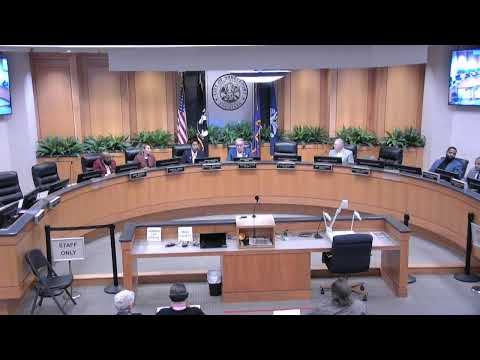
Residents and council members told the Public Safety Committee that unpaid water bills by apartment complexes are harming tenants and shifting costs and service disruptions onto residents.
William Daniel, director of Water and Sewer, told the committee state law prevents the department from placing a utility lien on buildings, a limit that officials say allows some apartment owners to avoid paying accumulated water bills while residents continue to suffer service problems.
Council members and staff discussed several possible responses — shorter collection windows, tougher cut‑off policies against nonpaying complexes, installation of AMI water meters at the unit level, and legal remedies such as rent‑in‑escrow or other tenant protections — but officials said state law constrains some options.
“My name is William Daniel, director of water and sewer. One of the biggest issues with these apartments not paying their bills is we can't put a lien on the buildings... We cannot put a utility lien on a property,” Daniel told the committee. He said the department can collect some money but that letting complexes go several months behind lets balances grow into “hundreds of thousands of dollars.”
Residents and council members described scenarios in which tenants pay rent (including money intended for utilities) to property managers who then fail to pay the utility account. City Attorney Edwards said there are legal mechanisms tenants can use — commonly called a rent strike or rent paid into a repository — that can preserve tenants’ legal standing while issues are resolved, but that the process requires steps and legal guidance.
Councilman Green and others urged more aggressive enforcement of collection under existing ordinances and asked staff and the administration to explore state‑level fixes or statutory changes that would allow the city to place utility liens or otherwise hold owners accountable. Daniel and other staff said some complexes made larger payments after enforcement pressure, but the state restriction on utility liens and the complexity of large past balances limit immediate remedies.
The committee also discussed technology options. Daniel said the city is installing AMI (advanced metering infrastructure) and is considering whether individual apartment unit meters could be used to allocate responsibility and reduce the problem in future buildings; retrofitting older apartment complexes would be difficult.
Committee members asked administration staff to continue research into other jurisdictions’ approaches and to draft possible legal and operational changes for further consideration. No ordinance change was adopted at the meeting.