Get Full Government Meeting Transcripts, Videos, & Alerts Forever!
Get email alerts on the Eminent Domain Porespace topic
No spam. Unsubscribe anytime.
Bill to bar eminent domain for CO2 storage, repeal pore‑space amalgamation draws split testimony
Summary
House Bill 1414 would block eminent domain for CO2 infrastructure and repeal pore‑space amalgamation language; supporters argued the bill protects landowners, while industry witnesses said it would undermine investment and CO2 markets.
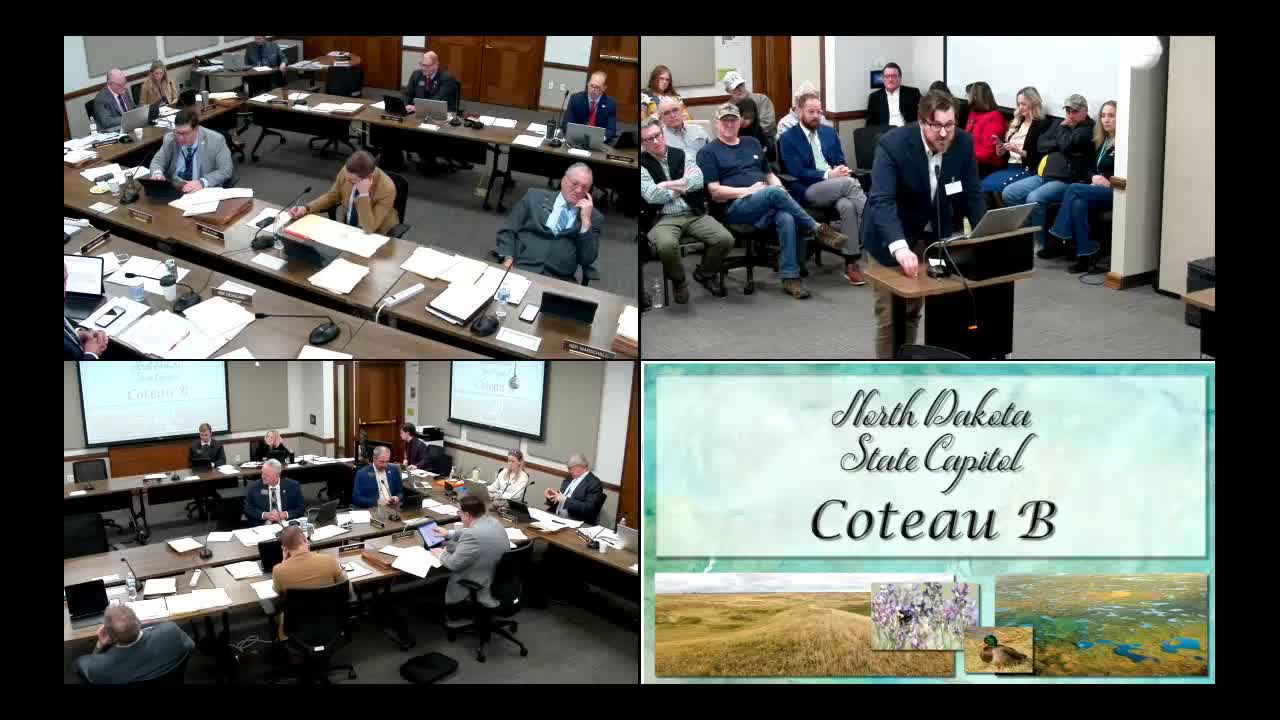
House Bill 1414 — which would remove certain public‑domain and eminent‑domain powers for geological CO2 storage and repeal pore‑space amalgamation rules — was the subject of a multi‑hour hearing before the House Energy and Natural Resources Committee.
Representative Matt Heilman introduced the bill and said it would stop use of eminent domain for projects described in the bill and remove CO2 pipelines from common‑carrier status. "This law change will preempt threats of eminent domain when industry representatives meet with their property owners," Sen. Jeff Magram said in support, arguing it would reduce landowner "fatigue" and allegedly coercive tactics during negotiations.
Supporters — mainly landowners and local officials — described aggressive land‑agent tactics and said property owners felt compelled to sign easements under threat of eminent domain. Several witnesses cited a South Dakota Supreme Court ruling that found Summit Carbon Solutions had not shown it was a common carrier in that state.
Opponents included Summit Carbon Solutions, ethanol producers, the North Dakota Petroleum Council, the Greater North Dakota Chamber and the Lignite Energy Council. Summit's Charlie Adams told the committee HB 1414 would "stymie carbon capture and storage and enhanced oil recovery projects" and said Summit has more than 80% voluntary easement agreements on parts of its route. "This bill would prohibit those 455 land owners who signed voluntary agreements from developing their pore space," Adams said, arguing the change would retroactively upset voluntary arrangements.
Ethanol producers and other industry witnesses said pipelines and pore‑space aggregation are critical to create contiguous storage units and to enable private investment to develop CO2 markets and value‑added products. Andrew testimony from Harvest Stone's Jeff Zuger and others said projects enable ethanol facilities to lower carbon intensity and access market premiums.
Committee members sought clarification on which existing statutes would be repealed and asked for legal analysis of the interplay between county land use, Industrial Commission authority and pore‑space ownership. No committee vote was recorded at the hearing.