Get Full Government Meeting Transcripts, Videos, & Alerts Forever!
Get email alerts on the Tribal Motor Vehicle Exemption topic
No spam. Unsubscribe anytime.
Panel holds bill to restore motor vehicle excise exemption for enrolled tribal members after broad testimony from tribes
Summary
Representative Colette Brown said House Bill 1521 would restore a motor vehicle excise tax exemption for all enrolled tribal members in North Dakota regardless of where they live; the Transportation Committee heard extensive tribal testimony and held the bill for further information.
Representative Colette Brown, D‑District 9, introduced House Bill 1521 to extend the motor vehicle excise tax exemption to all enrolled members of North Dakota’s federally recognized tribes regardless of whether they live on reservation lands. Brown said the measure addresses fairness and mobility, arguing the exemption would reduce a financial burden for tribal members who live off reservation because of housing, jobs or services.
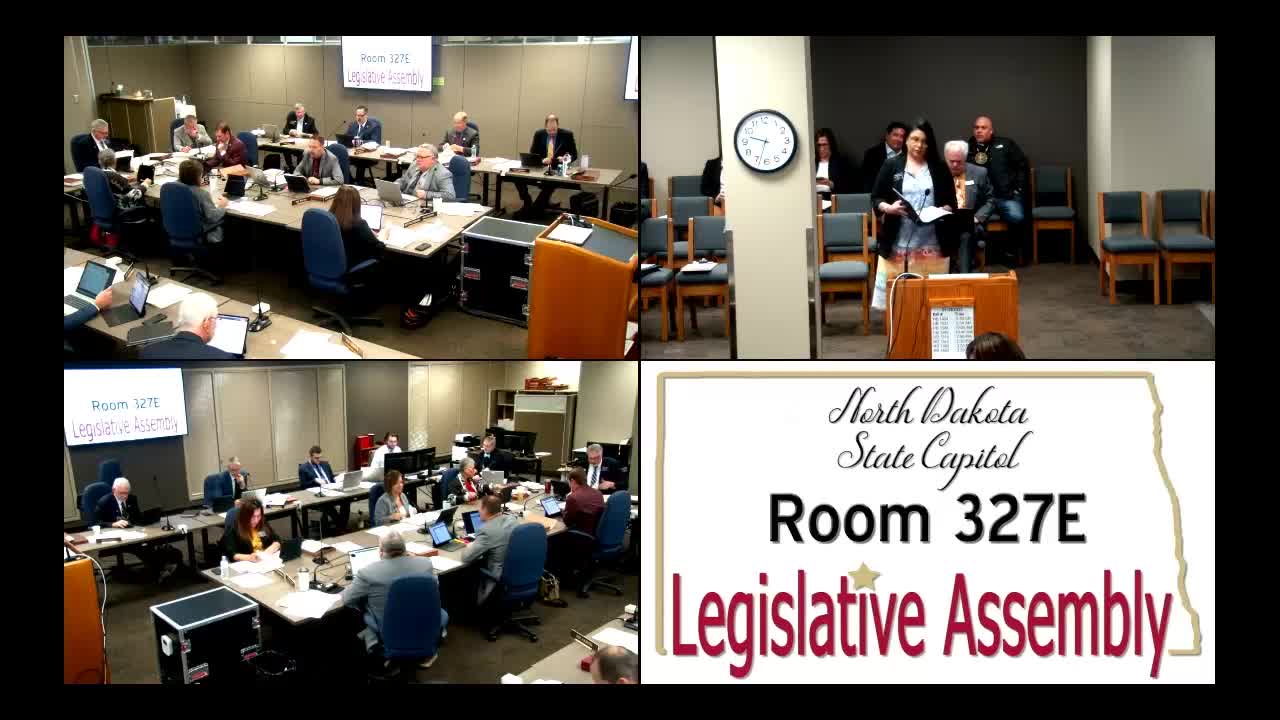
Multiple tribal leaders and representatives testified in support. Alicia LaCounte, general counsel for the Turtle Mountain Band of Chippewa, described tribal contributions to local infrastructure and health services and told the committee the tribe has roughly 24,000 members in the state and that 6,000–7,000 live in Rolette County and receive Indian Health Service care. Spirit Lake Nation Chairwoman Lana Street urged restoration of the exemption and said the change last session was adopted without meaningful consultation. Representative Jamie Davis and Representative Lisa Finley DeVille also spoke in support and highlighted administrative burdens that emerged after last session’s change.
Witnesses and members debated whether the exemption should be limited by residency, income or other criteria. Committee members asked for data to quantify the fiscal impact — how many enrolled members live off reservation, how many vehicles are registered to them, and the likely revenue effect. Several witnesses said some tribal members living off reservation still receive most services from the tribe and carry tribal identification suitable for verification.
No opposition witnesses appeared. The committee did not vote; Chairman Ruby said the panel would hold the bill pending staff follow‑up and requested the sponsor and witnesses provide enrollment and registration numbers for use in a future fiscal analysis.
The committee’s action: bill held for additional information and potential future consideration.