Get Full Government Meeting Transcripts, Videos, & Alerts Forever!
Get email alerts on the Drainage Policy topic
No spam. Unsubscribe anytime.
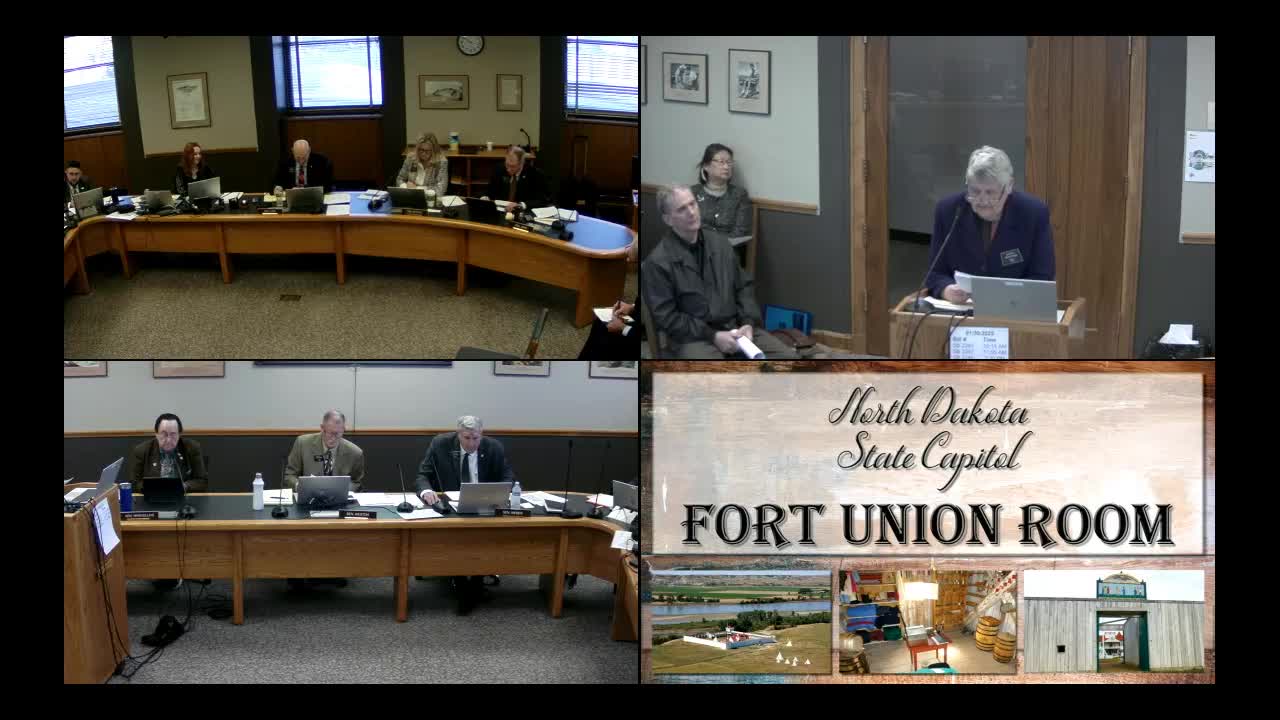
Lawmakers hear competing views on bill to require downstream notice, mediation for small drainage projects
Summary
Senate Agriculture committee heard hours of testimony for and against Senate Bill 2283, which would require downstream notice and an optional mediation step for subsurface drainage projects under 80 acres; proponents said notice and mediation would prevent lawsuits, opponents said it would add delay and cost.
The Senate Agriculture and Veterans Affairs Committee heard extended testimony on Senate Bill 2283, a proposal to require owners of subsurface water‑management projects on parcels smaller than 80 acres to notify downstream landowners and engage in a mediation process if objections are raised.
The bill would add a downstream‑notification step and a mediation window to the existing water‑board notice for under‑80‑acre projects. Proponents said the change would give downstream landowners a chance to resolve disputes before costly litigation; opponents said it duplicates existing remedies, imposes delays and could be used tactically to block projects.
What the bill would do (sponsor/advocate summary)
Sam Wagner of Dakota Resource Council explained the sponsors’ approach: landowners would still notify the local water board, but would also send letters to downstream owners and allow a 30‑day comment window; if objections remained, the parties would attempt mitigation through a mediation meeting before a permit application was required. Wagner said the process gives downstream owners “a chance to settle a dispute or receive compensation before lengthy court battles are needed.”
Supporters’ testimony
- Rural residents and farmers said unannounced nearby tile projects have caused crop loss, wet pastures and long‑term changes in drainage patterns. Roy Gable, Randy Kuhn and Madeline Luke described personal losses of hay or pasture productivity after neighbors installed tile and pumps that routed water onto their land.
- Dakota Resource Council and other proponents urged a 30‑day notification window (the companion House bill uses 60 days). Proponents suggested mediation language would substantially reduce suit filings.
Opposition and technical concerns
- Opponents (including the North Dakota Grain Growers Association and the North Dakota Water Resource Districts Association) said the bill imposes burdensome regulation on landowners and risks frivolous complaints intended to stall projects. Steve Hansen, Dan Wogsland (NDGGA) and Jack Dwyer (NDWRDA) argued existing water‑board complaint processes remain available and that cost and delay are real harms.
- Levi Otis of Ellingson Drainage (contractor) told the committee the 80‑acre threshold, as written in statute, typically produces limited flows (he cited an engineering figure of 560 gallons per minute as an upper bound in one calculation). He and other contractors said routine communication among neighbors and water boards is a preferable remedy to additional statewide mandates.
Administrative clarification
Aaron Curranz of the Department of Water Resources told the committee that, due to statutory changes, certain administrative remedies around subsurface systems were altered: he said the administrative complaint remedy for determining whether a permit was required “is no longer available to drain tile systems” under the law as it now reads, a point some proponents raised as justification for new notice language.
Committee outcome and context
Committee members said the subject is complex and noted earlier legislation on drainage and recent court cases. No final committee vote on SB 2283 was recorded during the hearing; Chairman Lewick closed testimony and moved to the next item. Several members said the topic would return in future discussions to refine technical parts of any statutory change (notice timing, mediation language, watershed exceptions).
Ending
Proponents urged combining SB 2283 with similar House language (House Bill 1544) to refine notification windows and add mediation; opponents urged caution and reliance on existing water‑board complaint processes. The committee left the matter open for possible amendment and further study.