Get Full Government Meeting Transcripts, Videos, & Alerts Forever!
Get email alerts on the Ag Research Extension topic
No spam. Unsubscribe anytime.
NDSU experiment station, Extension outline technology and outreach priorities to legislative ag committees
Summary
State Board of Agricultural Research and Education and NDSU presenters briefed House and Senate agriculture committees on research priorities — from drones and AI-driven breeding to virtual fencing and farm-safety simulators — and highlighted economic returns on ag research.
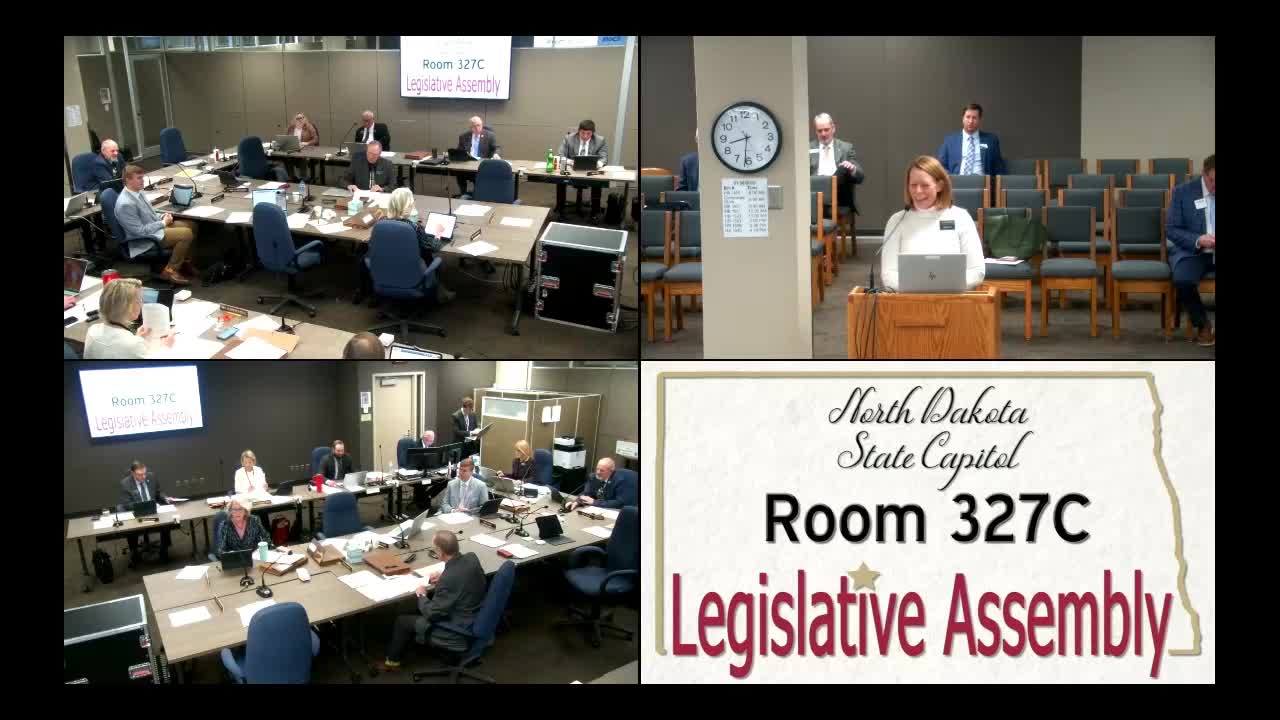
Chairmen Matthew Belz and Jon Lueck convened a joint overview from the State Board of Agricultural Research and Education (SBARE), the North Dakota Agricultural Experiment Station and NDSU Extension on the agencies' research, outreach and technology priorities.
Sarah Hall Lovas, chair of SBARE, opened the session and thanked the legislature for long-term support of the Ag Experiment Station and Extension. "The investments that the North Dakota Legislature has made into the Ag Experiment Station research and NDSU Extension education have resulted in significant and positive impacts for North Dakota agriculture and will last for future generations," Lovas said.
Greg Lardy, director of the North Dakota Agriculture Experiment Station and NDSU Extension, described research areas and extension programming. He said the industry contributes more than $30 billion annually to the state's economy and emphasized work on precision agriculture, breeding, AI-driven weed identification and training programs. "Our scientists are focused on providing innovative data-driven solutions that address both the immediate and long term challenges faced by North Dakota farmers and ranchers," Lardy said.
Researchers highlighted specific technology and outreach efforts: Juan Osorno described genomic selection and high-throughput phenotyping to accelerate variety development; Barney Geddes summarized microbial research aimed at reducing fertilizer needs and improving disease resilience; Eric Rifles explained drone-based prescription spraying that reduced herbicide use in field tests by 50% or more; Joshua Dodd discussed Internet-of-Things sensors for real-time monitoring; Miranda Neehan presented virtual fencing trials that kept animals within boundaries more than 90% of the time; and Angie Johnson described a tractor simulator used for farm-safety training.
Lardy and presenters said extension operates in all 53 North Dakota counties and provides training and field days tied to agronomy, pesticide safety and ag finance; presenters cited training of more than 7,200 people in pesticide safety and extension engagement with more than 40,000 youth through 4-H programs.
Committee members asked technical and deployment questions about cost, commercialization timelines and monitoring. Lardy said some technologies — including certain drone and AI applications — remain in testing and are not yet commercially available.
The presenters described data infrastructure needs, integrating drone imagery, genomic data and field trial results to make breeding and precision recommendations more efficient. The session closed with an invitation for committee members to visit research-extension centers and field days across the state.