Get Full Government Meeting Transcripts, Videos, & Alerts Forever!
Get email alerts on the Transitional Housing topic
No spam. Unsubscribe anytime.
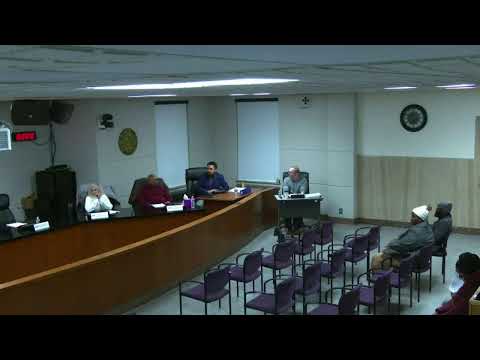
ZBA denies use variance for proposed Turner Housing transitional program at 121 Chamberlain Street
Summary
The Zoning Board of Appeals voted to deny a use variance request that would have allowed Turner Housing to operate a transitional housing/community service facility at a former rectory on Chamberlain Street; staff stressed the decision must rest on seven statutory standards and neighborhood zoning rules.
The Pontiac Zoning Board of Appeals voted to deny a use variance that would have allowed Turner Housing to repurpose a former rectory at 121 Chamberlain Street into a transitional housing program with wraparound services.
City planning staff told the board the building, formerly associated with the adjacent Catholic church, has been in place since at least 1951 and contains roughly 31 rooms. Staff said the applicant’s packet describes services including case management, job-readiness training, mental health counseling, health and wellness services, nutritional support and connections to public benefits.
Staff emphasized the board’s review must be limited to the seven legal standards for a use variance. A staff presenter said, “the ZBA should solely base their decision on the 7 standards of approval,” and reminded members that granting a use variance requires five affirmative votes.
The applicant, Shanti Turner of Turner Housing, described the proposed program as transitional housing with wraparound services and said stays would range “for 6 months to up to 2 years.” Turner told the board residents would be referred from local agencies with which the applicant has existing agreements, and named partnerships cited in the application, including CNS, Goodwill, Lighthouse and the Oakland County Health Division. Turner said staff and 24-hour security would be on-site and that volunteers and local residents had offered tutoring and other supports.
City staff and the presenter explained that the parcel is zoned R-1 (single-family) and that community service facilities such as homeless shelters and halfway houses are not permitted in R-1 districts. The staff presentation noted such facilities are allowed only by special exception in other districts (R-2, R-3, C-0, C-1 and C-3) and that the ordinance requires community service facilities to front on an “A” or “B” street—major thoroughfares or corridor streets—to ensure access for service vehicles and public transit. The presenter also warned that approval “could increase the congestion on neighborhood streets” and said the proposed use does not appear to align with the city’s 2014 future land-use plan.
Board discussion touched on a social-media post and an open house held at the property. Staff cautioned the board not to treat any ongoing enforcement or ticketing as proof of guilt, saying that due process and any related hearings are separate from the variance review. Staff also noted the property had previously operated as a group home or foster-care facility for many years and that code enforcement closed the prior operation in March 2023 because of living-condition concerns.
Commissioner May moved to approve the use variance, with Commissioner McClellan seconding. On roll call the board recorded these votes: Commissioner Anderson — yes; Commissioner Burke — no; Commissioner Bueno — no; Commissioner May — yes; Commissioner Pfebach — yes; Commissioner McCloud — yes. The motion did not reach the five affirmative votes required for a use variance and failed. Staff told the applicant they would follow up the next day about next steps.
Why it matters: The decision prevents an immediate reuse of the Chamberlain Street building as the applicant described but leaves procedural options open — for example, relocation to a properly zoned parcel, a rezoning effort, or a revised application to the ZBA. The board’s denial also underscores the city’s zoning separation between low-density single-family neighborhoods and higher-occupancy community service facilities.
What’s next: Staff said they will contact the applicant with guidance on next steps. Turner told the board she had no alternate site identified at the hearing.