Get Full Government Meeting Transcripts, Videos, & Alerts Forever!
Get email alerts on the Land Use Planning topic
No spam. Unsubscribe anytime.
Commissioners press county staff on Plan Hamilton, RPA costs and planning representation for unincorporated areas
Summary
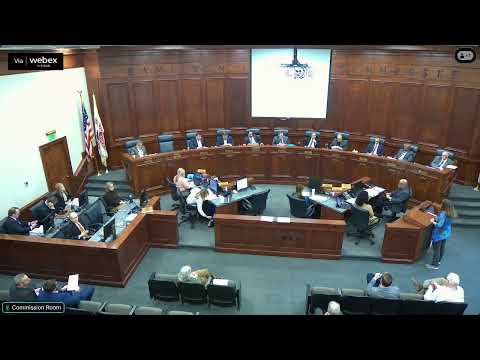
At the Jan. 29 meeting commissioners raised concerns about Plan Hamilton, the composition of the planning commission, RPA staffing costs and potential in-house planning; county staff and RPA representatives described options and the attorney’s office agreed to research legal issues.
During announcements and general discussion on Jan. 29, several commissioners raised questions about Plan Hamilton, the Regional Planning Agency (RPA) contract, and whether Hamilton County should develop an in-house planning commission or alter the existing RPA structure to better represent unincorporated areas.
Commissioner Shipley opened the discussion by asking why Hamilton County does not have its own planning commission separate from the city-led RPA; he said residents in rural districts feel planning decisions are being made without adequate local knowledge. Commissioner Baker and others said the needs of urban and rural areas differ and that representation and staff focus should reflect those differences.
Nathan Janeway, director of Development Services, cautioned against a simple split because city residents pay county taxes and because county interests intersect with incorporated areas; he said final zoning decisions still rest with the county commission. Brian Schultz of RPA explained the current composition of the planning commission: 15 members, seven appointed by the county mayor, seven by the city mayor, and a jointly appointed chair. Schultz and Janeway said they were working on a Plan Hamilton update and emphasized that zoning-code amendments would be needed to change net density calculations.
Commissioners raised several technical concerns: the difference between gross acreage and buildable acreage, a desire for a net density calculation in zoning, and worries about decentralized wastewater systems in parts of the county that are far from centralized wastewater treatment. Commissioners suggested staff prepare options, and the county attorney’s office agreed to research legal steps and report back; a planning-and-zoning committee meeting was proposed for follow-up within roughly 30 days.