Get Full Government Meeting Transcripts, Videos, & Alerts Forever!
Get email alerts on the Economic Development Governance topic
No spam. Unsubscribe anytime.
St. Clair County commissioners press EDA for transparency, vote to release FOIA opinion
Summary
The St. Clair County Board of Commissioners held a second workshop to determine whether the county should continue using the services of the Economic Development Alliance of St. Clair County (EDA) and to explore how those services should be delivered.
The St. Clair County Board of Commissioners held a second workshop to determine whether the county should continue using the services of the Economic Development Alliance of St. Clair County (EDA) and to explore how those services should be delivered. Commissioners and residents spent much of the meeting criticizing the EDA’s use of nondisclosure agreements (NDAs) and its limited transparency, and the board voted in favor of releasing county attorney Gary Fletcher’s legal opinion on the Freedom of Information Act (FOIA).
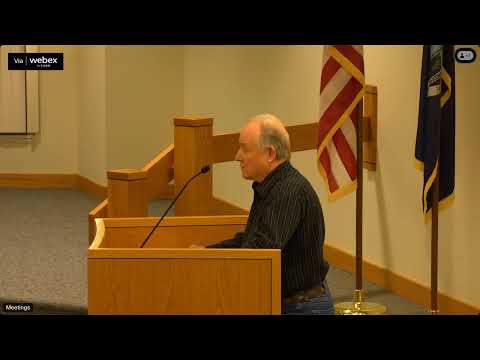
The discussion matters because the EDA markets and helps recruit commercial and industrial projects across St. Clair County, and several citizens and township supervisors told commissioners they feel excluded from early-stage negotiations and decision-making. “This organization has a disregard for communities during negotiations or discussions,” said Sandra Tannehill, planning commissioner for Wales Township. She, other township officials and multiple residents complained that NDAs and confidential processes keep townships and voters in the dark.
Public commenters described a range of concerns and benefits. James Endress Jr., Ira Township supervisor, read a letter saying the EDA helped rehabilitate an old warehouse in his township and that recent projects produced roughly 30 new jobs and an additional project expected about seven new jobs. Business owner Renee Evner Todd described $14,000 in EDA grant support that she said helped her secure patents and advance software development for a Port Huron company. Still, several speakers urged stricter oversight or an end to county funding if transparency cannot be assured.
Commissioners and EDA leaders described several voluntary changes the EDA offered or the county requested. County Commissioner David Rushing summarized items discussed with EDA leadership and the board’s executive committee, including written opt-in/opt-out membership for municipalities, a formal communication and project protocol, broader distribution of the EDA’s weekly report, periodic town-hall meetings, additional county seats on the EDA board, an updated EDA mission statement, a process for addressing confidentiality, and making the EDA Business Center available for community events once construction is complete.
Dan Casey, chief executive of the EDA, told the board that NDAs are infrequent and typically requested very early in a company’s site-selection process. “Not most of our projects do not require NDAs,” Casey said, and he said the EDA is willing to develop a process so an NDA would be considered only after approval steps are defined.
Several commissioners said they prefer a memorandum of understanding (MOU) to a formal contract because it would allow the county to condition funding on transparency and specific deliverables without immediate litigation risks. “I would shy away from a contract. I would do more of a memorandum of understanding that we produce and they sign off on,” one commissioner said, urging clear accountability tied to continued funding.
On formal action, Commissioner Angie moved to add a vote to release county attorney Gary Fletcher’s FOIA opinion; the motion was seconded and passed in a voice vote. Commissioners did not record a roll-call tally in the transcript; the board announced the motion passed. Commissioners discussed obtaining and sharing other written legal opinions (including one referenced by Wales Township) at a future meeting.
What remained unresolved at the workshop were: whether the county will require the EDA to become subject to FOIA or the Open Meetings Act (several attorneys noted the EDA is not legally subject to those statutes because it is not a statutory body and not primarily government-funded), how NDAs will be handled in practice and for what duration, and whether the county should contract for economic development services in-house or reform the existing EDA model. Casey and commissioners agreed to at least one more workshop to convert options into draft policy or an MOU for formal board consideration.
The board scheduled a third workshop to refine proposed solutions and potential actions. In the interim officials and EDA staff said they would draft communication protocols, consider broader distribution of weekly reports, and propose mechanisms for greater township notification and participation in early-stage project inquiries.
For now, the only formal decision captured in the meeting minutes was the commissioners’ vote to release Gary Fletcher’s FOIA opinion; all other items remained discussion items to be worked into a proposed agreement or brought back to the board for possible action.