Get Full Government Meeting Transcripts, Videos, & Alerts Forever!
Get email alerts on the Wildfire Management topic
No spam. Unsubscribe anytime.
Georgia Forestry Commission warns of elevated wildfire risks after Hurricane Helene; describes response and prescribed-fire work
Summary
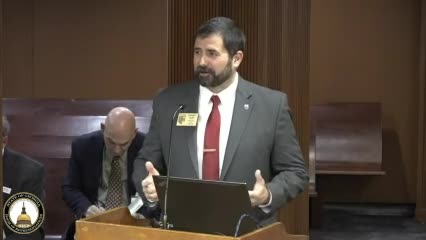
Johnny Sabo, director of the Georgia Forestry Commission, told the House Natural Resources & Environment Committee the agency is an emergency-response organization with roughly 400 wildland firefighters, described Hurricane Helene recovery work and urged increased firebreaks and prescribed burns to reduce future fire risk.
Johnny Sabo, director of the Georgia Forestry Commission, told the House Natural Resources & Environment Committee that the commission functions principally as an emergency-response organization and briefed members on post-hurricane risks, firefighting capacity and prevention strategies.
Sabo said the commission employs about 524 people, roughly 400 of whom are emergency responders or wildland firefighters. "We are an emergency response agency at heart," he said, and described a rapid response during Hurricane Helene that included clearing 40,000 miles of roads and conducting damage assessments to quantify timber losses. He said those operations were completed without injuries.
Sabo warned that the downed timber and increased fuels left by Helene will raise fire complexity and response times in affected regions. He gave examples: an incident that once took 30 minutes to contain is now taking five hours in debris-filled areas, and he predicted that equipment, tactics and response plans must evolve to address larger fuels and altered fuel beds.
Prevention measures Sabo highlighted include installing firebreaks and increasing prescribed burning. He said the commission oversaw about 25,000 miles of firebreak installation last year and that the state recorded roughly 1.5 million acres treated with prescribed fire across public and private lands. He said private landowners carry much of the cost: federal cost-share pays for only a small fraction of private prescribed-burn acreage.
Sabo also described the commission’s wildfire law-enforcement unit, which investigates arson and timber theft, and community programs such as Firewise USA and Community Wildfire Protection Plans to reduce structure vulnerability. He urged a proactive, "offensive" approach to fuels management rather than relying solely on reactive firefighting as the state adapts to post-hurricane conditions.
Why it matters: Large storm events can leave extensive fuels that increase wildfire risk for years after the storm. Sabo told members that proactive fuel reduction, prescribed fire and community planning are key to preventing catastrophic wildfire and protecting homes and private timber resources.