Get Full Government Meeting Transcripts, Videos, & Alerts Forever!
Get email alerts on the Speed Cameras topic
No spam. Unsubscribe anytime.
Committee advances speed‑camera guardrails bill after hours of debate on safety and revenue
Summary
House Bill 2041, amended with language from a similar subcommittee bill, was reported out of the House Transportation Committee on a divided 11‑9 vote. The bill sets transparency and operational rules for speed‑monitoring cameras and directs excess revenue toward a safety fund, though the patron said she is open to other options.
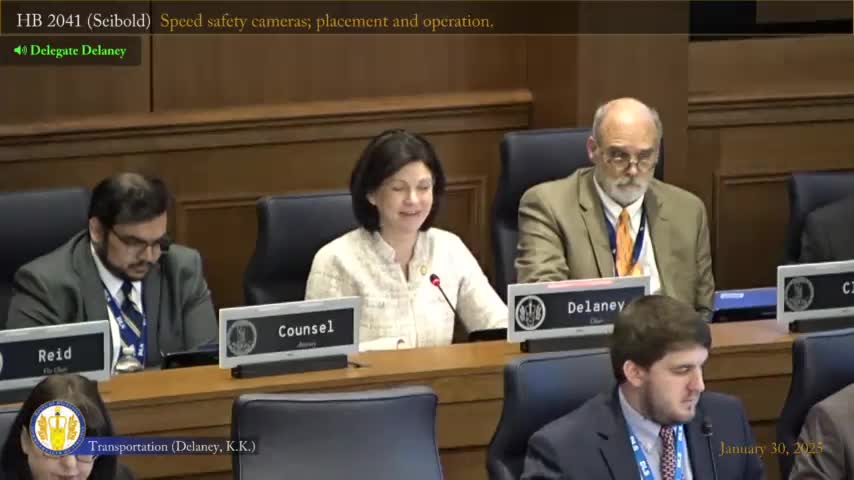
The House Transportation Committee on Tuesday reported House Bill 2041 with a substitute, sending the measure to the floor on an 11‑9 party-line roll call after extended debate over safety, revenue and local control.
Delegate Seebold, the bill’s patron, said the measure “puts guardrails on a program that already exists” and described changes meant to increase transparency and reduce incentives to treat cameras as a revenue source. Among the provisions Seebold described were advance warning signs at camera sites, an advisory group for local placement decisions, public reporting requirements and a ban on vendor contracts that pay vendors a percentage of citations.
Seebold told the committee the bill allows localities to recover pure operational costs from camera revenue but directs surplus funds into the Highway Safety Improvement Fund in the bill’s current text. She said she is open to amendments to keep more money local if the committee wishes.
Opponents and some local officials said the potential diversion of funds from local governments could hinder safety investments such as crosswalks and lighting. Mindy Carlin, who identified herself as a representative of Suffolk, said Suffolk reviews each citation and uses camera revenue for pedestrian safety projects; she urged retention of local control over surplus funds. Resident speakers described crashes and urged stronger enforcement in rural corridors.
The bill also includes vendor‑calibration provisions Seebold described: contracts must be flat‑fee rather than percentage‑based, and the bill introduces a civil penalty for vendors who fail to calibrate devices. Seebold said the stated policy goal is “net 0” tickets over time — cameras should prompt behavioral change so citations fall.
After questions from committee members and public testimony, Delegate Reid moved to report the bill with the substitute. The clerk opened and closed the roll; the committee reported HB 2041 by a roll call of 11 to 9.
Supporters said the measure is aimed at saving lives in school zones, work zones and high‑speed corridors; opponents emphasized local revenue and implementation concerns. The patron committed to continue working with local governments and stakeholders as the bill proceeds to the House floor.