Get Full Government Meeting Transcripts, Videos, & Alerts Forever!
Get email alerts on the Reentry Identification topic
No spam. Unsubscribe anytime.
Subcommittee backs substitute to study providing IDs for people released from jails
Summary
The committee voted 6-0 to report a substitute to HB 2221 that removes a mandatory jail ID requirement for this year and instead forms a stakeholder work group to develop uniform processes and report back to the General Assembly by Nov. 1.
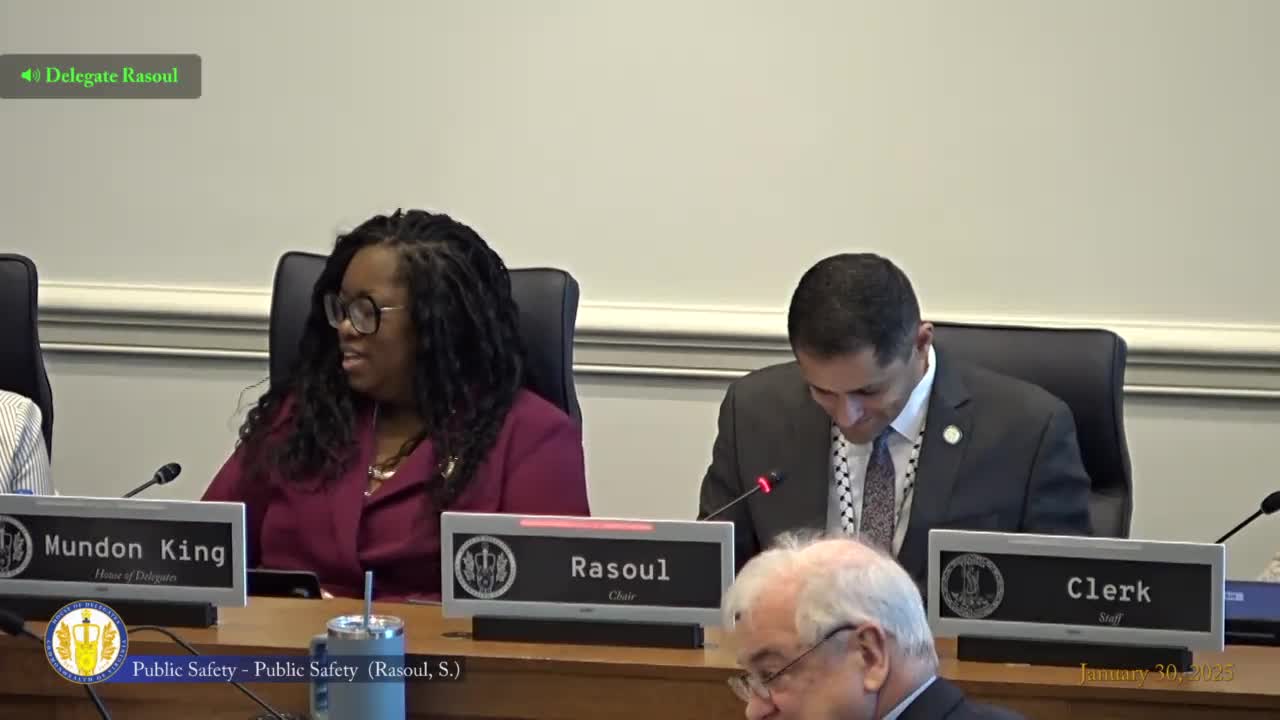
The House Public Safety Subcommittee unanimously (6-0) reported a substituted HB 2221 that would establish a year-long work group to develop uniform processes for providing photo identification to people being released from local jails.
Delegate Cousins, the bill’s patron, said the substitute removes a requirement that jails provide a photo ID before release and replaces it with a stakeholder work group that will "collaborate on this issue over the next year" and report recommendations to the General Assembly by Nov. 1. The substitute also included technical amendments from the Department of Corrections (DOC) and the Department of Motor Vehicles (DMV).
DOC representatives told the committee the agency already verifies identity for people entering and leaving state correctional facilities and provides documentation to help individuals obtain DMV identification. A DOC official described existing practices to verify identity, immigration status, and residence, and said the substitute codifies much of what DOC already does while seeking better solutions for local jails, which vary by locality.
Reentry advocates testified in favor of the bill, citing data they said show over 50% of people released have no ID and that lack of identification delays employment, housing, and healthcare. “Obtaining an ID after release is often onerous,” the Humanization Project told the committee; witnesses from local reentry nonprofits said having an ID could reduce time to employment from about 30 days to roughly 9 days for those with proper documentation.
Supporters said the substitute aims to gather jail stakeholders and agencies (DOC, DMV, regional jails) to agree on feasible, uniform procedures for jails to help returning residents obtain IDs at release. The committee reported the substitute 6-0.
The substitute requests a stakeholder report to the General Assembly by Nov. 1; the substitute removes an immediate mandate on jails for this session.