Get Full Government Meeting Transcripts, Videos, & Alerts Forever!
Get email alerts on the Consumer Protection topic
No spam. Unsubscribe anytime.
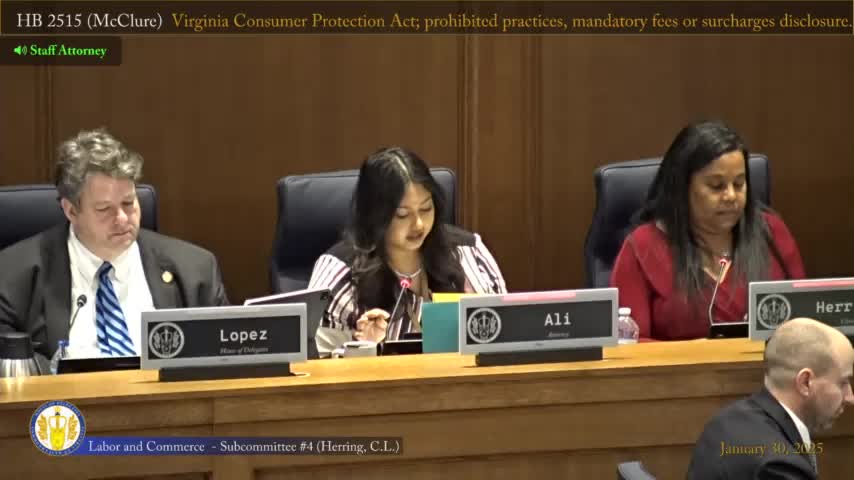
Subcommittee advances hidden‑fees bill after substitute clears stakeholder negotiations
Summary
The subcommittee voted to report HB 2515 with a substitute after supporters said the measure would require transparent, all‑in pricing and opponents pressed concerns about private right of action and dynamic pricing. The bill was reported with substitute on a 3–2 vote.
HB 2,515, a consumer protection bill aimed at requiring businesses to advertise an all‑in price that includes mandatory fees, cleared a House subcommittee on a 3–2 vote after a substitute was adopted.
Sponsor Delegate McClure said the bill is “a consumer protection bill that requires a disclosure of all mandatory fees and charges and advertising a displayed price of a good or service.” She and others described the measure as targeting “hidden” or “junk” fees that often surface at checkout and that harm households, particularly those struggling to make ends meet.
Representatives of small‑business and consumer‑advocacy organizations testified in favor. Ryan O’Toole of Freedom Virginia said hidden fees “undermine trust” and harm hardworking Virginians; Jay Spear of the Virginia Poverty Law Center said many households “need to know what things cost upfront.” Several trade groups and platform companies (including representatives for Uber Eats, Live Nation and Ticketmaster) said they had negotiated language into the substitute and voiced conditional support.
TechNet and other technology trade representatives asked the committee to review the substitute and flagged concerns that the bill — by amending the Virginia Consumer Protection Act — could create private rights of action and that some business pricing models are dynamic. Margaret Durkin of TechNet said some members use dynamic pricing models and that the substitute needed additional review.
After amendments and adoption of the substitute the committee voted to report HB 2,515 with the substitute on a vote of 3–2. The substitute includes exemptions for certain industries already subject to federal disclosure regimes and clarifies compliance pathways for mixed goods‑and‑services providers.
Why it matters: Backers said the bill would protect consumers and level a playing field for small businesses that disclose full prices; opponents worry about litigation risk and the law’s interaction with dynamic pricing and trade secrets. The bill advances to the next stage with negotiated substitute language recorded in committee action.