Get Full Government Meeting Transcripts, Videos, & Alerts Forever!
Get email alerts on the School Calendar Holidays topic
No spam. Unsubscribe anytime.
Milton School Committee confronts calendar, religious-holiday equity and consistency concerns
Summary
Public commenters urged keeping Jewish high-holy days on the district calendar and adding other religious holidays; the committee debated rotating holiday days, calendar structure and the need for a clearer policy path.
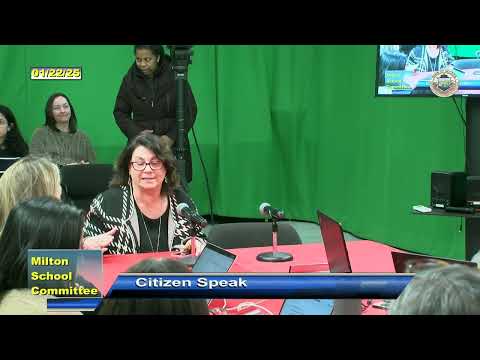
Public comment and a lengthy committee discussion on Jan. 22 centered on whether Milton’s school calendar should continue to designate certain religious holidays as days off.
Two residents urged the committee to keep Yom Kippur as a school holiday and to consider adding other religious holidays. Karen Friedman Hannah, a town-meeting member and synagogue leader, said removing the long-standing recognition of Jewish high-holy days would be “very upsetting and very concerning,” and she recommended keeping the current Jewish observance while considering adding Diwali, Eid and Lunar New Year. Rob Milt, a parent, told the committee that Yom Kippur has been treated as a non-school day for about 30 years and said removing it would force students to make “a wrenching and frankly demoralizing decision” about whether to attend school when their faith requires observance.
Committee members spent substantial time discussing several calendar scenarios that had been reviewed earlier in the process. One proposed approach that surfaced in public feedback — a rotating pair of school days off that would cycle through different religious and cultural holidays (so the district would observe two holidays each year but rotate which ones are days off) — drew skepticism from several committee members who said it could dilute the meaning of specific holy days and cause confusion for families and staff when schedules change year to year.
Other discussion points included community requests to keep clear calendar labels listing observed and recognized holidays, and calls for a separate policy-and-procedure review to set a transparent process for future requests to add or change calendar holidays. Committee members also received and discussed recent clergy letters urging more inclusive recognition of religious holidays. Several members said they favored deeper policy work rather than an immediate calendar change; others argued for adding specific holidays now. No final vote on the district calendar occurred at the Jan. 22 meeting; the committee asked staff to return with a revised draft calendar that addresses formatting and professional-development scheduling concerns and to refer the holiday‑recognition question to the policy committee for a more detailed review.
Public commenters and several committee members framed the issue as an inclusion and belonging question for students from religious minority communities; other members emphasized instructional time, schedule consistency and the need for a transparent process for evaluating future holiday requests. The committee set a policy-committee discussion before the next full school-committee meeting to consider longer-term procedures and criteria for adding or rotating recognized holidays on future calendars.