Collicott School reports rising enrollment, expands early‑grade phonics and staff development
Loading...
Summary
Principal Holly Concannon and Collicott School site council told the Milton School Committee that kindergarten enrollment has surged, class sizes have grown, and the school has launched UFLI phonics in K–2 while maintaining strong staff experience and targeted support programs.
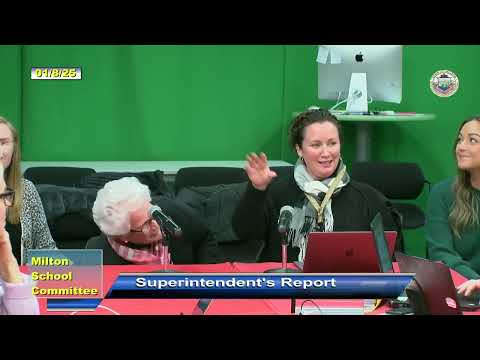
Collicott School Principal Holly Concannon told the Milton School Committee on Monday night that the school’s enrollment has increased sharply and that the school is prioritizing early‑grade phonics instruction and staff development to meet rising needs.
The presentation summarized enrollment and staffing changes: Collicott enrolled 621 students this year across 30 classrooms, up from 584 students in 29 classrooms last year, an increase of 37 students. The school added one kindergarten classroom this summer but reported that kindergarten and third grade have the largest class sizes; average class sizes in some primary classrooms are about 23–24 students. Concannon said the kindergarten classes are at or near capacity and district principals are coordinating placement as new students arrive.
School site council members said staff experience and coordinated supports are central to the school’s success. Assistant Principal and curriculum coordinator Ellen Mohan said Unit A teachers average 19.7 years of experience. The school also houses a partnership program with the New England Center for Children that adds about 21 Unit D (educational assistant) staff and aides specialized instruction for students with significant needs. Mohan said 100% of Unit D staff participated in high‑quality professional development this year and about 55% are actively pursuing higher degrees or certification in education-related fields.
The site council outlined academic and enrichment priorities. Kindergarten teacher Katherine (Katherine Perrault in the presentation) said Collicott has adopted the UFLI phonics program in kindergarten through grade 2, used alongside the existing Reach for Reading curriculum, and credited the district’s early literacy coach with regular support in common planning. Teachers reported early signs of measurable reading growth, greater student confidence, and expanded use of district assessment tools such as DIBELS and i‑Ready to target interventions.
Collicott leaders described expanded supports including adaptive art and music, project‑based STEM (Project Lead The Way), a math league, weekly PBIS recognition, and partnerships with Milton High School, Milton Academy and the public library. Administrative assistant Joanne Barker was singled out for operational support including substitute coordination and web maintenance.
The presentation also flagged capacity and “beyond the bell” enrichment funding as an area of uncertainty. Concannon said the school hopes to continue targeted after‑school programming but funding for this school year remains uncertain. Committee members asked about sibling placement and how the district makes placement decisions when schools are at capacity; Concannon said central office manages placements and that principals coordinate to balance space, programmatic needs and special education or ELL services.
The presentation closed with site council goals that emphasize academic excellence, early literacy with a phonics focus, and deeper family and community engagement. Concannon and staff said they will continue to provide updates and data at future meetings.