Get Full Government Meeting Transcripts, Videos, & Alerts Forever!
Get email alerts on the School Construction topic
No spam. Unsubscribe anytime.
Stoughton school leaders press voters to approve $113 million South Elementary project after MSBA extension
Summary
School officials and project designers presented the South Elementary School plan and financing at a public forum, saying an MSBA grant and an independent review back the new-build option; town meeting authorization is scheduled for Feb. 3 and a ballot vote for April 8.
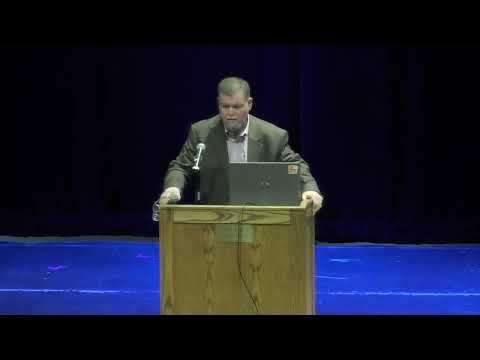
Stoughton school officials, the School Building Committee and project designers urged residents at a public forum to approve borrowing to build a new South Elementary School, saying an unprecedented extension from the Massachusetts School Building Authority (MSBA) and an independent review show the new building is the most cost-effective long-term solution.
The forum, held by Stoughton Public Schools, outlined the project scope, financing and timeline. The total project cost is about $113,000,000, MSBA will reimburse roughly $47,000,000, and the town’s maximum share was described as approximately $65,000,000, figures repeated by project leaders at the meeting. The committee said the town must secure local funding before MSBA’s extension expires in April; town meeting is scheduled for Feb. 3 to re-authorize the appropriation and voters will decide the debt-exclusion ballot question on April 8.
Why it matters: The presenters said renovating the existing South School would not be cheaper or yield equivalent usable space, and that temporary fixes such as modular classrooms would be expensive, nonreimbursable and short‑term solutions. The project proponents argued a new building would reduce the district’s long‑term operating costs by allowing the system to move from eight elementary buildings to six, improve accessibility and special‑education space, and avoid repeated, costly emergency repairs.
"The project that we're proposing is ... the best solution for the town of Stoughton," said TJ Recupero, a member of the School Building Committee, describing the MSBA extension and the independent working group’s review as confirming the committee’s approach.
Superintendent Dr. Bayada Yanno emphasized building condition and accessibility. "It's incredible in 2025 that the town of Stoughton still has a building utilized for its children and families that's not ADA compliant," she said, noting that bringing the current building into code would require extensive work and reduce classroom space.
Design and program: Architect Carl Friedzewski (DRA) reviewed the site and layout. The proposed three‑story, pinwheel‑shaped building would group grade levels into "neighborhood" wings (kindergarten/grade 1 on the first floor, upper grades on higher floors), include a community wing with cafeteria and gym, and center a double‑height "learning commons" with a STEM lab.
Independent review and alternatives: The forum included results from an independent working group convened by the town manager that studied the project and alternatives. Presenters said the group estimated a straight renovation of the South School (bringing it to code without adding space) would carry a construction cost of about $35,000,000 and a total project cost near $46,000,000 after soft costs — and would still provide less usable space than a new building. Presenters also said modular classrooms, which would not be reimbursable by MSBA, were estimated in different scenarios at several million dollars and carry operational and safety drawbacks.
Cost and taxpayer impact: Committee members presented an estimate from the town’s borrowing adviser indicating a tax impact of roughly $0.61 per $1,000 of assessed value under the borrowing scenario used in April estimates. At the forum they translated that to about $240 per year for a $400,000 home and roughly $305 per year for a $500,000 home; presenters said those are estimates and that proceeds from surplus school property sales could lower the net burden.
Timeline and approvals: The presenters said the MSBA granted an extension to secure local funding through April. If town meeting (Feb. 3) authorizes the appropriation and voters pass the debt exclusion on April 8, staff will finalize designs, pursue local permits (planning board, conservation commission), and proceed toward construction. Presenters warned that re‑entering the MSBA process for a different project could add five years or more and would likely delay a full solution by eight to ten years.
Public comments and outreach: The forum included residents’ questions and comments about outreach, the project’s visual design and tax impacts. Kristen Berry, a Stoughton resident and forum attendee, asked how organizers plan to reach voters who did not participate in the prior June vote and those who remain undecided. Chris Shannon, speaking as a resident with a workforce‑development background, argued a new school "is good for business," saying employers look for communities that have invested in schools.
Other details raised at the forum: presenters said the district currently has about 90 children on a preschool waiting list, that English‑language‑learner enrollment has risen (presenters said the district has more than 700 ELL students), and that district enrollment has been increasing by roughly 50 students per year. The project team also noted an approximate $5,000,000 contingency in the budget for cost fluctuations and unforeseen requirements.
Where to find information: Presenters directed residents to the district project page (newelementaryschool@stoughtonschools.org and the Stoughton Public Schools website) and to an independent advocacy page (voteyesstoughton.com) for further materials and outreach details.
Next steps: Town meeting on Feb. 3 will consider the appropriation; if passed locally, the debt‑exclusion ballot question goes to voters on April 8. Project proponents said they expect additional permitting and design work would follow a successful vote.