Get Full Government Meeting Transcripts, Videos, & Alerts Forever!
Get email alerts on the Child Welfare Funding topic
No spam. Unsubscribe anytime.
DHS detailed large foster care deficit, DSNAP relief payout and new QRTP pilot
Summary
Georgia Department of Human Services Commissioner Candace Bross told the committee DFCS faces a $44 million FY25 state-funding deficit in out-of-home care, described a $126 million DSNAP payout to households after Hurricane Helene, and announced a pilot Qualified Residential Treatment Program to serve children with complex needs.
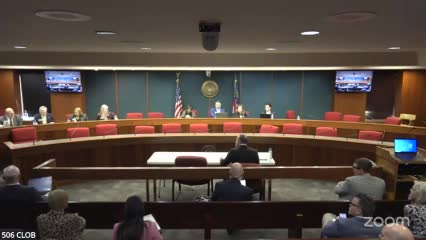
Commissioner Candace Bross, director of the Division of Family and Children Services at the Georgia Department of Human Services, presented a broad overview of agency results and amended FY25 requests, emphasizing foster care costs, disaster SNAP operations and a new pilot for complex behavioral-health placements.
On foster care funding, Bross told the committee the agency estimated a $44,000,000 shortfall in state funds for out-of-home care in FY25 after updated quarterly projections. "Our current a f y 25 deficit is 44,000,000 in state funds," she said, explaining that more children have entered care with complex mental and behavioral health needs and that federal restrictions (including how Title IV-E and more recent federal changes interact with congregate care funding) constrain which placements are eligible for federal reimbursement.
Bross described the new pilot QRTP (qualified residential treatment program) executed with Murphy Harps in Cedartown: "We have executed a contract again with Murphy Harps in Cedartown, Georgia to pilot the state's first QRTP. And the first child was placed there a few days ago with additional children placed in just the past couple of days." The agency said QRTP licensing and the new federal exceptions will let the state draw down more federal dollars over time for eligible children, though the pilot is new.
On disaster SNAP (D-SNAP) after Hurricane Helene, Bross gave program totals: DFCS provided over $126,000,000 in benefits across 55 counties, assisting nearly 267,000 households and serving more than 598,000 individuals between Oct. 21 and Nov. 23, 2024. The agency said it absorbed about $11,000,000 as the state match to draw down federal funding and is exploring reimbursement avenues through federal and state partners.
Bross also described operational changes: the division has launched a special victims unit to coordinate with law enforcement on missing foster youth and certain exploitation cases; the unit includes a sworn officer deputized by the Fulton County Sheriff to execute exigency actions such as device-location requests. Bross said the agency contracted medical service providers to clear a backlog of Medicaid disability determinations and is modernizing Georgia Gateway and invoicing for provider payments.
Ending: Bross asked the committee for support for the governor's FY25 recommendations and for additional funding to close the out-of-home care deficit; she said DFCS will provide requested data to committee staff.