Get Full Government Meeting Transcripts, Videos, & Alerts Forever!
Get email alerts on the Veterans Homestead Exemption topic
No spam. Unsubscribe anytime.
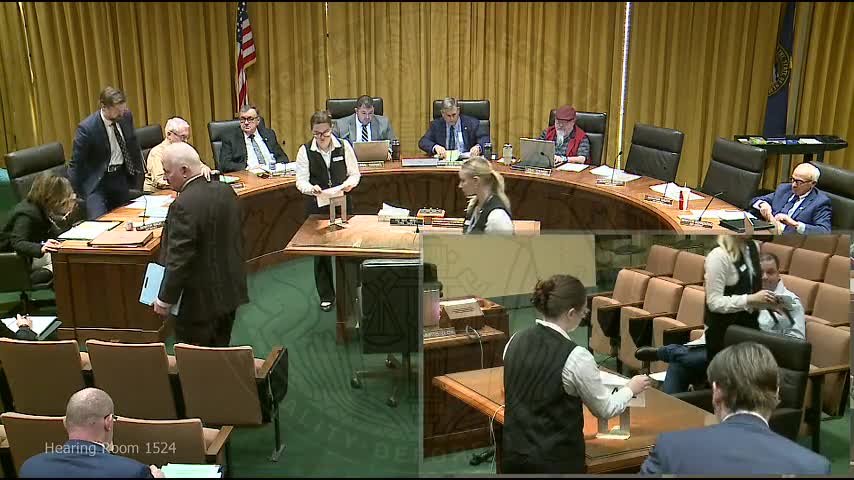
Committee hears two bills to expand homestead exemption for partially disabled veterans
Summary
Joint hearings on LB272 and LB425 focused on expanding Nebraska's homestead exemption to veterans with less than 100% VA disability ratings; proponents argued the change would provide targeted property‑tax relief, while senators and county officials raised fiscal questions and possible caps to limit cost.
Sen. George Dungan and Sen. Bob Anderson presented competing but related proposals to expand Nebraska's homestead exemption for veterans with partial service‑connected disabilities.
Dungan's bill, LB272, would extend the existing homestead exemption (which currently applies to veterans with a 100% disability rating) to veterans with more than a 10% service‑connected disability, applying the exemption proportionally to the disability percentage. Anderson's bill, LB425 (the Vets Act), narrows that expansion to veterans rated 80%–90% disabled and would also scale the exemption to the disability percentage.
Why it matters: Supporters said many disabled veterans now fall below the 100% threshold used in current Nebraska law but still face significant property tax burdens. Lance Molina, a disabled Air Force veteran testifying in support, said Nebraska's all‑or‑nothing approach often excludes veterans who have a combined rating that prorat es to less than 100% even though they have multiple service‑connected conditions. He said his property tax increased 20% year over year in one recent year and that rising taxes consume a large portion of VA disability income.
Multiple veterans' organizations backed the bills. Testimony in support included current and former service members and county veteran service officers. Spike Jordan, county veteran service officer for Sioux and Dawes Counties, urged passage and said the average disability rating in Nebraska is about 30%, adding that the current statute leaves many deserving veterans without relief. Melissa Allen, representing Disabled American Veterans (DAV) and the Nebraska Veterans Council, urged lawmakers to consider demographic trends that could affect fiscal estimates, noting the veteran population is declining over time and that many veterans do not own homes or already live in long‑term care.
County concerns and fiscal numbers: John Cannon of the Nebraska Association of County Officials (NACO) described how the homestead exemption program is administered: county assessors verify ownership and occupancy and calculate values, while the Department of Revenue verifies income and certifies exemption amounts for state reimbursement. Cannon said the homestead program can hold local levies down and explained the reimbursement process.
Several witnesses and senators questioned fiscal estimates. The fiscal note for LB272 cited an estimated fiscal impact that proponents and some committee members called high (a figure read in the hearing was about $63 million for LB272 in one cited estimate and about $1.95 million for LB425). NACO said its own rough calculation for an earlier version of the bills suggested a lower cost (Cannon estimated roughly $15 million for LB272 in a back‑of‑envelope estimate and said he would resubmit a corrected fiscal note). Senators pressed proponents about possible limits to reduce cost, such as adding income or property value caps; proponents said such caps could exclude veterans in need and that they preferred to target assistance by disability percentage.
Committee remarks: Sen. Jacobson asked whether disability must be service connected; senators and proponents confirmed the proposals keep the current requirement that disability be service connected and that VA ratings can be changed over time. Sen. Sorrentino and others suggested narrowing eligibility or adding property‑value caps to reduce the fiscal impact; Sen. Anderson said his bill was intentionally narrower (80%–90%) because the broader proposal in LB272 could be fiscally challenging.
No formal actions were taken at the hearing. Sponsors urged the committee to advance discussion and to consider fiscal‑note adjustments and targeted design choices to manage state costs while expanding relief for partially disabled veterans.