Get Full Government Meeting Transcripts, Videos, & Alerts Forever!
Get email alerts on the Taxation Ptet topic
No spam. Unsubscribe anytime.
Revenue committee hears bill to clarify pass‑through entity tax and require detailed notices of deficiency
Summary
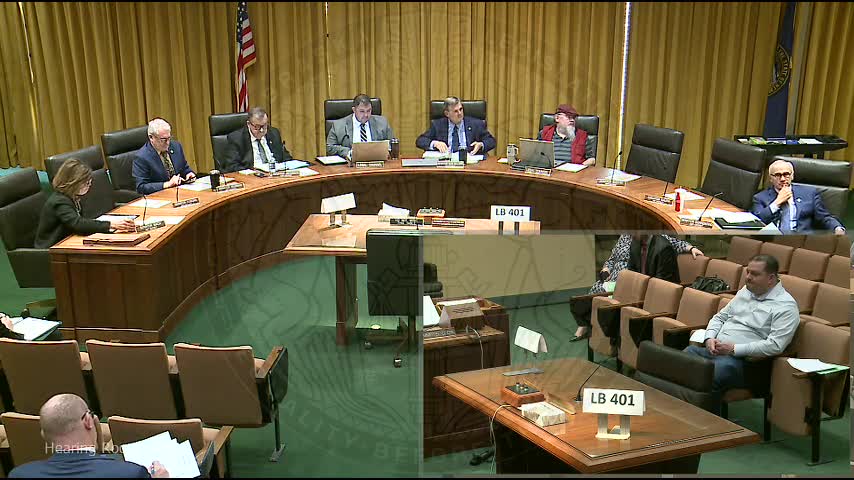
Sen. Brad Von Gillern, chair of the revenue committee, introduced LB401 on behalf of a bill he said has two aims: “to provide technical clarity and to increase transparency for taxpayers in Nebraska.”
Sen. Brad Von Gillern, chair of the revenue committee, introduced LB401 on behalf of a bill he said has two aims: “to provide technical clarity and to increase transparency for taxpayers in Nebraska.”
The bill would clarify how pass‑through entity tax (PTET) elections are made — stating the election must be made on the entity's return for the year the election is made — and would treat refundable credits as available for tax years beginning on or after July 1, 2022, “without regard to the year in which the taxes were paid.” The bill also would require that notices of deficiency issued by the Department of Revenue include a written statement explaining the reasons for the department's determination.
Why it matters: Supporters said LB401 removes technical uncertainty for businesses using the PTET mechanism and adds due‑process protections for taxpayers facing audits or refund denials. Nicholas Bjornson, a tax attorney who testified as a proponent, said requiring a “clear and detailed explanation upfront can potentially reduce the need for extensive discovery and appeals, thereby saving both taxpayers and the tax commissioner valuable time and resources.”
Bjornson, who testified on his own behalf and on behalf of business groups including the Greater Omaha Chamber and Nebraska Society of CPAs, described practical problems under current practice: he said Nebraska's deficiency notices often consist of an Excel spreadsheet or audit work papers that “don't really provide what exactly they found issue with,” leaving taxpayers and representatives to spend months or years trying to identify the department's basis for an assessment.
Committee discussion focused on the bill's fiscal note. Von Gillern told the committee the Department of Revenue estimated the bill would require additional staffing and generated a fiscal note of roughly $450,000 for the current biennium; he said he expected to offer an amendment to remove language he believed caused the larger fiscal estimate and that he was discussing scope with the department to narrow the note. He read aloud the department's staffing breakdown from the fiscal note that, as the bill was described in the hearing record, included more than 30 full‑time equivalent positions across audit, operations and IT roles.
Bjornson said his practice sees deficiency notices frequently and that other states' experience suggests requirement of a written basis speeds administrative resolution; he pointed to North Carolina and the federal IRS as examples where providing findings earlier improved appeals efficiency. He told senators the bill does not change the tax commissioner's authority to issue a notice or the presumption that such notices are correct; it only requires the department to provide the underlying facts, circumstances and the legal bases relied upon.
No proponents beyond Bjornson rose to question the bill; the committee recorded no opponents or neutral testifiers in the hearing record. Von Gillern closed by repeating his intent to work with the Department of Revenue to clarify language and reduce the fiscal note before the bill advances.
The public hearing on LB401 closed with no formal committee action taken at that time.