Get Full Government Meeting Transcripts, Videos, & Alerts Forever!
Get email alerts on the Public Health Budget Programs topic
No spam. Unsubscribe anytime.
Georgia Department of Public Health seeks funding for awareness, research and program changes; federal funding still uncertain
Summary
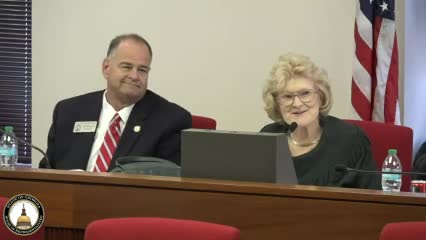
Department of Public Health Commissioner Kathleen Toomey told the committee the amended budget includes funding to centralize the low-THC card program, a one-time study of social media—s impact on youth and a transfer to support an Alzheimer—s awareness contract.
Department of Public Health Commissioner Kathleen Toomey told the Appropriations Subcommittee for Health that several amended-budget items are intended to boost administrative efficiency, support surveillance and research, and centralize management of Georgia—s low-THC card program.
Toomey said the department—s federal funding is in flux and that most federal dollars for the agency come from USDA (largely WIC) and HHS (CDC, HRSA). She said the department was waiting for federal guidance and for the state Office of Planning and Budget to provide additional direction before quantifying impacts.
Why it matters: Toomey told the committee funding decisions matter for core public-health programs across Georgia—s 19 health districts. She said centralizing the low-THC card portal reduced handling issues at local health departments and moved fees back to the state treasury, and that the fee was increased from $25 to $30 while the card validity extended from three to five years.
Toomey outlined three amended-budget items she described as largely administrative: transferring an Alzheimer—s and brain health awareness contract into DPH to piggyback on existing Emory contracts; funding a one-time study of social media—s impact on children and adolescents (with USG researchers and epidemiologic staff); and administratively centralizing the low-THC medical cannabis card program so funds collected return to the treasury. She said the department now receives weekly case counts on low-THC and has an epidemiologist tracking trends.
On implementation, Toomey said the department is working with physician boards and other partners to reduce errors in provider-submitted forms that previously delayed card issuance; the office also has begun mailing cards directly to applicants to address access problems. She said complaint volumes about the program have declined since these changes and that she has personally followed up on outstanding issues.
Toomey said the department will deploy an epidemiologist and research assistants on the social-media study, and that the study is intended to be a one-time investment producing a report to share with other agencies (including DBHDD and the Department of Education).
Ending: Toomey asked the committee to consider the amendments while noting final federal guidance on other budget items remained pending; she closed her presentation and invited questions.