Get Full Government Meeting Transcripts, Videos, & Alerts Forever!
Get email alerts on the Energy Choice topic
No spam. Unsubscribe anytime.
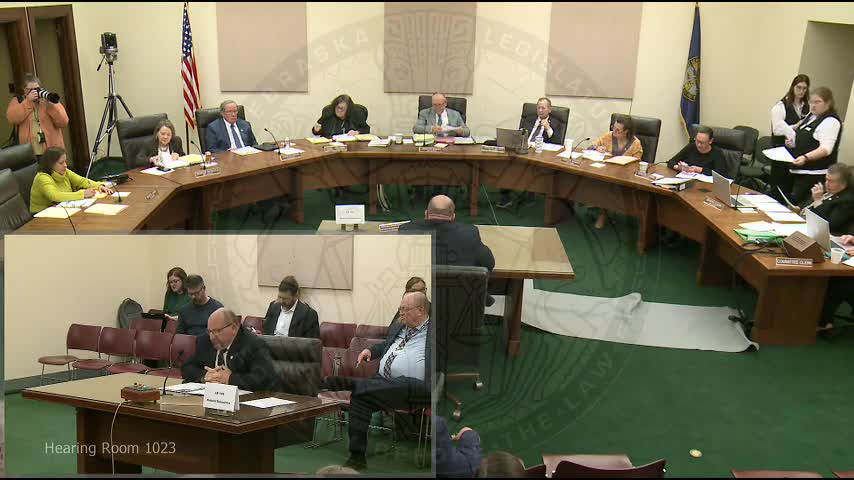
Committee hears LB129 to preserve consumer access to legally regulated fuels; amendment discussed
Summary
Senator Dan McKeon introduced LB129 and amendment AM76, saying the bill is designed to preserve consumer access to fuels "legally sold and regulated by the state of Nebraska" and to prevent local bans on specific fuel sources.
Senator Dan McKeon introduced LB129 and a white-copy amendment, AM76, describing the bill as intended to "ensure access to the fuels that are legally sold and regulated by the state of Nebraska" and to protect consumers against local bans on specific fuel types. McKeon said the amendment removes language referencing charging stations at the request of public power stakeholders and adds an explicit exemption for not-for-profit public power entities such as municipal utilities, public power districts and electric cooperatives. "With these changes, they all have no objections to the bill as amended," McKeon said.
Proponents said the measure preserves consumer choice and protects industries that produce legally regulated liquid fuels in Nebraska. Craig Schoenfeld of Valero, which operates an ethanol facility in Albion, described Nebraska as a leading producer of renewable fuels and said LB129 would keep consumer access to those fuels. "Nebraska is a leader in renewable fuel production... Ensuring consumers' access to these liquid fuels should be a priority of the state," Schoenfeld said. Dawn Caldwell of Renewable Fuels Nebraska and the Ag Leaders Working Group and Mike Karbo of the American Petroleum Institute also testified in support, emphasizing market choice for transportation fuels.
Stakeholders and committee members probed the bill's scope. Several senators asked whether the bill would impede local climate or procurement policies, municipal fleet electrification, or limits tied to signage or other local codes. Senator Jane Raybould and others questioned whether the bill would reduce local authority to pursue low- or no-emission vehicle strategies using grants or procurement rules; proponents said the bill is intended to preserve consumer access to legally regulated fuels, with the amendment addressing concerns about public power utilities.
Opponents and neutral witnesses included the League of Nebraska Municipalities, the Nebraska Power Association (representing public power utilities), Black Hills Energy and the Nebraska Rural Electric Association. Lash Chaffin of the League testified in opposition, calling the bill "a solution looking for a problem" and warning of broad, unintended consequences for municipal authorities such as signage and local planning. James Dukesherer, representing the Nebraska Power Association, said the association opposed the green-copy bill as written but that the amendment under discussion — which would exempt public power utilities — would remove their opposition. Jill Becker of Black Hills Energy said the company was neutral on the amended bill.
Testimony identified existing legislative precedents in other states and acknowledged prior Nebraska measures protecting certain fuel sales; McKeon said similar laws exist in states including Alabama, Louisiana, Oklahoma, Tennessee, Florida and Texas, and that the Iowa Senate had passed a related measure. Witnesses and senators discussed whether the bill should be narrowed to transportation uses only or otherwise clarified to avoid interfering with local land-use codes, municipal procurement, or emergency-generation and infrastructure rules.
Committee members did not take a final vote; the clerk recorded two proponents, three opponents and one neutral witness during the hearing. The sponsor said he would continue working with stakeholders on amendment language to address municipal and public power concerns before any committee action.