Get Full Government Meeting Transcripts, Videos, & Alerts Forever!
Get email alerts on the Childcare Emergency Notification topic
No spam. Unsubscribe anytime.
Bill (LB162) would expand emergency notification, training and reunification supports for childcare providers
Summary
Witnesses told the Health and Human Services Committee that child‑care centers and home providers lack the same automatic emergency notifications schools receive; LB 162 would establish a grant program, training and notification designees to integrate childcare into local emergency systems.
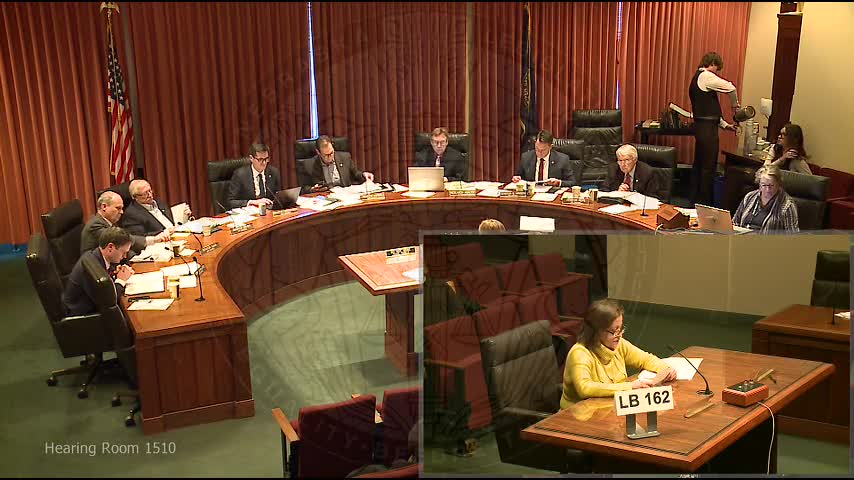
Senator Margo Juarez opened the hearing on LB 162, saying the bill would close a safety gap by integrating licensed child‑care centers and family child‑care providers into local emergency notification and reunification systems. "This bill would create the child care safety and security fund and directs the Nebraska Department of Education to award competitive grants that facilitate community partnerships for emergency response procedures involving childcare providers," she said.
Multiple childcare operators and local coordinators described incidents where centers lacked timely notification of nearby threats. Robert Patterson, CEO of Kids Can Community Center in Omaha, testified that a nearby armed foot pursuit left toddlers outside on a playground until parents started calling the center. "We only knew something was amiss because parents started calling us," Patterson said, urging the committee to act to avoid similar risks.
Lincoln Littles described a local pilot that pairs child‑care programs with school emergency systems, uses the I Love You Guys Foundation's Standard Response Protocol adapted for early childhood, and has run training sessions and issued small security grants funded by local fundraising. "This initiative includes notification alerts, drill reminders, emergency materials, and training sessions," Suzanne Schneider testified.
Under language offered in committee, the bill would make a one‑time appropriation (amendment text provided in the hearing referenced $300,000 from the cash reserve fund) to support designees who operate a notification system, deliver age‑appropriate reunification training and provide materials; the proposal allows participation on a voluntary basis and requires annual reporting to the Legislature. Testimony emphasized that the proposal is voluntary for providers and designed to avoid imposing new costs on families.
Senators asked detailed questions about the fiscal note — the Educational Service Unit Coordinating Council estimated a need for partial FTEs across ESUs to administer grants — and about grant eligibility and prioritization. Witnesses said the Lincoln pilot uses ESUs and local emergency management partners to deliver training and enrollment in the notification system; proponents asked the committee to advance the bill and offered to work with NDE and ESUs to tighten fiscal and implementation details.
No opponents testified; the hearing closed with the introducer saying she would work with agencies to refine the fiscal estimates and implementation plan.