Get Full Government Meeting Transcripts, Videos, & Alerts Forever!
Get email alerts on the Wellhead Protection topic
No spam. Unsubscribe anytime.
Committee hears bill to require notice and consideration for wellhead protection areas
Summary
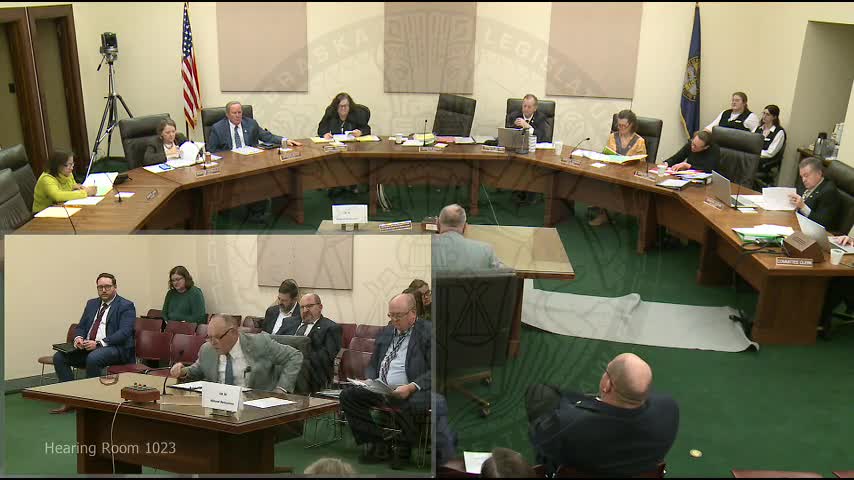
The Natural Resources Committee heard testimony on LB36, which would require local jurisdictions to notify public water suppliers about substantive land-use actions within designated wellhead protection areas and to consider public water supply when making decisions affecting those areas.
Senator Tom Brandt introduced LB36 on behalf of the Natural Resources Committee, saying the bill would require counties, cities and villages with zoning, land-use or permitting authority to notify entities that have established wellhead protection areas when substantive land-use changes are proposed within those areas. "LB 36 addresses defined areas known as wellhead protection areas," Brandt said, and described them as "the surface and subsurface areas surrounding a well field...through which contaminants are reasonably likely to move forward and reach the water well or well field."
The bill would also require local jurisdictions to "take into consideration the public water supply when making determinations within the defined wellhead protection areas," Brandt said. He and supporters said the measure is intended to add a statutory notice and consideration requirement without slowing routine permitting for minor projects such as new roofs or water heaters. "All this bill is saying is you just need to notify the wellhead protection area," Brandt said.
Rick Kubat, representing Metropolitan Utilities District (MUD), testified as a proponent. Kubat said MUD supplies roughly one-third of Nebraska's population with natural gas and water and described instances in which developments near well fields raised concerns about wastewater and fuel spills. "If LB 36 were in place, it would have made it clear with all the parties involved that due consideration should be made for the community drinking water supply," Kubat said. He told the committee that roughly 85% of Nebraskans receive drinking water from groundwater and that wellhead protection areas are presently, in his view, often “toothless” because notice and statutory consideration are not required.
Committee members asked how the bill would interact with existing permitting and the Nebraska Department of Environment and Energy (NDE) roles. Kubat and Senator Brandt said the bill is intended to provide notice and statutory direction but not to transfer permitting authority to NDE. Brandt acknowledged the bill may need language work to clarify what types of projects should trigger notice, citing a desire to exclude routine household repairs while including projects with potential contamination risk such as underground fuel tanks or large confinement operations.
Lash Chaffin of the League of Nebraska Municipalities testified in a neutral but supportive tone and offered to work with the sponsor on language. He said many municipalities and zoning officials already collaborate with local water suppliers but that modern administration and staff turnover can create communication gaps that a targeted notice requirement could address.
Senators and testifiers discussed timing concerns: Brandt said the bill's 30-day notice period is intended to give a water supplier time to raise substantive concerns but that sponsors are willing to work with cities and counties on any timing or procedural changes that would avoid delaying normal permitting processes. For the record, the committee clerk noted four proponents, two opponents and two neutral submissions on LB36.
The hearing concluded with the sponsor indicating willingness to work with stakeholders on drafting clarifications. No committee vote or formal action on LB36 was recorded at the hearing.