Get Full Government Meeting Transcripts, Videos, & Alerts Forever!
Get email alerts on the Pensions Trs topic
No spam. Unsubscribe anytime.
Teachers Retirement System reports $113 billion in assets, discusses lower assumed return and ADEC impact
Summary
Officials from the Teachers Retirement System told the joint House and Senate retirement committee that TRS assets rose to about $113 billion and that the system lowered its assumed investment return to 6.9%, a change lawmakers said increases the actuarially determined employer contribution (ADEC) and could affect future benefit decisions.
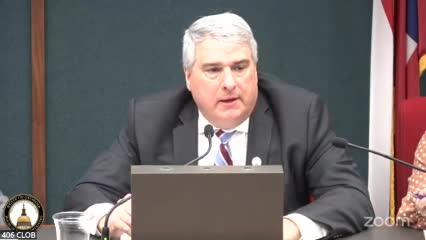
Buster Evans, a representative of the Teachers Retirement System (TRS), told the joint House and Senate retirement committee that TRS had about $106 billion in assets as of June 30 and about $113 billion "as of this morning," and described a funding ratio of 78.2% under the system's current actuarial assumptions.
The presentation explained why TRS recently reduced its assumed rate of return from 7.25% to 6.9% and how that change affects the ADEC, the actuarially determined employer contribution used to pay annual pension liabilities. "We have an assumed rate of return of 6.9%. We've got that assumed rate of return down from 7.25 to 6.9 so that we'd would be more conservatively focused," Evans said.
The assumption change drew questions from members. Representative Chuck Martin and others said lowering the assumed return increases the ADEC and therefore can prompt larger cash contributions from the state and other employers. "When you lower your return, it makes you look like you're more underfunded, so we put another $115,000,000 in there," Representative Brandon (committee member) said, summarizing the financial mechanics described in the presentation. Chairman Martin warned that moving the assumption up or down can affect how much money the system will appear to need over long time horizons.
TRS officials provided basic plan and investment details. Evans said TRS serves K–12 teachers, college and technical educators, county extension agents and public library employees; that the system has "over 500,000 active, retired, and inactive members"; and that the plan's asset allocation is roughly 75% equities and 25% fixed income with up to 5% allowed in alternative investments (about 2% currently in private equity). He told lawmakers the system manages roughly 80% of assets in‑house at low cost (about six basis points). The presentation included plan-design and payroll statistics: average monthly beneficiary benefit of $3,637; roughly 152,000 beneficiaries; average service credit about 25½ years; and average retirement age about 60.
On smoothing and volatility, Evans said TRS smooths investment returns over five years to avoid abrupt swings in employer contribution requirements. "We smooth assets over a 5 year period of time," he said, explaining that smoothing reduces unpredictability in the ADEC.
Committee members and TRS staff also discussed the practical effect of asset‑allocation and private‑equity exposure. Senator McLaren asked how much alternative investments contributed to TRS's year‑to‑date outperformance; Evans replied that TRS outperformed in part because it had a relatively low allocation to alternatives during a year when that asset class experienced write‑downs, and that equity exposure produced stronger returns in the recent market run.
No formal committee action or vote on TRS policy, plan design or the assumption change was taken at the hearing. The presentation was an informational overview and committee members indicated they will continue oversight and follow‑up questions during the session.
Lawmakers pressed for continued regular briefings and asked staff and TRS trustees for more detailed explanations of the actuarial assumptions and long‑term funding plan.
The committee paused its TRS discussion to hear presentations from other retirement systems and stakeholder groups later in the same meeting.