Get Full Government Meeting Transcripts, Videos, & Alerts Forever!
Get email alerts on the Medicaid Dispensing Fee topic
No spam. Unsubscribe anytime.
Nebraska committee hears bill to tier Medicaid dispensing fee after 2024 increase for independents
Summary
Lawmakers and pharmacy groups debated LB 138, which would expand and tier the $10.38 Medicaid dispensing fee adopted in 2024 for independent pharmacies so that higher‑volume and larger pharmacies receive graduated reimbursements; sponsors said the change aims to preserve rural access and equitable reimbursement.
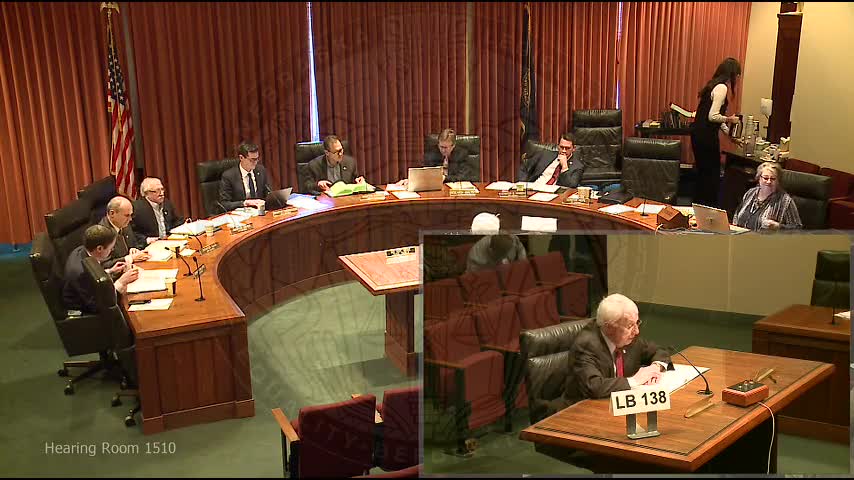
Senator Merv Riepe introduced LB 138 as a follow-up to last year's legislation (LB 204) that established an enhanced Medicaid dispensing fee for some independent pharmacies. "LB 138 is an effort to fine tune this policy and address equity in the reimbursement to avoid unintended disparities," Riepe said in his opening statement.
The bill would extend the $10.38 dispensing fee beyond the independent‑pharmacy definition (six or fewer locations) and create a tiered schedule based on annual prescription volume: pharmacies under 30,000 prescriptions, a $10.38 fee; 30,000–69,999 prescriptions, $9.51; and 70,000 or more, $8.30. The bill also would grant the full $10.38 to any non‑mail order pharmacy located more than 30 miles from the nearest pharmacy.
Proponents — including the Nebraska Pharmacists Association, Nebraska Retail Federation and Nebraska Grocery Industry Association — told the committee the earlier change was a good first step but left some pharmacies in a gray area: too large to qualify as "independent" but too small to negotiate better acquisition prices. "$10.38 should be what all pharmacies get reimbursed," Rich Otto of the Nebraska Retail Federation testified.
Haley Pertzborn of the Nebraska Pharmacists Association recommended that the committee advance LB 138 so all pharmacy types are considered and noted that a cost‑of‑dispensing survey ordered last year is due; committee members were told the bill could be adjusted to reflect the survey results.
Committee members asked about the legal definition of "dispensing fee" and whether the payment applies only to Medicaid; Senator Riepe said the bill will be narrowed in drafting to ensure it applies to Medicaid reimbursement under the Medical Assistance Act. The Legislature's fiscal implications were discussed at length: Senator Riepe disclosed a fiscal estimate showing a general‑fund impact of $3,339,477 and federal funds of $5,404,898 if the bill is adopted as drafted.
Proponents argued the reimbursement is intended to preserve pharmacy access in rural areas and address inequities created by average‑cost drug pricing. No formal committee action or vote was recorded in the hearing.
Committee members and witnesses said the bill's tiered approach was modeled on other states' structures and could be amended after the state cost‑of‑dispensing survey is finalized.