Get Full Government Meeting Transcripts, Videos, & Alerts Forever!
Get email alerts on the Housing Policy topic
No spam. Unsubscribe anytime.
Bill to prohibit local rent control draws partisan testimony; advocates urge local flexibility
Summary
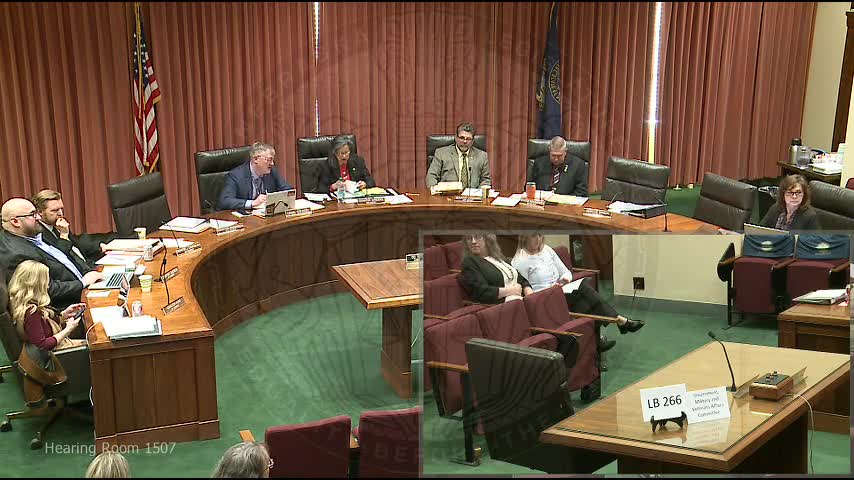
LB 266, a proposal to bar local governments from imposing rent control on private residential contracts, drew extensive proponent testimony from landlord and property‑owner groups and opposition from tenant advocates who said the ban preempts local solutions to housing instability.
Senator Robert Dover (19th District) opened LB 266 by arguing the state should prevent local rent control ordinances, saying rent control "can disincentivize developers from building new housing" and could distort housing markets. Dover told the committee the bill is intended as a preventive measure even though no Nebraska political subdivision has an active rent‑control proposal at the time of the hearing.
Representatives of landlord and property‑owner groups testified in favor of the bill. Doug Kagan of Nebraska Taxpayers for Freedom warned of administrative costs and economic distortions he associated with rent control, and Lynn Fisher, president of the Statewide Property Owners Association, described landlords as the primary suppliers of affordable rental housing in the state and urged lawmakers to block local rent‑control ordinances to avoid discouraging investment and new development.
"When government at any level adds more regulation and chooses winners and losers in the economy, everyone loses," Fisher said, citing examples of cities she said experienced reduced new development after rent‑control measures.
Dennis Tierney of the Metropolitan Property Owners Association and other landlord witnesses referenced academic reviews and Federal Reserve research they said show rent control reduces supply and harms housing quality.
Opponents included Erin Feichtinger, policy director for the Women's Fund of Omaha, who testified that LB 266 is a "solution in search of a problem" because no Nebraska jurisdiction is currently pursuing rent control. Feichtinger said housing shortages and housing instability vary across communities and should be addressed locally: "Taking away a tool that may possibly one day exist in the future to address a community's unique needs is unnecessary," she told the committee.
Feichtinger also disputed claims that Omaha's Affordable Housing Action Plan recommends rent control, saying the plan only recorded community members mentioning the idea during public engagement and that rent control was not included among formal recommendations submitted to the Omaha City Council.
Committee discussion focused on whether preempting local action is appropriate when no city or county has proposed rent control and on evidence from other localities. Several proponents cited experiences in other states and cities as precedents; opponents emphasized local discretion and differences among Nebraska communities. The committee did not take a vote; the online hearing record listed 37 proponents and 22 opponents at the time the hearing record was summarized.