Get Full Government Meeting Transcripts, Videos, & Alerts Forever!
Get email alerts on the Pharmacy Technician Ratio topic
No spam. Unsubscribe anytime.
Nebraska hearing on LB118 presses to raise pharmacist-to‑technician ratio from 3:1 to 4:1
Summary
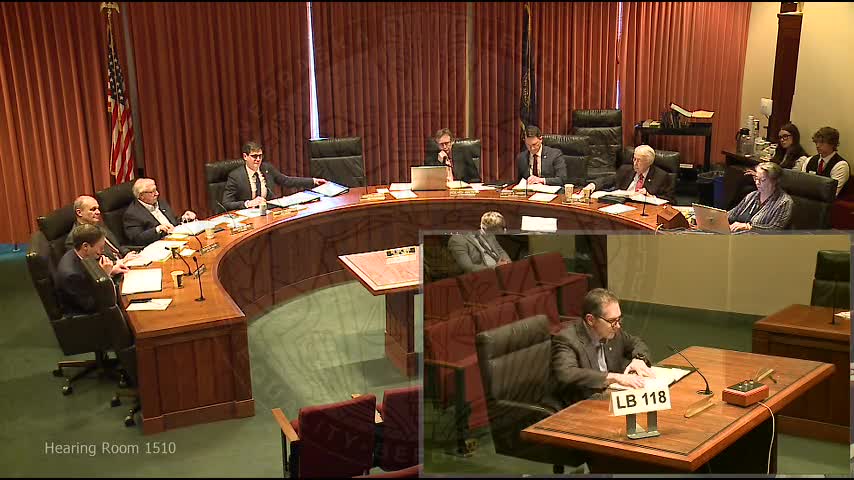
Senator Brian Hardin introduced LB 118 to the Health and Human Services Committee, asking the Legislature to raise the maximum number of pharmacy technicians a pharmacist may supervise from three to four.
Senator Brian Hardin introduced LB 118 to the Health and Human Services Committee, asking the Legislature to raise the maximum number of pharmacy technicians a pharmacist may supervise from three to four. "I'm here to introduce LB 118, which seeks to increase the current pharmacy technician to pharmacy pharmacist ratio to 4 to 1 from its current 3 to 1," Hardin said during opening remarks.
Supporters told the committee the change would free pharmacists to perform clinical tasks — counseling, medication therapy management and coordination with other clinicians — while technicians take on administrative duties. "LB 118 will maximize the use and value of pharmacy technicians without sacrificing patient safety," testified Aly Dering Anderson, a pharmacist and University of Nebraska College of Pharmacy professor, citing experience in neighboring states where higher ratios are in place.
The bill's proponents included retail and grocery industry associations and chain and independent pharmacists. Several pharmacists described staffing pressures during holidays and pandemic surges and said higher ratios already exist in many states: "One of the 24 states with no ratio is Iowa," Anderson said, adding she had supervised as many as six technicians in peak situations.
Neutral testimony came from Haley Pertzborn, CEO of the Nebraska Pharmacists Association, who said the membership was split but urged safeguards if the ratio increases. Pertzborn recommended that pharmacies using a 1:4 ratio ensure at least 50% of technicians are certified and preserve the pharmacist in charge's authority to set the safe supervision level for a given shift. "It is crucial that the pharmacist in charge of the team that day retains the authority to determine the appropriate supervision ratio for their specific setting," she said.
Committee members asked about technician credentialing and portability across states, training, and whether increased ratios had produced safety problems elsewhere. Pharmacy witnesses noted Nebraska law already protects pharmacists from being coerced into supervising technicians contrary to their professional judgment and cited the Uniform Credentialing Act and statute 38‑2867 as giving pharmacists that protection. Multiple witnesses said they had not observed patient-safety problems in states with higher ratios.
The hearing recorded broad support from pharmacists, retail associations and grocery groups and neutral caution from the professional association; no opponents testified during the hearing. No committee action or vote on LB 118 was recorded in the hearing.
Looking ahead, supporters said the change would be one tool to address workforce shortages and access issues, particularly in rural areas where pharmacists sometimes are the only clinicians available. Opponents were not present to testify; the Nebraska Pharmacists Association recommended several guardrails if the committee advances the bill.