Get Full Government Meeting Transcripts, Videos, & Alerts Forever!
Get email alerts on the Environmental Enforcement topic
No spam. Unsubscribe anytime.
Lakeville commission closes enforcement order at 160 Bedford Street, asks engineer to confirm stormwater plan before continuing NOI review
Summary
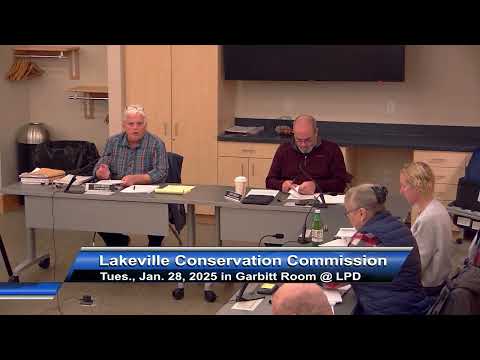
The Lakeville Conservation Commission voted to close an enforcement order for 160 Bedford Street and continue formal review of the site’s Notice of Intent to Feb. 11, after receiving documentation that contaminated soil had been removed and laboratory results showing copper and zinc in stormwater samples.
The Lakeville Conservation Commission voted to close an enforcement order for 160 Bedford Street and set a follow-up date for the site’s Notice of Intent (NOI).
Commission members closed the enforcement action after the applicant provided a limited removal action report and bills of lading showing that contaminated soil removed from the site had left Massachusetts. The commission recorded that December stormwater sampling detected copper and zinc at levels that triggered further review under the EPA’s Multi-Sector General Permit benchmarks and asked the project engineer to confirm whether the existing NOI already accounts for the recommended stormwater controls.
The commission’s agent said the soil disposal documentation and lab reports were included in a 171‑page report provided to commissioners and recommended additional review of the NOI to ensure it covers corrective measures for contaminated soils and stormwater. The agent asked the engineer to either: (1) provide a letter certifying that the previously submitted NOI already incorporates the recommended stormwater remediation measures based on the new sampling results, or (2) submit an amended NOI that does.
Commission staff and the project engineer reported that December sampling found zinc in both stormwater samples and copper in one sample. The engineer explained that EPA benchmarks for certain industrial sectors are non‑enforceable screening levels that trigger “corrective actions” and recommended improving on‑site stormwater controls (for example: deep‑sump catch basins, sediment settling and infiltration designed to meet Massachusetts stormwater standards). The commission asked the engineer to review the NOI in light of those results and render an opinion before the next review.
Public questions at the meeting focused on the scope of sampling and whether contamination could have migrated beyond the sampled pits. The project’s laboratory chain-of-custody documents were examined in the meeting; the agent said manifests and disposal documentation were now on file. Residents asked about well testing and the potential for contaminants to reach groundwater; commission staff said additional water‑quality testing appropriate to the project scope would be required at the NOI stage.
The commission set a continuance for the NOI to Feb. 11 and instructed the engineer to provide either an amended NOI or a written statement that the previously filed NOI already addresses the sampling results and recommended stormwater measures. The enforcement order itself was closed by motion of the commission.