Get Full Government Meeting Transcripts, Videos, & Alerts Forever!
Get email alerts on the Land Use Permitting topic
No spam. Unsubscribe anytime.
Lakeville select board denies temporary unregistered-vehicle permit for 160 Bedford Street after public concern and conservation review
Summary
After a public hearing and extensive public comment about wetland runoff and site conditions, the Town of Lakeville Select Board declined to grant a license for temporary storage of unregistered motor vehicles at 160 Bedford Street and directed enforcement follow-up with town staff and counsel.
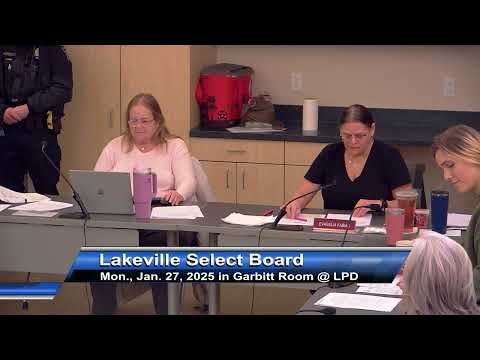
The Town of Lakeville Select Board on Jan. 27 denied a license application to allow temporary storage of unregistered motor vehicles at 160 Bedford Street following a public hearing featuring neighbors’ environmental concerns and legal review of town bylaws.
Neighbors and town counsel told the board the property has had long-standing accumulation of vehicles, trailers, shipping containers and other materials. Conservation staff and neighbors raised soil and stormwater concerns, including test results reporting elevated metals in fill material; conservation commissioners were scheduled to review the site the day after the hearing. Town counsel also advised the board about limits in existing bylaw language and enforcement options.
The board discussed multiple conditions that had been proposed during the hearing — including a 200-foot setback from Bedford Street and abutters for stored vehicles, visual screening for abutters (to be recommended by the Conservation Commission), prompt disposal of discarded vehicle parts, requirements that hazardous fluids be stored to prevent leakage, a limit on the number of unregistered vehicles on site, and that all tires be kept on rims. Applicant representatives described the operation as vehicle storage with rotation and asked for a reasonable cap tied to parcel size; neighbors described long periods of apparent inaction and reported material washing downslope into adjacent wet areas.
Select Board members debated enforcement mechanics, the difference between registered and unregistered vehicles, and whether other site activity (trailers emptied on-site, dumpsters and apparent salvage) constituted a separate junkyard violation. Town counsel explained that junkyard activity and other bylaw violations could be the subject of separate enforcement actions and that some enforcement vehicles (for example, tickets versus court complaints) require specific bylaw language.
After extended discussion and public comment from residents including Tim Wynn and Donna Catzano, the board voted and the chair announced the license was not granted. The board recorded that conservation commission findings and any outstanding enforcement actions would inform next steps; staff were directed to accept and route any formal complaints and to pursue appropriate enforcement under the applicable bylaws and state law as necessary.
The decision leaves outstanding issues for the conservation commission and inspectional services, including soil testing results and whether further remediation or enforcement is required. Several residents were told to resubmit complaints to the town administrator and the director of inspectional services for formal review.
The meeting record shows the board intended the denial to preserve enforcement options under other town bylaws (including the town’s junk/dealer provisions) and to require clearer compliance before any storage use would be permitted on the parcel.