Get Full Government Meeting Transcripts, Videos, & Alerts Forever!
Get email alerts on the Juvenile Interrogation And Confessions topic
No spam. Unsubscribe anytime.
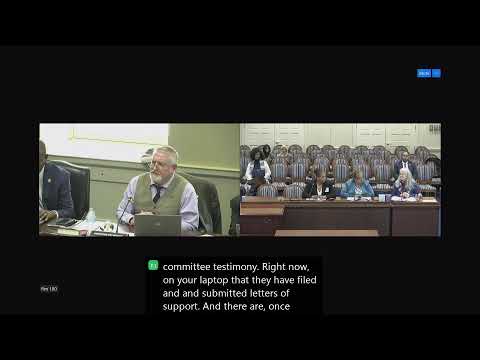
Committee debates bill to limit use of deceptive interrogation tactics on children
Summary
HB 165 would create a rebuttable presumption that statements by minors obtained after intentional deception by law enforcement are involuntary and inadmissible; proponents cited false-confession research and opponents warned it would remove a tool for investigators.
The House Judiciary Committee heard competing testimony Jan. 30 on House Bill 165, which would establish a rebuttable presumption that statements by minors taken during custodial interrogations after intentional deception by law enforcement are involuntary and inadmissible in court.
Delegate Delia Severo (presenting as Delegate Osvero in the transcript) framed the bill as completing protections begun in the Child Interrogation Act by prohibiting the use of deceptive interrogation tactics on children. "When we're talking about a child, we're talking about a developing mind," the sponsor said, and added that deceptive tactics can produce false confessions that change young people's lives.
Proponents included Ken Phelps of the Episcopal Diocese of Maryland, Aubrey Edwards Luce of the Center for Families, Children & the Courts at the University of Baltimore, and the Council on American-Islamic Relations (CAIR-Maryland) represented by Kimberly Suarte on behalf of Zainab Chaudhry. They cited studies showing minors are more likely than adults to produce false confessions and pointed to high-profile examples, including the Central Park Five, as evidence of the risks. "When police lied to children, prosecutors should have the burden to prove whether the child's statement was voluntary and admissible," Aubrey Edwards Luce said.
Opponents included Scott Schellenberger (representing prosecution perspective) and Chaz Ball of the Maryland Fraternal Order of Police. Schellenberger argued Maryland already has enhanced protections in place following recent legislation (cited in testimony as Senate Bill 53 and the codified provisions in Courts & Judicial Proceedings), including notification to parents and a requirement that minors consult with counsel prior to custodial interrogation in many cases. He said the Office of the Public Defender is on-call, and that in practice public defenders often advise minors not to speak, limiting the number of custodial interrogations. Ball warned the bill would unduly restrict investigatory tools police use to secure confessions; he described subterfuge as an accepted investigative technique and said voluntariness is a judge's determination.
Committee members asked whether other states have similar laws; proponents cited Utah, Illinois and Oregon as having passed related protections and said several other states had introduced similar measures. Law-enforcement witnesses and prosecutors warned about operational impacts including fewer interrogations and potential effects on evidence-gathering. The hearing concluded with no recorded committee vote.