Get Full Government Meeting Transcripts, Videos, & Alerts Forever!
Get email alerts on the Ethics Charter topic
No spam. Unsubscribe anytime.
Ethics office seeks specific wording, board composition and timing changes to Article 9
Summary
Atlanta’s ethics officer presented a list of suggested changes to proposed charter amendment Article 9, urging restoration of the board name, adjustments to nominating entities and changes to timeline and reporting provisions to prevent conflicts of interest and preserve appellate functions.
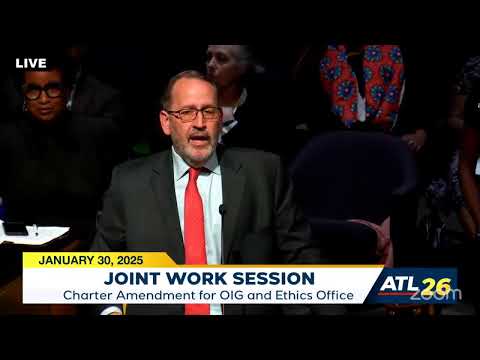
Atlanta — The city’s ethics office used a Jan. 29 joint council work session to lay out targeted revisions to the proposed Article 9 charter language governing the city’s ethics function.
Jabu Sangova, who identified herself as the city’s ethics officer, told the council the ethics function should remain a distinct, clearly defined office and urged several specific changes to the substitute draft. “We do support that,” Sangova said when referring to the proposal that creates a chartered ethics function; she then outlined areas where the ethics office seeks restoration or clarification.
Why it matters: Article 9 defines the ethics office’s jurisdiction, the composition and functions of its governing board, and appellate procedures. Sangova told council members that changes in the substitute could limit the ethics board’s ability to perform its appellate role and could create conflicts if board members receive detailed briefings on open investigations they later must adjudicate.
Key requests from the ethics office included restoring the governing name to “Board of Ethics,” reintroducing the word “intentional” into a critical enforcement provision (section 9-101 F1), and revising a proposed requirement that three attorneys serve on the board. Sangova said the existing nominee pool (the Atlanta Bar Association and Gate City Bar Association) is too narrow to guarantee three attorneys and recommended adding a third nominating entity such as Georgia State University, Georgia Tech, or the Justice Center of Atlanta to broaden the pool.
Sangova also asked that the chair of the ethics board be an attorney but that the proposed five‑year investigatory‑experience requirement be removed so the chair position can be filled by attorneys from varied legal backgrounds (litigation, ethics/compliance, prosecution) with appellate hearing experience. On timelines, Sangova objected to a proposed 30‑day deadline for completing preliminary investigations, calling that window “too restrictive” and proposing a 90‑day period as more practicable.
The ethics officer said the office supports the substitute’s effort to prevent duplicative investigations by clarifying that OIG should not investigate matters that fall under the ethics office’s jurisdiction, but she warned that providing board members with detailed briefings on open investigations would create conflicts if the board later hears appeals.
What’s next: Council members and the law department indicated they will review the ethics office’s suggested language changes. Sangova and the ethics office requested that clarifications be folded into subsequent drafts of the substitute to preserve the ethics board’s appellate role and prevent procedural conflicts.