Get Full Government Meeting Transcripts, Videos, & Alerts Forever!
Get email alerts on the Education Funding topic
No spam. Unsubscribe anytime.
Budget briefing: governor seeks pauses and caps in Blueprint rollout and shifts $144 million in costs to local governments
Summary
DLS told the committee the governor's budget would cap childcare enrollment, delay parts of the Blueprint for Maryland's Future, and permanently shift roughly $93 million in teacher‑retirement costs plus other items to local governments, totaling about $144 million in new local responsibilities.
Dave Romans, Department of Legislative Services staff, told the House Environment and Transportation Committee that the governor's FY26 proposal reduces or delays several education and child‑care commitments under current law to achieve budget savings.
Romans said the administration proposes holding the behavioral health portion of the Blueprint at $40 million annually rather than the $130 million mandated in statute. He also described a delay in the planned expansion of teacher collaborative time (the proposal would hold the rollout until 2030), a move Romans said would save roughly $124 million in fiscal 2026 and larger sums in later years. The governor would fund the concentration‑of‑poverty portion of the Blueprint at current fiscal 2026 levels but pause growth in fiscal 2027 and 2028, which DLS projects would save about $70 million in fiscal 2027 and nearly $200 million in fiscal 2028.
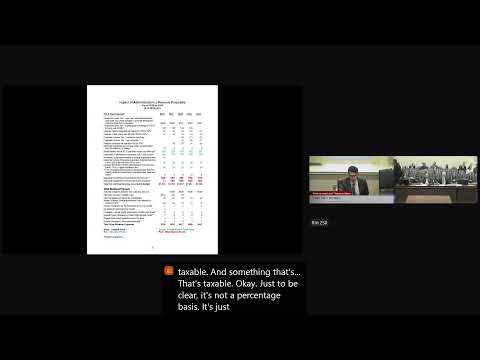
On local cost shifts, Romans and legislators discussed a proposal to share growth in the unfunded liability for teacher retirement with local governments. Romans said the state would pick up $93 million and locals would be asked to pick up $93 million, creating an ongoing $93 million local cost shift tied to teacher retirement. When Delegate Jacobs asked for confirmation, Romans replied, "It's 93 that's shifting from the state to the counties, yep." The $93 million is the largest component of a roughly $144 million package of costs Romans said would fall to counties and local governments under the governor's plan; other elements include an increased share of Department of Assessments and Taxation costs (from 50 percent of that function to 90 percent borne by counties) and changes in nonpublic special education placements.
Romans also described a proposed cap on the childcare scholarship program at about 42,000 children in fiscal 2026; the program had grown from about 23,000 children in fiscal 2023 to roughly 42,000 currently, and the forecast had projected growth above 50,000 without the cap.
Committee members asked how the changes would be allocated at the county level; Romans pointed members to county‑by‑county impacts in the DLS packet (page 60) and noted that some costs fall to local governments rather than local education agencies. No formal legislative action occurred at the briefing; the presentation was framed as background for members who will consider bills and amendments this session.