Get Full Government Meeting Transcripts, Videos, & Alerts Forever!
Get email alerts on the State Budget topic
No spam. Unsubscribe anytime.
Maryland fiscal briefing: governor's plan narrows short-term gap but leaves $186 million structural shortfall for FY26
Summary
Department of Legislative Services staff told the House Environment and Transportation Committee on Jan. 30 that Gov. Hogan's proposed FY26 budget reduces a multi‑billion-dollar forecast shortfall through statutory changes and transfers, but a $186 million structural gap remains for fiscal 2026 and longer-term deficits persist through 2030.
Dave Romans, Department of Legislative Services staff, told the House Environment and Transportation Committee on Jan. 30 that the governor's proposed FY26 operating budget totals $67.3 billion and narrows a previously forecast shortfall but does not achieve full structural balance in fiscal 2026.
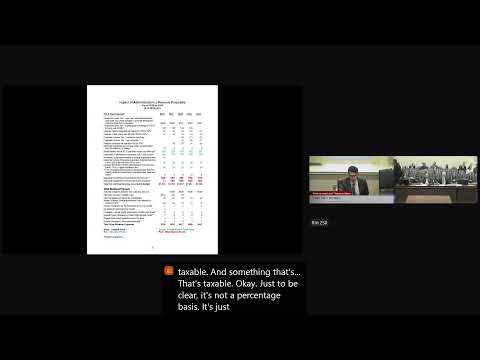
Romans said the governor's package relies heavily on a Budget Reconciliation and Financing Act (BRFAA) that includes roughly $3.0 billion of statutory changes and financing actions. "The BRFAA is just those things that require a statutory change," Romans said during the briefing.
The governor's proposal shows total general fund spending of about $27.0 billion, a decrease of about $274 million (roughly 1 percent) from the current year, according to Romans. The state would end fiscal 2026 with an estimated general fund cash balance of about $106 million and a rainy day fund of roughly $2.0 billion, equal to about 8 percent of general fund revenues. Romans said the plan still leaves an $186 million structural gap in fiscal 2026 that would require additional cuts or revenue actions to close.
Key balancing elements identified by Romans include about $1.3 billion in revenue adjustments, $633 million in transfers to the general fund (the largest single transfer is $230 million from the local income tax reserve fund, repayable over 10 years beginning in fiscal 2029) and about $1.0 billion in spending reductions. Transfers also include $150 million of alternative compliance payments from the Strategic Energy Investment Fund (SEIF) and a proposal to dedicate $180 million of SEIF dollars to a climate pollution plan account.
Spending reductions cited include a smaller deposit to the rainy day fund and policy cuts that affect hospitals and local governments. Romans said the governor proposes an increase in the state's hospital assessment of about $100 million annually. Local governments would see several cost shifts totaling roughly $144 million, the largest of which is a $93 million change related to teacher retirement costs.
Romans highlighted programmatic cuts and caps in social services and education as part of the cost containment plan. Examples he cited: capping the childcare scholarship program at about 42,000 children in fiscal 2026, a $106 million reduction in funding for the University System of Maryland in fiscal 2026 compared with fiscal 2025, and combined current‑year and FY26 reductions to developmental disabilities funding (about $97 million in the current year and $235 million in fiscal 2026).
Romans also flagged litigation and settlement risk tied to the Child Victims Act of 2023. He said about 35,100 people have come forward under the statute and that the attorney general's office is negotiating with plaintiffs; if a settlement is reached and funded in FY26, lawmakers would need to identify funding because there is no dedicated appropriation in the governor's budget for such settlements.
Romans told members the governor's proposal makes substantial progress against the five‑year structural shortfall but that further action will likely be needed in future years as deficits reemerge by fiscal 2028 and grow toward fiscal 2030.
Committee members asked clarifying questions about assumptions in the forecast, transfers, and the potential need for a second phase of budget adjustments in coming years. No formal action was taken during the briefing; the presentation was background for the committee's substantive hearings this session.