Get Full Government Meeting Transcripts, Videos, & Alerts Forever!
Get email alerts on the Liberty Specific Plan topic
No spam. Unsubscribe anytime.
Planning commission advances Liberty Specific Plan, certifies EIR and forwards project to council
Summary
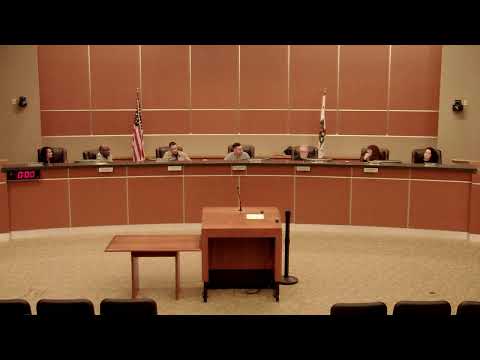
On Jan. 30 the West Sacramento Planning Commission voted 7-0 to approve staff recommendations for the Liberty Specific Plan, advance related land‑use approvals and certify the project's environmental review despite objections from nearby residents that the EIR should be recirculated.
The West Sacramento Planning Commission on Jan. 30 voted 7-0 to approve staff recommendations on the Liberty Specific Plan, advance related land‑use entitlements and certify the project's environmental review, sending the subdivision map, zoning and General Plan amendment recommendations to the City Council.
The vote follows a multi‑year review of the roughly 342‑acre Liberty site and several public hearings. The staff presentation described the project as including residential development, commercial and community space, parks and public right of way, and accompanying draft and final environmental impact reports (EIR), findings of fact, a statement of overriding considerations and a mitigation monitoring program as part of the actions before the commission.
Commissioners heard both supporters and opponents during public comment. Several nearby homeowners told the commission that the developer had responded to concerns about lot lines, tree protection and setbacks; others, and an attorney representing Perella Court residents, asked the commission not to certify the EIR and to require additional study or recirculation.
City planning staff told the commission the Liberty project encompasses about 342 acres owned by the Pay family and described proposed components including housing, about 50 acres of parks and greenbelts and public right of way. Staff also described map and entitlement steps that would follow a recommendation to City Council, and that certification of the EIR and adoption of associated findings are part of the action being considered.
Opponents focused on adjacency and environmental review. Matt Kiesling, appearing for Perella Court residents, said the EIR had become stale and "has multiple legal flaws," and urged the commission to withhold certification and recirculate the document. "I would strongly recommend you not certify the EIR. It has multiple legal flaws," Kiesling said.
Kevin Kemper, the Liberty team's land‑use attorney, responded that the passage of time alone does not require CEQA recirculation and that the team had worked to address neighbor concerns. "CEQA requires recirculation in the event that there's a significant new environmental impact or a number of other factors. The passage of time alone without more is not one of those circumstances," Kemper said.
The city attorney advised the commission that, after reviewing the public comments and subsequent filings, the Liberty EIR "properly analyzes the impacts of the project," identifies appropriate mitigation and includes an appropriate statement of overriding considerations, and that recirculation was not required. "I don't think the EIR needs to be recirculated," the city attorney said.
Several nearby residents offered contrasting perspectives. Ted Henderson of Redwood Avenue said his earlier concerns had been resolved through negotiation with the project team and said he supported the revisions. "My concerns have been resolved. Really happy with the agreements that we've been able to make," Henderson said. BJ Tanner, also from Redwood Avenue, said the applicant had accommodated tree‑protection and setback requests. In contrast, Charles Opperman and the Perella Court representative asked the commission to require additional changes to avoid through‑traffic and to protect backyards.
Staff described a number of plan revisions made in response to prior commission direction and public comment, including reorienting some lots, removing a local street (Silverleaf), enlarging certain lots and providing a planting buffer suggested for a city property gap. Staff also said a utility corridor had to be widened (from a prior 20–23 foot corridor to 30 feet) which affected lot layouts in part of the plan.
At the close of discussion Commissioner (name read during roll call) moved to approve staff's recommendation; the motion was seconded and carried in a roll call vote with all voting commissioners recorded as "aye." The clerk read the roll call: Commissioner Sablage Aye; Commissioner Jackson Aye; Commissioner Olivares Aye; Commissioner Delgado Aye; Commissioner Squires Aye; Commissioner Linker Aye; Commissioner Wall Aye. The commission's approval advances the map and the specific plan recommendation to the City Council; staff noted that any interested party may appeal the commission action to the city clerk's office.
The commission and several speakers emphasized that the site is within ongoing local flood‑protection and levee improvement planning and that development fees contribute to completing local flood protection projects. Dan Ramos, RD 900 trustee, said fees from new housing help fund levee work and move the city toward 200‑year protection.
Next steps: the commission's recommendation and the record, including the final EIR, findings and mitigation monitoring program, will be transmitted to the City Council for its review; appeals must be filed with the City Clerk's office according to the city notice. The commission did not direct recirculation of the EIR.