Get Full Government Meeting Transcripts, Videos, & Alerts Forever!
Get email alerts on the Campus Housing Privacy topic
No spam. Unsubscribe anytime.
Committee advances HB 269 after extensive public comment on sex-designated campus housing
Summary
The committee approved substitute HB 269 on a 5–1 vote. The substitute requires occupants of sex-designated dorms to correspond to biological sex at birth and directs universities to provide non–sex-designated housing options; public testimony included many students and advocacy groups both for and against the bill.
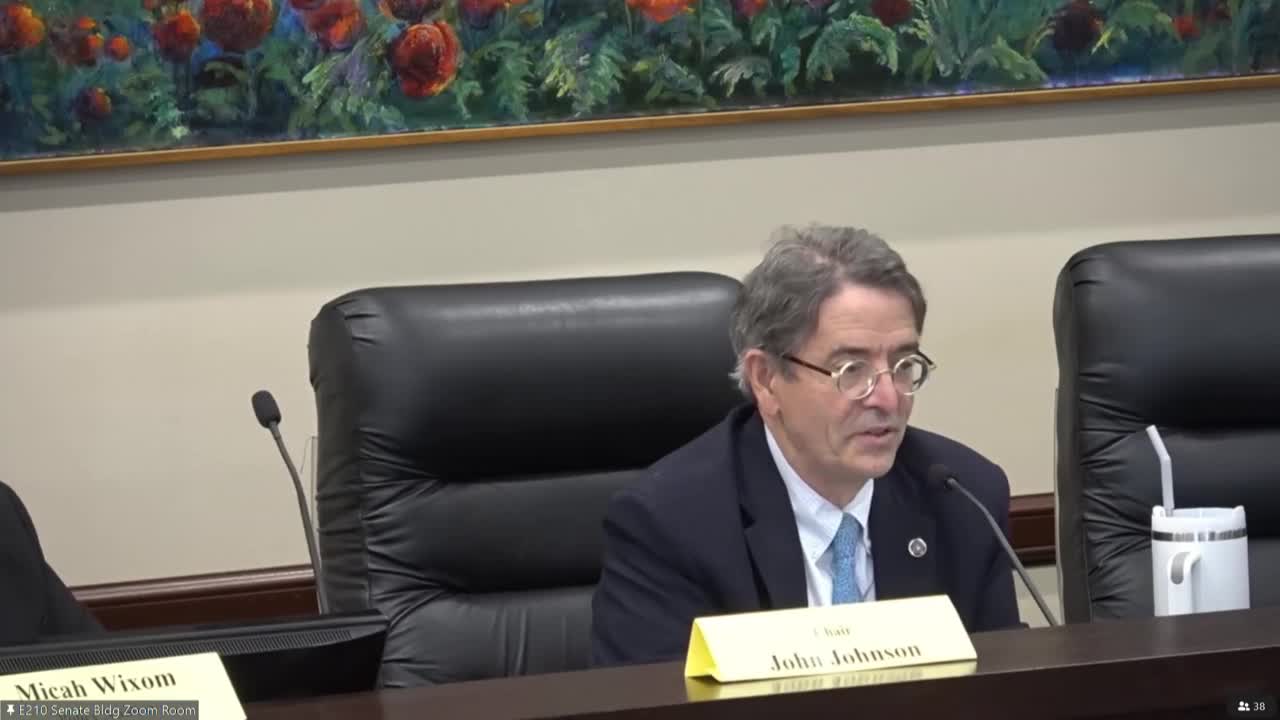
The committee voted 5–1 to send substitute HB 269, Privacy Protections in Sex-Designated Areas, to the full Senate after a lengthy public-comment period in which students, parents, university-affiliated residents and civil-rights and advocacy groups spoke for and against the measure.
Senator Brammer presented the bill and described the substitute as doing two principal things: first, in sex-designated dormitories or dwellings the bill requires that occupants "must correspond to their birth biological sex" (as stated by the sponsor in committee); second, it requires institutions of higher education to provide non–sex-designated housing options where biological sex is not a condition for residency. The sponsor said the substitute narrows prior language and that the universities must make alternative housing available.
Public testimony was extensive and divided. Opponents included students currently living in campus housing and transgender advocacy and civil-rights organizations who argued the universities already had procedures to reassign roommates and that the bill would force outing of transgender students, increase the risk of harassment, and impose state intervention in roommate disputes. Equality Utah's director, Troy Williams, asked the committee to "seek solutions that protect the freedom, the liberty, and the housing of all students in Utah" and urged mediation and campus-led responses. Several university students, including a university resident assistant who said she was doxxed after a housing dispute, described harassment they had experienced and urged the committee not to pass a law that would further target transgender students.
Supporters included parents and advocacy groups who said women deserve protected female-only housing and described incidents where female students said they were placed unexpectedly in living situations they found unacceptable. Avery Saltzman, who identified herself as a student and said she was relocated after learning a resident assistant identifying as female was male-assigned at birth, described feeling "shocked and immediately panicked" and said she was told to relocate by residence-hall staff. Parent speakers and women's-rights advocates said the substitute preserves options, including a checkbox for gender-specific or inclusive housing.
Committee discussion acknowledged the strong emotions on both sides. Several senators expressed appreciation for the civil testimony; Senator Riebe opposed the bill in committee saying it was "government overreach" and "a solution looking for a problem." The motion to favorably recommend the substitute passed 5–1, with Senator Eby recorded in opposition.
Sponsors said universities will still be required to offer non–sex-designated housing; opponents warned the law could lead to forced outings and increased harm to transgender students. The substitute now advances to the full Senate, where further debate and amendment are expected.